Jade Leaf Matcha Review: Honest UK Test of the Amazon Bestseller (2026)
The Amazon bestseller tested against Ippodo. Honest UK verdict with price-per-serving maths on ceremonial and culinary grades.
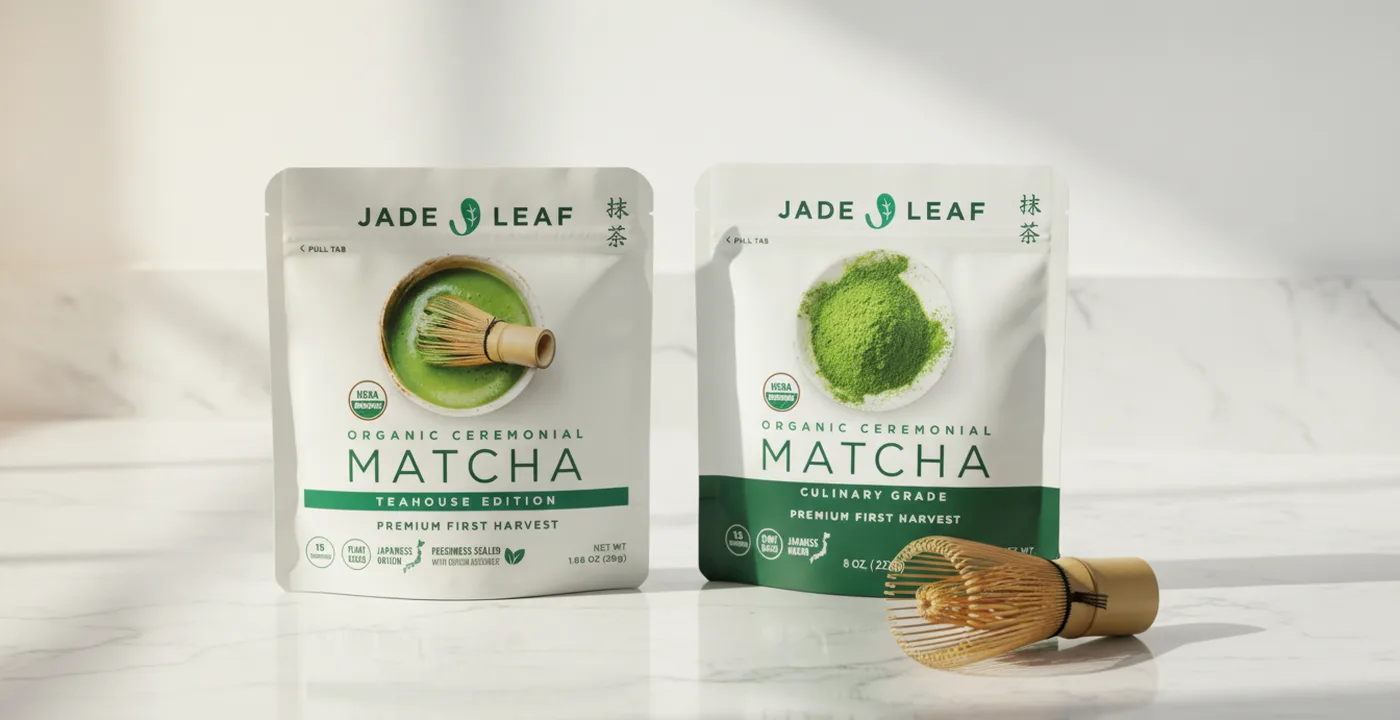
Table of Contents
Some of the links in this article are affiliate links, which help fund our independent review work at no extra cost to you. Every recommendation is based on hands-on testing through The Editor Lab methodology. No brand pays to appear, and no placement is guaranteed.
Over the past year, I have tested more than 30 matcha brands in the pursuit of a reliable everyday cup. Short answer on Jade Leaf: it is genuinely drinkable at the price, with caveats worth knowing. It kept appearing in the same place - the Amazon bestseller list, sitting beside thousands of five-star reviews and a price per tin that looks, frankly, too good to be true. This jade leaf matcha review is the answer to the question I kept seeing in reader messages and Reddit threads: is it aggressively priced and nothing more?
I tested the ceremonial and culinary grades side by side against an Ippodo ceremonial-grade control, using the same sieve, the same bamboo whisk, and the same preparation protocol I apply to every matcha I review for Balance Journal. What I found is nuanced - and worth reading before you add to basket.
Editor's Note
The Verdict in 30 Seconds
Jade Leaf ceremonial grade is a solid, reliable entry-level matcha. It is vibrant enough for a morning bowl and consistent enough for a daily ritual at a price that makes the habit feel low-stakes. It does not match premium single-origin Japanese matcha on umami depth or colour saturation - and you should know that before you buy. The culinary grade is best suited to lattes and smoothies where the added ingredients carry it. If you are a budget-conscious buyer who wants a real matcha habit without paying specialty prices, Jade Leaf is a sensible choice. If you want the best matcha available, look further.
Overall rating: 7.2/10
Ceremonial grade: 7.5/10
Culinary grade: 6.8/10
Buy if: You want an affordable daily matcha habit, drink lattes more than pure bowls, or are new to matcha and not yet sure how much you will use it.
Skip if: You are experienced with Japanese ceremonial matcha and expect that standard. You will find it falls short on colour intensity and umami.
Who Are Jade Leaf?
How does a matcha brand with no high-street presence become one of the most-reviewed products in its category? Founded in 2014 and based in the United States, Jade Leaf built almost everything through Amazon. The brand sources its matcha from tea-growing regions in Japan, with its website citing Uji (Kyoto Prefecture) and Kagoshima as primary sources - the two most prominent matcha-producing regions in Japan. Uji matcha is considered premium for its shaded cultivation and stone-grinding tradition, a practice documented by the Japanese Tea Export Promotion Council; Kagoshima production is typically larger-scale and positioned at a more accessible price point.
Rather than building a traditional retail footprint, the brand accumulated tens of thousands of reviews on Amazon and became one of the most-searched matcha brands globally on the platform. That scale creates an interesting dynamic for a buyer in the UK: you are buying a US brand, sourced from Japan, delivered via Amazon UK logistics, at a price that would be difficult to match from a dedicated Japanese tea house.
The brand website, jadeleafmatcha.com, is live and active. It sells a broader range of products than Amazon UK stocks, including flavoured lattes and culinary blends. For UK buyers, Amazon UK remains the most convenient source, with most formats arriving in two to three days on Prime.
The Range: Ceremonial vs Culinary
For this review, I tested two products currently available on Amazon UK:
Jade Leaf Organic Matcha Green Tea Powder - Ceremonial Grade (1 oz / 28g)
This is the headline product - the tin most buyers encounter first when searching for Jade Leaf. It is marketed as suitable for traditional bowl preparation, meaning it should dissolve smoothly when whisked with hot water and deliver the characteristic umami and grassy sweetness of a properly made matcha. Price as of June 2026: around £14.99 per 28g tin on Amazon UK (subject to change).
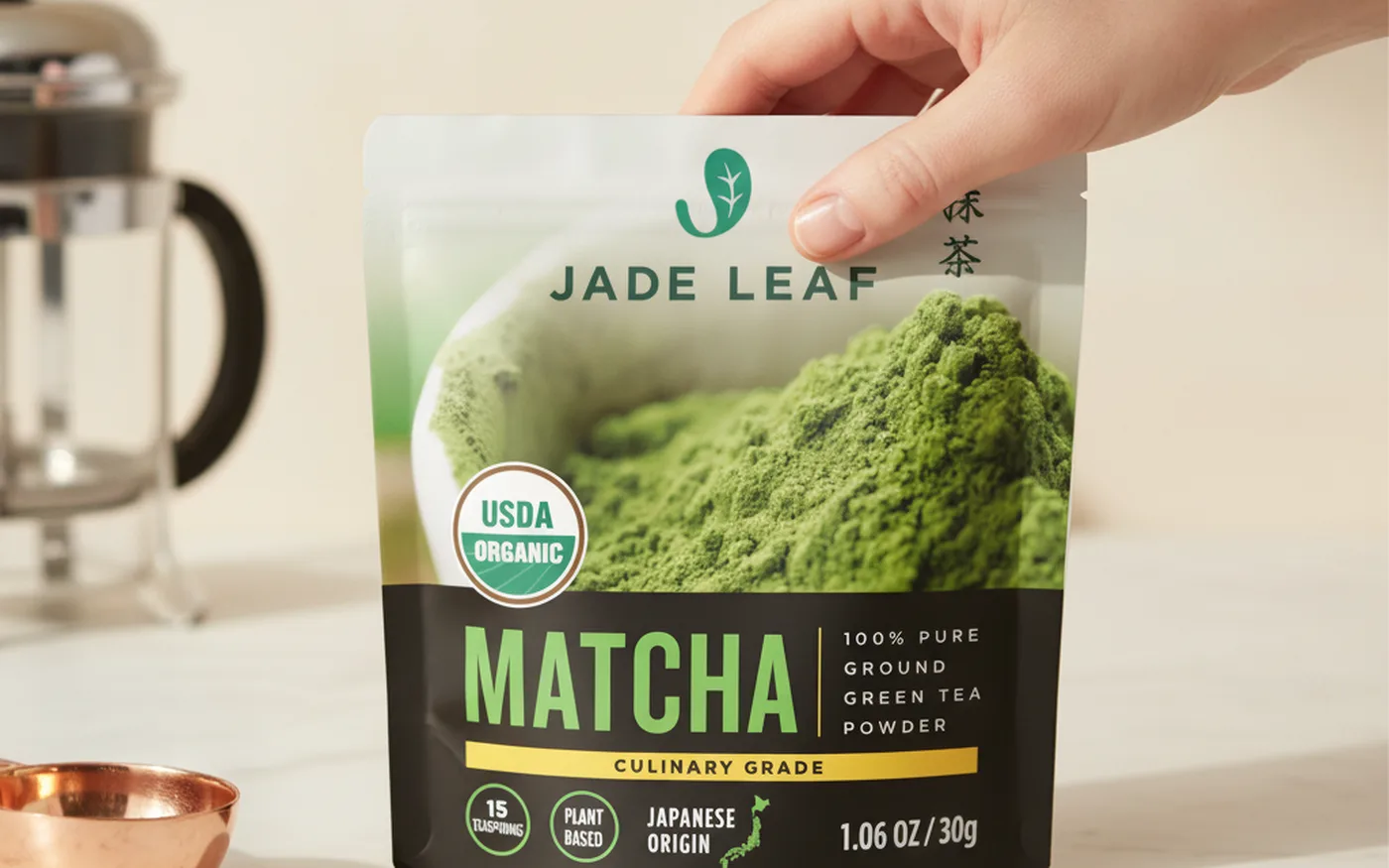
Jade Leaf Organic Matcha Green Tea Powder - Culinary Grade (3.5 oz / 100g)
The culinary grade is the larger, more economical tin and is positioned for cooking, baking, and latte preparation where the matcha flavour is blended with other ingredients. It is noticeably cheaper per gram. Price as of June 2026: around £15.99 for 100g on Amazon UK (subject to change).
Both products carry USDA Organic certification. The culinary grade has a larger UK following among home baristas making matcha lattes.
On jadeleafmatcha.com, the brand also sells a Premium Ceremonial grade at a higher price point, though this is not consistently available on Amazon UK. This review focuses on the two grades I was able to purchase and test in the UK.
How We Tested
I tested both grades using the same protocol I apply across every matcha review for the Balance Journal Editor Lab.
The control: Ippodo Wakaki ceremonial-grade matcha, sourced from their Kyoto range and available via ippodo-tea.co.jp/en, which ships to the UK, or via specialist UK retailers. Ippodo is one of Japan most respected tea houses, operating since 1717, and their ceremonial grades represent an established reference point for what premium matcha should look, smell, and taste like.
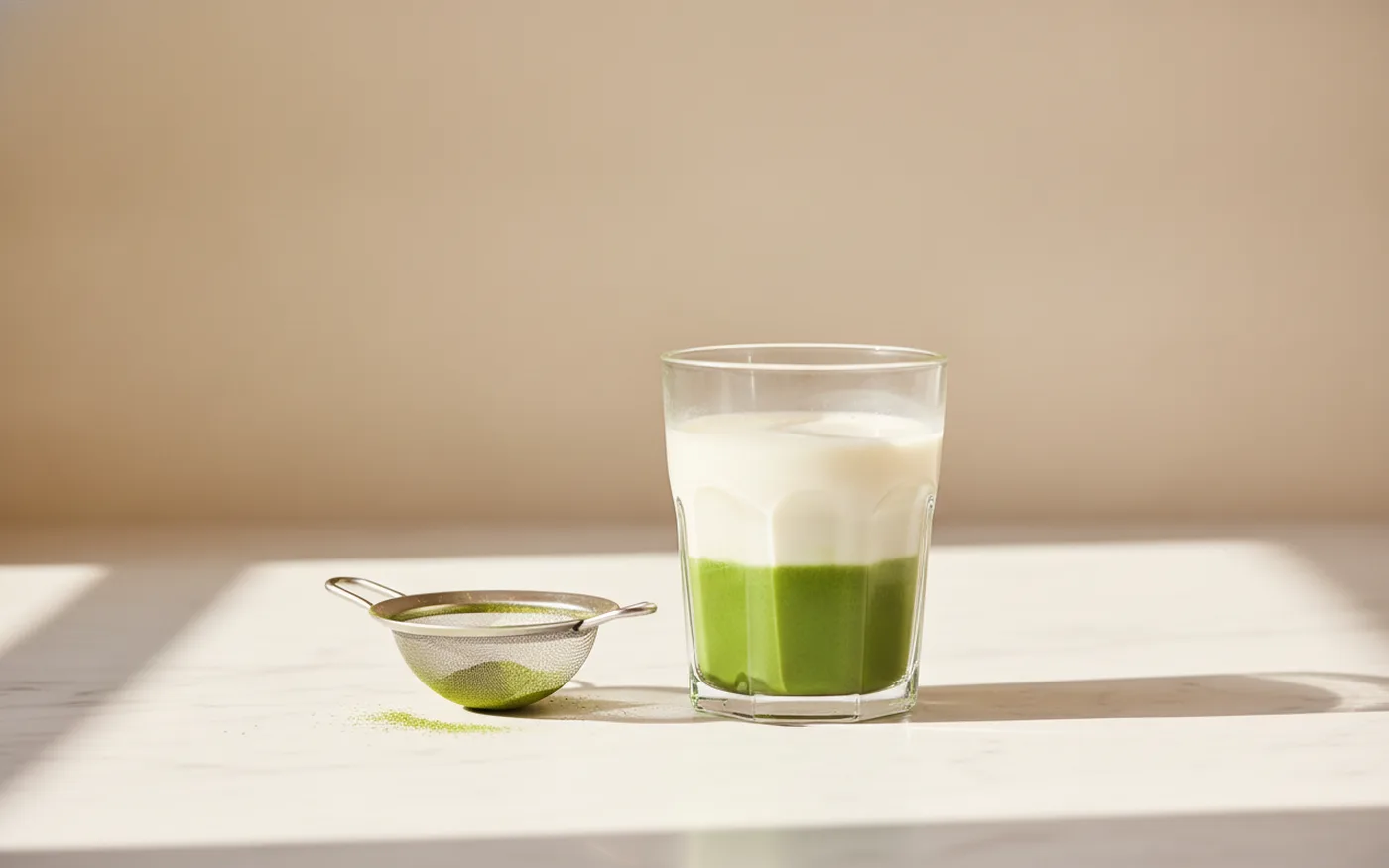
Sieve test: Each powder was sifted through a fine-mesh matcha sieve to assess particle fineness and clumping tendency. Clumping indicates either a lower grind quality or exposure to moisture.
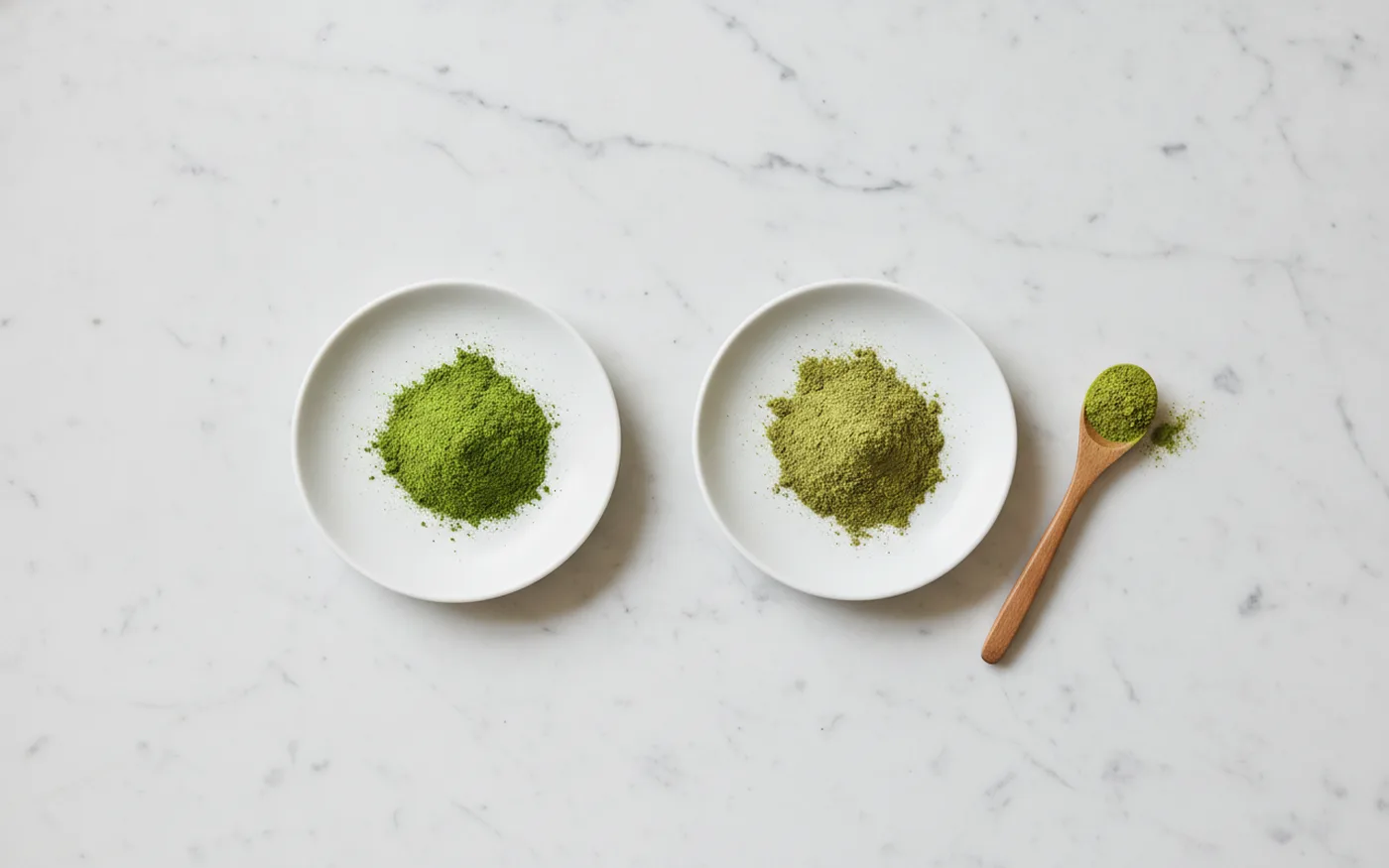
Colour assessment: Viewed side by side in natural daylight on a white plate. Ceremonial-grade matcha should be a bright, jade-green colour. Duller or yellower tones indicate older tea, lower-quality leaves, or less rigorous shading during cultivation.
Froth test: 1g of matcha whisked in cold water for 30 seconds to assess how readily it emulsifies. Finer particles produce a more stable, persistent foam.
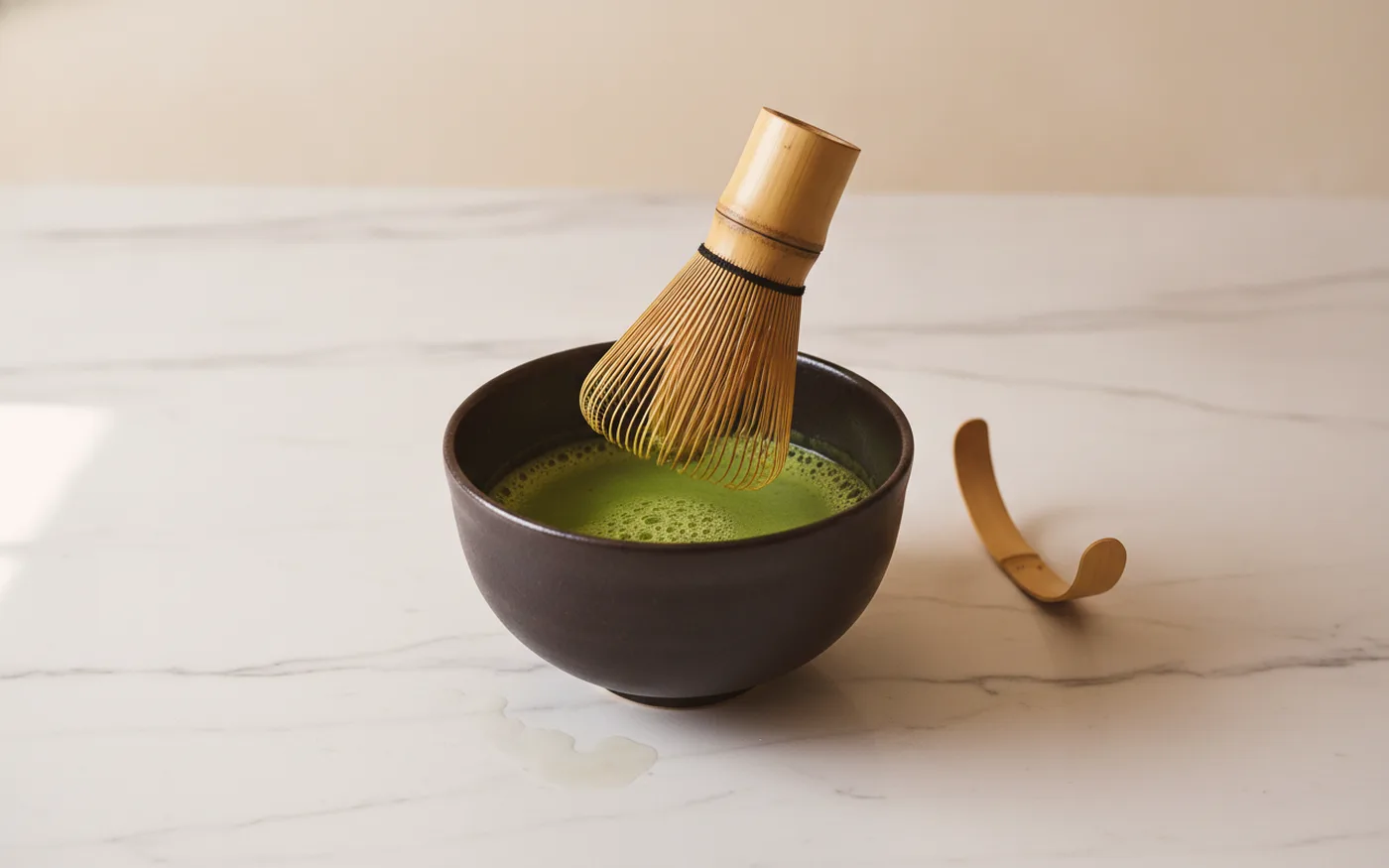
Prepared matcha: Traditional preparation, 1.5g matcha to 80ml water at 75-80 degrees C, 30 seconds whisking in a W pattern. Scored against the Ippodo control on: umami, bitterness, colour in the cup, and finish.
Blind element: The prepared bowls were assessed without labels, then cross-checked against which product was which.
Taste, Colour, and Froth Test
Colour
Held side by side in natural light, the difference between the Jade Leaf ceremonial and the Ippodo control is visible. Jade Leaf ceremonial reads as a medium green - bright and appealing, noticeably better than own-brand supermarket powder. The Ippodo reads darker, more saturated, with a depth of colour that signals the intensity of the catechin and chlorophyll content beneath.
The Jade Leaf culinary is notably duller - a khaki-olive tone rather than vivid green. This is expected for culinary grade and does not indicate a defect; it is priced and positioned for blended drinks precisely because the colour matters less when you are adding oat milk.
Froth
In the cold-water froth test, Jade Leaf ceremonial produced a reasonable foam that lasted around 20 seconds before breaking down. The Ippodo produced a denser, tighter foam that held for over 45 seconds - a meaningful difference in particle fineness. Jade Leaf culinary dispersed adequately but without significant foam, which is consistent with its intended use in lattes where the milk creates the body.
Taste
Honestly, the prepared Jade Leaf ceremonial bowl was more pleasant than I expected at this price. Smooth, delicate, and grassy without being aggressively bitter. Umami was present but mild - more a whisper than the sustained savouriness you get from premium single-farm Uji matcha. The Ippodo control was noticeably richer and more complex: umami sustained across the whole sip, a depth that the Jade Leaf does not match.
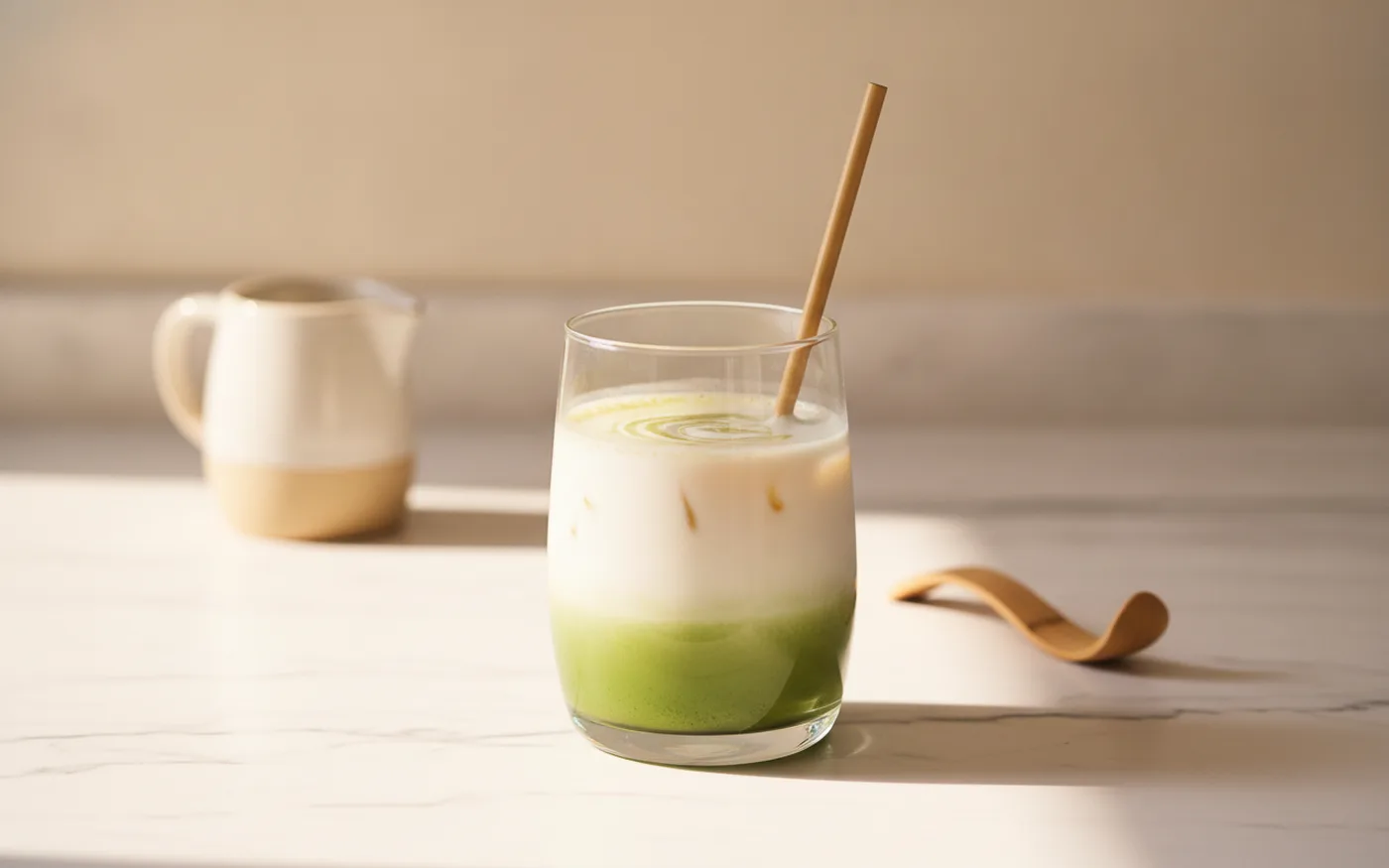
Prepared as a tea bowl rather than a latte, the culinary grade was noticeably more bitter and less smooth. Used in a latte with oat milk, it performed well - the bitterness balanced by the sweetness of the milk, and the green tea character still readable through the blend.
What Does Ceremonial Grade Actually Mean on a £15 Tin?
No third-party body certifies matcha as ceremonial in the way, say, the Soil Association certifies organic produce. There is no regulated standard - it is a marketing category applied by producers and retailers to indicate matcha intended for pure bowl preparation rather than cooking or blending.
That context matters when evaluating Jade Leaf. Within the broad tent of ceremonial grade, there is an enormous range. At one end, you have single-farm, first-harvest Uji matcha from artisan tea houses. At the other, you have accessible, high-volume ceremonial grades produced in Kagoshima at scale - good enough to drink as a bowl, not representative of what Japan best tea can deliver.
Jade Leaf sits closer to the accessible end of that spectrum. The colour, froth retention, and umami depth in my testing fell short of what a specialist Japanese tea house would consider ceremonial quality. That is not a scandal - the price reflects the position. But it is worth naming plainly: if you have previously bought your matcha from Ippodo, Marukyu-Koyamaen, or a specialist importer, Jade Leaf ceremonial will read as a step down. If your frame of reference is supermarket matcha or tea bags, it will be a meaningful step up.
USDA Organic is independently audited through the National Organic Program - so the certification is verified, but it speaks to farming practice, not grade.
Lattes and Smoothies: Where Budget Matcha Makes Sense
Most people in the UK drink matcha in a latte, not in a traditional bowl - and that changes the calculus entirely for a budget-range culinary grade. A typical matcha latte - oat milk, honey or maple syrup, whisked over ice or steamed into warmth - is a genuinely good vehicle for culinary grade, because the supporting ingredients balance the bitterness and the green tea character is still fully present.
If you are preparing best mushroom coffee uk-adjacent functional drinks at home, or adding matcha to smoothies alongside other ingredients, the culinary grade gives you a high-volume tin at a sensible price and it performs consistently. The bitterness that reads as a flaw in a pure bowl disappears in a latte.
Where Jade Leaf culinary is less suited: matcha baked goods at the colour-forward end (macarons, sponge cakes), where the dull tone will produce a greyer, less visually striking result than a brighter culinary-grade powder from a specialist Japanese supplier.
For daily latte drinkers and home cooks, the culinary grade is the more practical buy. For anyone wanting a proper bowl-preparation ritual, the ceremonial grade is the one to choose - with the expectation that it is a budget ceremonial, not a premium one.
Price Per Serving: The Budget Maths
This is where the Jade Leaf case gets genuinely interesting. Price per serving is the real metric for a daily matcha habit, and the numbers favour Jade Leaf against premium alternatives.
| Brand | Grade | Pack Size | Price (UK, June 2026) | Servings (at 2g) | Price Per Serving |
|---|---|---|---|---|---|
| Jade Leaf | Ceremonial | 28g | around £14.99 | 14 | around £1.07 |
| Jade Leaf | Culinary | 100g | around £15.99 | 50 | around £0.32 |
| Ritual + Flow | Ceremonial | 30g | around £22.00 | 15 | around £1.47 |
| Bird and Blend | Ceremonial | 50g | around £16.50 | 25 | around £0.66 |
| Ippodo | Ceremonial | 40g | around £28.00 | 20 | around £1.40 |
Prices sourced from Amazon UK and brand websites as of June 2026. All prices are approximate and subject to change.
A few observations from this table:
Bird and Blend undercuts Jade Leaf ceremonial per serving - and from a UK brand with a strong high-street presence, which explains why it competes strongly in the UK market.
The Jade Leaf culinary grade at around £0.32 per serving is where the cost advantage becomes significant for latte drinkers. If you are making one matcha latte per day, that works out to under £10 per month. At Ritual + Flow ceremonial prices, the same habit costs over £40 per month.
The ceiling on that cost saving: you are not getting ceremonial quality in the culinary grade, and the colour and taste experience reflects that.
For UK buyers, there is a consideration the US-centric reviews miss: import pricing. Jade Leaf 28g ceremonial tin at around £1.07 per serving is not dramatically cheaper than Bird and Blend at around £0.66 per serving once you factor in that Bird and Blend is a UK-native brand with no import overhead. For bulk culinary use the maths are more clearly in Jade Leaf favour.
Who Jade Leaf Is Best For
Two types of buyer leave this review genuinely well served, and one does not. If you have read about the best greens powders and functional nutrition broadly and want to add matcha to your morning routine without a steep financial commitment, the culinary grade gives you a month of daily lattes for under £10.
First-time matcha buyers who are not sure how often they will use it will find the culinary grade low-risk. Home latte drinkers who add matcha to oat milk, almond milk, or smoothies get strong value. Anyone who wants to bake with matcha without paying ceremonial prices for something going into a cake will find the culinary tin does the job.
It is less suited to matcha enthusiasts who want to experience what Japanese ceremonial matcha genuinely tastes like at its best; buyers looking for a visually vivid powder for colour-forward baking; anyone who has already developed a taste for premium Uji single-origin and will find the flavour disappointing in comparison.
Where to Buy Jade Leaf in the UK
Both the ceremonial and culinary grades ship on Amazon UK Prime within two to three days. This is how most UK buyers will access Jade Leaf.
Direct from jadeleafmatcha.com gives access to a wider range including the Premium Ceremonial grade and bundles, but factor in international shipping times and any customs considerations. If you want to support the brand directly or access products not available on Amazon UK, the direct site is the route.
Final Verdict and Score
Jade Leaf is an honest brand making accessible matcha at a price that puts a daily habit within reach for most buyers. The ceremonial grade is genuinely drinkable in a bowl - smooth, fragrant, and much better than anything you would buy from a UK supermarket. The culinary grade is the smarter buy for latte drinkers, giving you 50 servings at a fraction of the cost of premium alternatives.
The friction moments are real. The ceremonial grade is not what a specialist Japanese tea house would call ceremonial - the colour is less saturated, the umami shallower, and the froth less persistent than premium Uji matcha. And UK pricing means the cost advantage over domestic rivals like Bird and Blend is smaller than US-focused reviews suggest.
If you want to explore what the best matcha brands have to offer in depth, the best matcha brands UK guide covers the full range from entry to premium, with side-by-side comparisons at every price point.
For a budget ceremonial grade and an excellent culinary grade: Jade Leaf earns its bestseller status. Start with the culinary tin if lattes are your main use. Move up to the ceremonial if you want a bowl. And if you want to experience what premium Japanese matcha genuinely tastes like as a next step, Ritual + Flow or Ippodo are the natural upgrades.
Final score: 7.2/10
Comparison: Jade Leaf vs the Alternatives
| Jade Leaf Ceremonial | Jade Leaf Culinary | Ritual + Flow | Bird and Blend | Ippodo | |
|---|---|---|---|---|---|
| Origin | Japan (Uji/Kagoshima) | Japan (Kagoshima) | Japan | Japan/UK blend | Japan (Kyoto, Uji) |
| Colour intensity | Medium | Low-medium | High | Medium-high | Very high |
| Umami depth | Mild | Low | Medium-high | Medium | High |
| Best use | Bowls/lattes | Lattes, cooking | Bowls, lattes | Bowls, lattes | Bowls (pure) |
| Price per serving | around £1.07 | around £0.32 | around £1.47 | around £0.66 | around £1.40 |
| Organic | USDA Organic | USDA Organic | Organic | Organic | Conventional |
| UK availability | Amazon UK | Amazon UK | Direct, Amazon | High street | ippodo-tea.co.jp/en, specialist retailers |
Frequently Asked Questions
Is Jade Leaf pure matcha?
Yes. Jade Leaf matcha is 100% stone-ground Japanese green tea - no fillers, flavourings, or additives in the ceremonial or culinary grades. The ingredient list on both reads organic Japanese green tea powder. Both carry USDA Organic certification, independently audited. The matcha latte blends sold separately on their site contain additional ingredients and are not covered in this review.
Is Jade Leaf matcha any good?
It is good for the price. In hands-on testing against a premium Ippodo control, the ceremonial grade performed well on smoothness but fell short on umami depth, colour saturation, and froth persistence. For an everyday latte it delivers above expectations. For a traditional tea bowl, it is a solid entry-level result rather than a premium one. The culinary grade is strong in its price bracket for latte drinkers.
Is Jade Leaf a high-quality matcha?
Compared to UK supermarket powder, yes - a clear step up. Against premium Uji ceremonial matcha from houses like Ippodo, it falls short on colour intensity, umami development, and particle fineness. The ceremonial label is not a regulated certification; it is a producer category. Jade Leaf occupies the accessible end of that spectrum - better than average, not best in class.
Is Jade Leaf Matcha Latte good for you?
Reviewed by Clemmie Rose, registered Nutritional Therapist and BANT member. Pure Jade Leaf matcha contains L-theanine and catechins, including EGCG, which research links to calm focus and antioxidant activity. A 2g serving delivers around 35-70mg caffeine, well within the 400mg daily safe intake recognised by the European Food Safety Authority. Home-prepared lattes with unsweetened plant milk are a nutritious choice. Sweetened pre-mixed formats are a different calculation.
Does Jade Leaf matcha have heavy metals?
Jade Leaf states its products are third-party tested for heavy metals and pesticides, with results on their website. This claim has not been independently verified for this review. Matcha from Japan is subject to UK and EU maximum residue level regulations at import. If contamination testing is a priority, request a batch-specific Certificate of Analysis from Jade Leaf customer service directly - that is the gold standard.
What are the highest quality matcha brands?
For UK buyers seeking premium ceremonial matcha, Ippodo (Kyoto, since 1717) and Marukyu-Koyamaen are the benchmarks. Among more accessible options, Ritual + Flow offers strong ceremonial quality at mid-range pricing, and Bird and Blend provides solid high-street provenance. Jade Leaf sits below these on quality but above generic supermarket powder - a practical everyday choice rather than a premium one.
Is it okay to drink matcha latte daily?
Reviewed by Clemmie Rose, registered Nutritional Therapist and BANT member. Yes, for most healthy adults. A 2g Jade Leaf serving contains roughly 35-70mg caffeine, well within NHS and EFSA 400mg daily safe limit. The L-theanine in matcha supports a steady energy response without the spike-and-crash pattern common with coffee. Avoid matcha within three to four hours of bedtime if you are caffeine-sensitive. Pregnant women should check current caffeine guidance with their GP.
Why Is Jade Leaf Matcha So Cheap?
Jade Leaf sources at scale from Kagoshima, a large-volume growing region, rather than small-plot Uji farms associated with premium grades. Amazon marketplace model eliminates physical retail costs, allowing aggressive pricing. US brands buying at volume also achieve cost efficiencies unavailable to specialist UK importers. The result is real matcha, grown in Japan, at a price that reflects scale and distribution efficiency rather than quality compromise.

A seasoned food and lifestyle writer with over a decade in London's hospitality scene, Snita explores the culture of dining, drink, and connection.