How to Clean a Coffee Machine: The Complete UK Guide (Espresso, Bean to Cup, Pod, Filter)

Coffee & Wellness Writer
Most machines die from neglect, not age. Fifteen years in commercial espresso, reduced to five minutes a week.
Table of Contents
Some of the links in this article are affiliate links, which help fund our independent review work at no extra cost to you. Every recommendation is based on hands-on testing through The Editor Lab methodology. No brand pays to appear, and no placement is guaranteed.
If your coffee machine is producing bitter shots or slower-than-usual flow, the problem is almost certainly not your coffee. Coffee machines accumulate residue - oils from ground coffee, limescale from hard water, milk protein from the steam wand - and when that residue builds up, it affects flavour, flow, and eventually the machine itself.
Knowing how to clean a coffee machine properly is the single most useful skill for anyone who owns one. This guide covers every machine type in the UK market - espresso, bean to cup, pod, and filter - with step-by-step routines I have used on commercial and home machines throughout 15 years in the coffee industry, including five and a half years at Sanremo UK, one of the world's leading espresso machine manufacturers, and two years calibrating commercial bean-to-cup machines across hundreds of UK sites at UCC Coffee.
Why Cleaning Your Coffee Machine Actually Matters
Most people under-clean their coffee machines because the consequences are gradual. The machine still works. The coffee still tastes roughly like coffee. But underneath, three things are happening.
Rancid coffee oils alter flavour. Coffee contains natural oils that extract during brewing. Left on group heads, basket screens, and portafilters, these oils oxidise within 24 to 48 hours and become rancid. That rancidity transfers directly into your next shot - and that is where the 'stale, bitter' flavour most people blame on bad coffee actually comes from.
Limescale is the slow killer that most machine owners never see coming. The Drinking Water Inspectorate maps the UK as predominantly hard to very hard water. Hard water leaves calcium and magnesium deposits (limescale) on every surface it touches, including your machine's boiler, group head, and internal pipework. Limescale is thermally insulating: as it builds on boiler elements, the element works harder and runs hotter to achieve the same brew temperature, accelerating wear. Left long enough, limescale causes boiler failure - repair costs typically run £150 to £350 on a domestic machine.
Bacteria and mould colonise waste components. Research published in Nature Scientific Reports identified between 35 and 67 bacterial genera in capsule coffee machines, with the highest concentrations found in the drip tray and used-capsule waste reservoir - components that accumulate warm moisture and organic residue between uses. Milk protein at room temperature is one of the fastest-growing environments for bacteria. A weekly clean of the steam wand, milk circuit, and drip tray is the only effective countermeasure. The Speciality Coffee Association recommends cleaning standards for all espresso equipment in commercial and home environments.
How Often Should You Clean a Coffee Machine?
Cleaning frequency depends on two variables: machine type and your local water hardness. Use this table as a baseline, then adjust for harder water regions (South East England, East Anglia, Thames Valley) where descaling frequency roughly doubles.
| Task | Espresso Machine | Bean to Cup | Pod Machine | Filter / Cafetiere |
|---|---|---|---|---|
| Rinse group head or chamber | Daily | Daily (auto-rinse) | After each use | After each use |
| Backflush with water | After each session | N/A | N/A | N/A |
| Steam wand purge and wipe | After every use | After every use | N/A | N/A |
| Deep clean (tablet or backflush agent) | Weekly | Weekly | Monthly | Weekly |
| Milk system clean | Weekly | Weekly (or manufacturer cycle) | Monthly | N/A |
| Descale | Every 2-3 months (soft water) / monthly (hard water) | Every 2-3 months / monthly (hard water) | Every 2-3 months | Every 2-3 months |
| Bean hopper degrease | N/A | Monthly | N/A | N/A |
| Full disassembly clean | Quarterly | Quarterly | Quarterly | Monthly |
Water hardness adjustment: If your area reads above 200mg/l (as CaCO3) on your water supplier's data, descale at the top frequency in the range above. The DWI provides water hardness data by postcode on their public database.
What You Need Before You Start
You do not need specialist equipment for the basics. This is the full toolkit for covering all machine types.
For espresso machines:
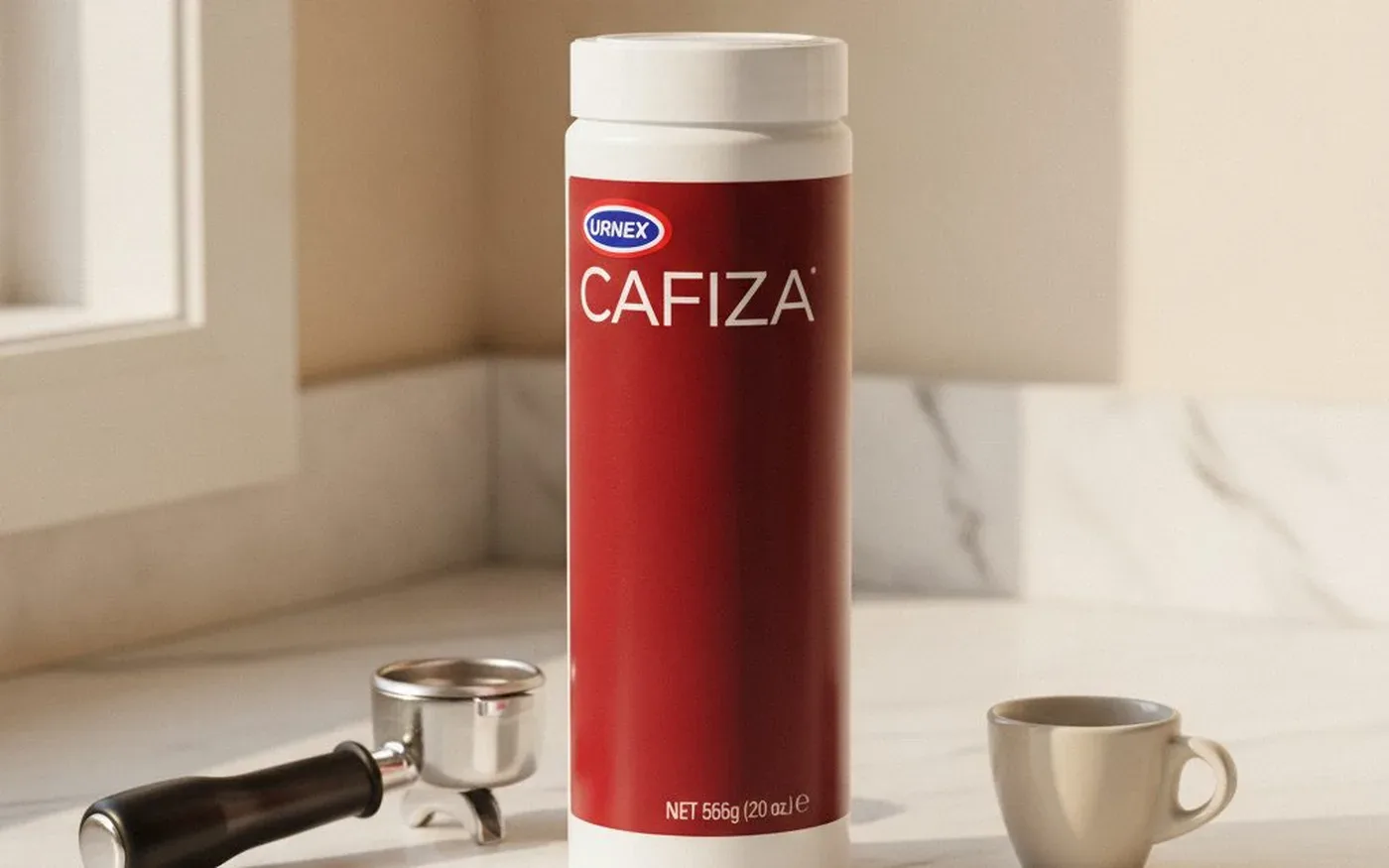
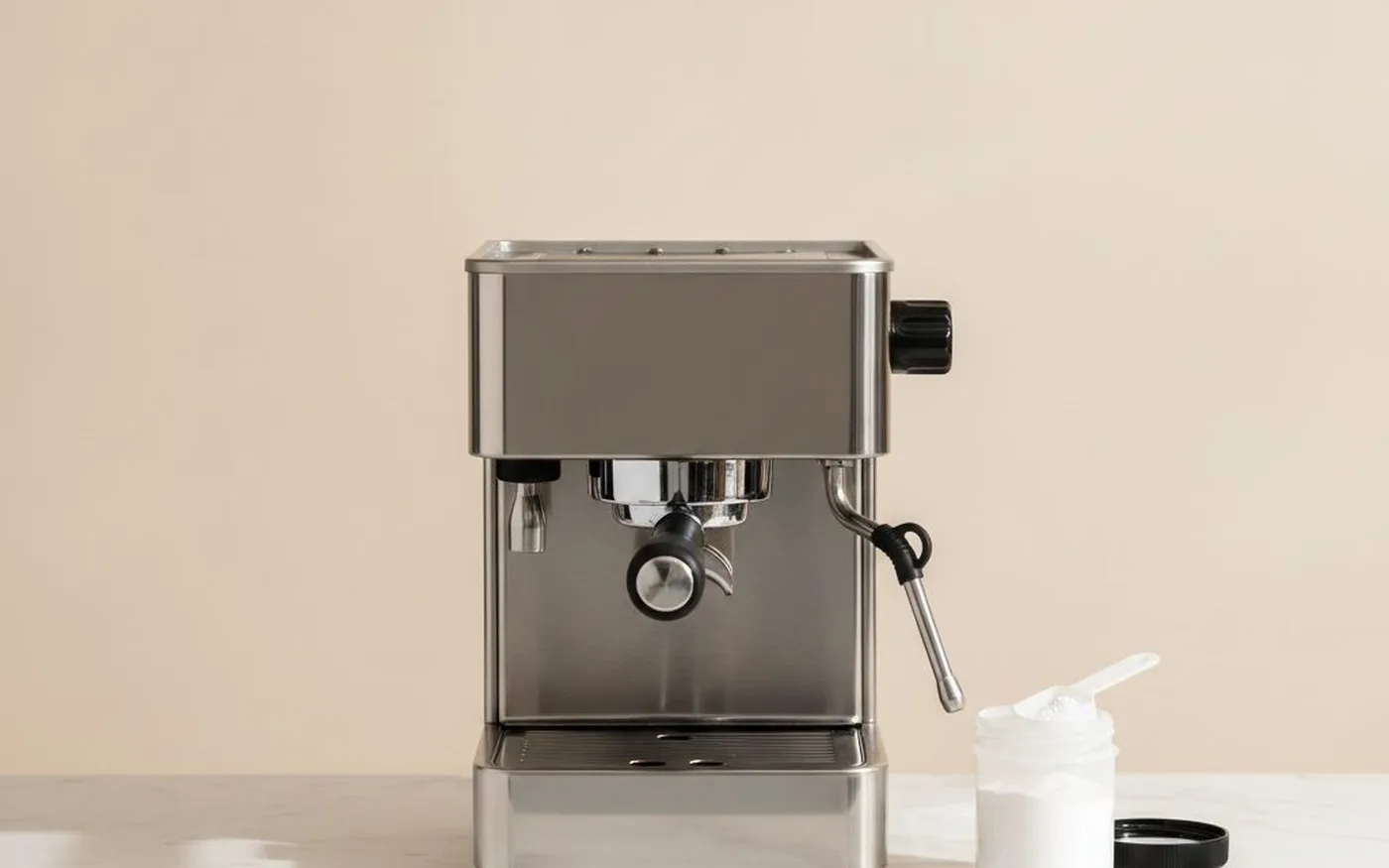
- Urnex Cafiza - sodium percarbonate-based. What specialty cafes use. Around £10-12 for 566g.
- Blind basket (blanking disc) - required for backflushing. Most Sage and Gaggia machines ship with one.
- Group head brush - stiff-bristle, designed for the shower screen and group head gasket. Around £6-8.
- Microfibre cloths (at least two).
For descaling (all machine types):
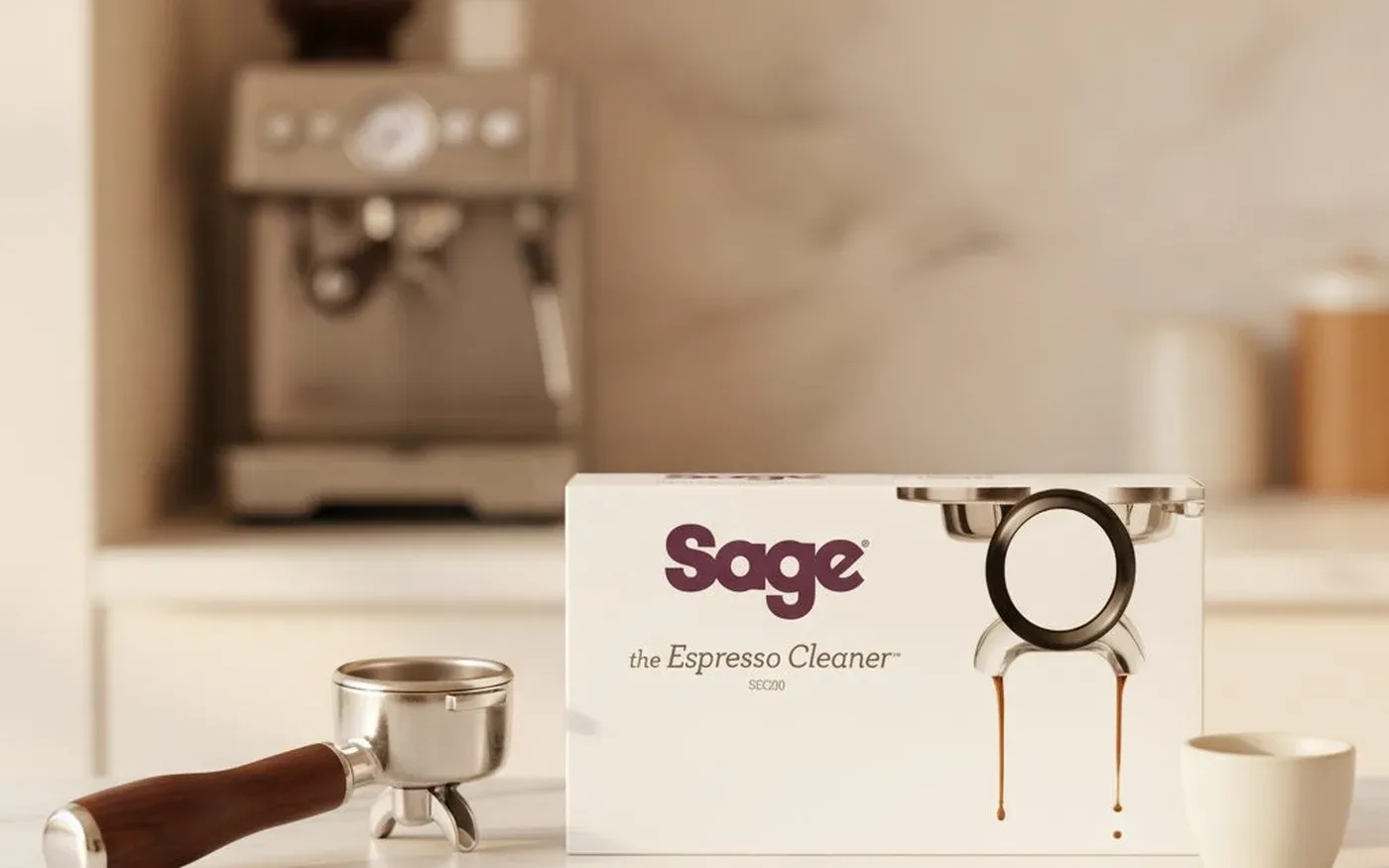
- De'Longhi EcoDecalk - manufacturer-approved for all De'Longhi machines. Around £8-10 for 500ml.
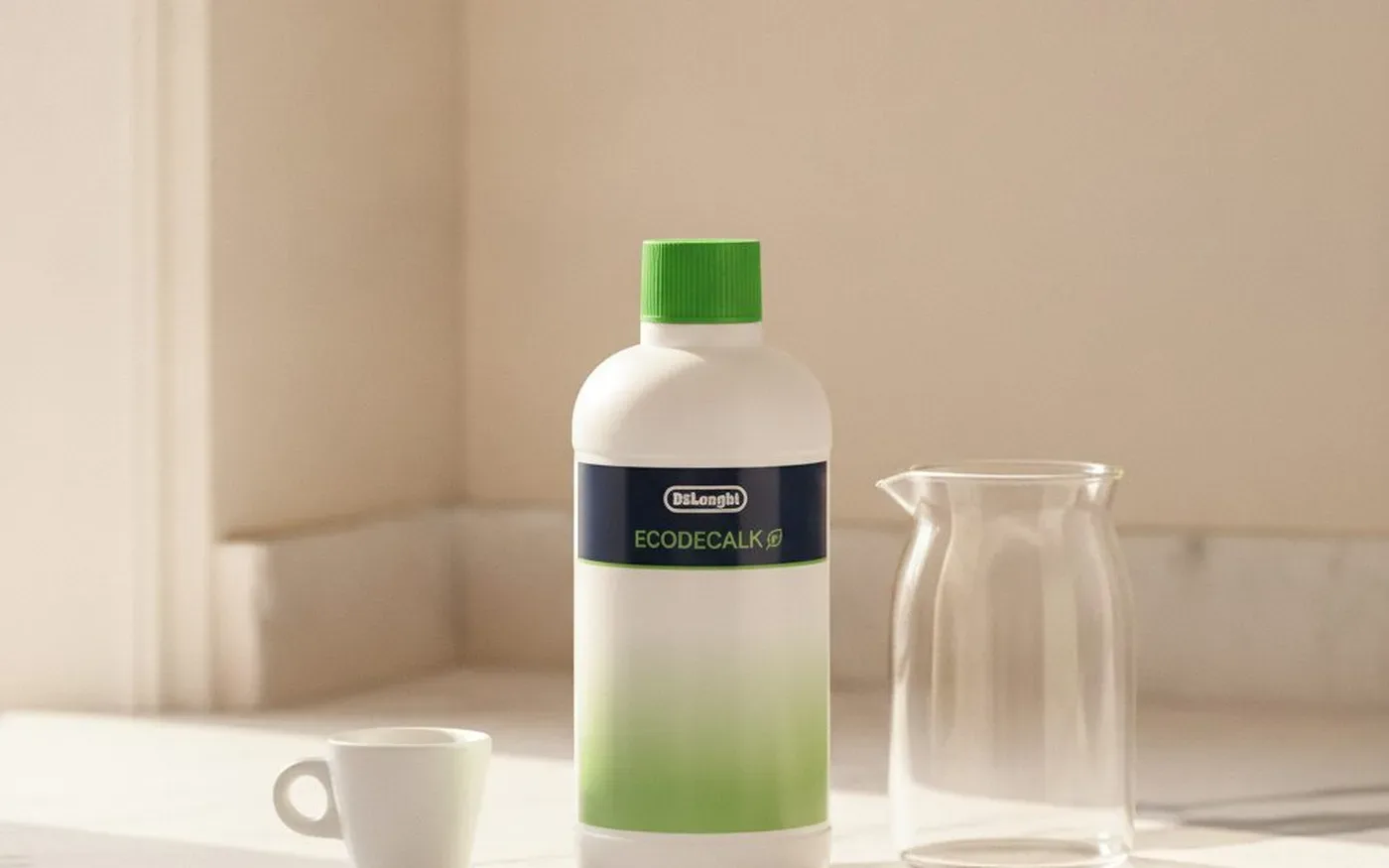
- Sage Appliances cleaning tablets - designed for Sage machines. Around £9-11 for eight tablets.
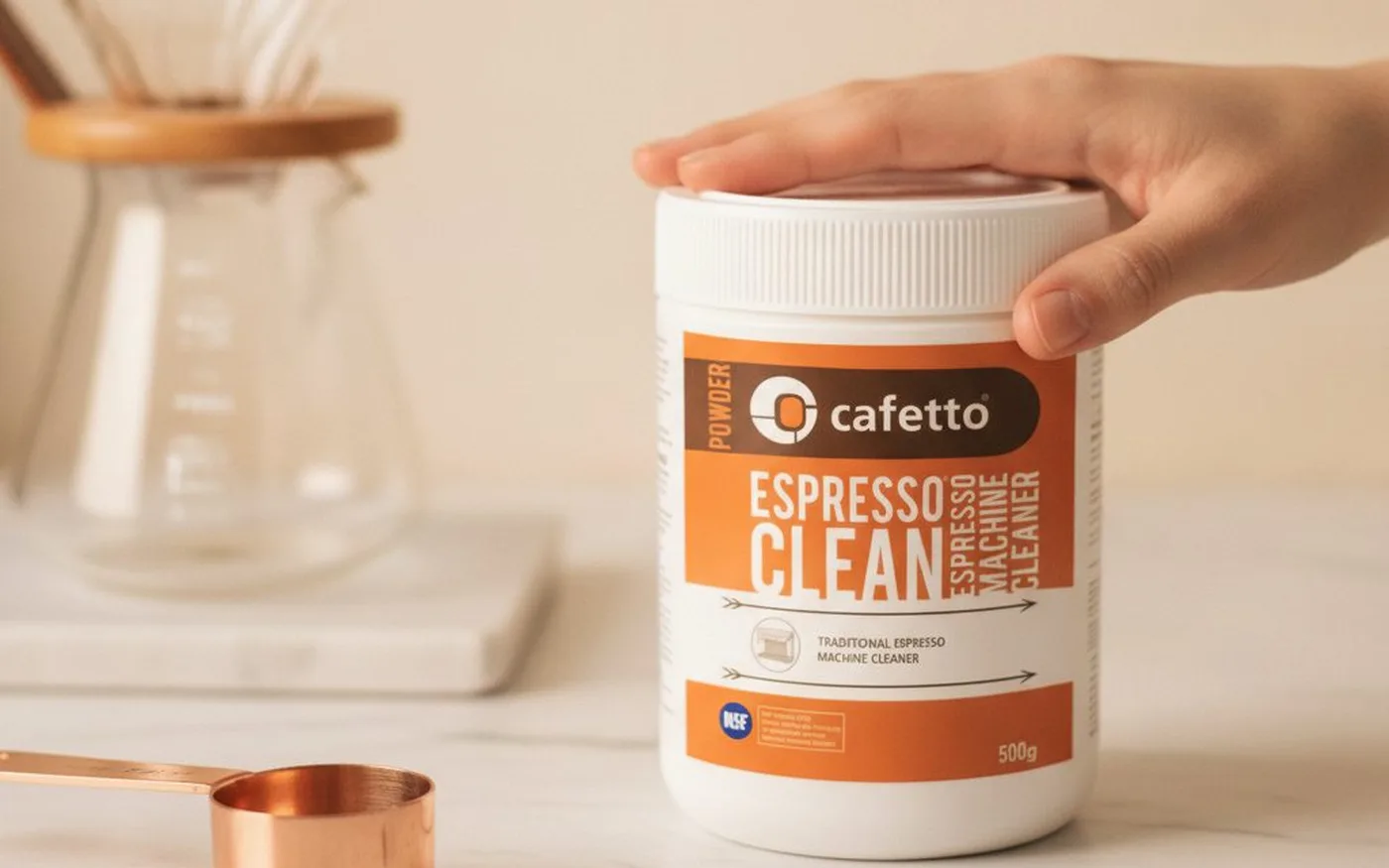
- Cafetto Espresso Clean - eco-certified alternative. Around £10-12.
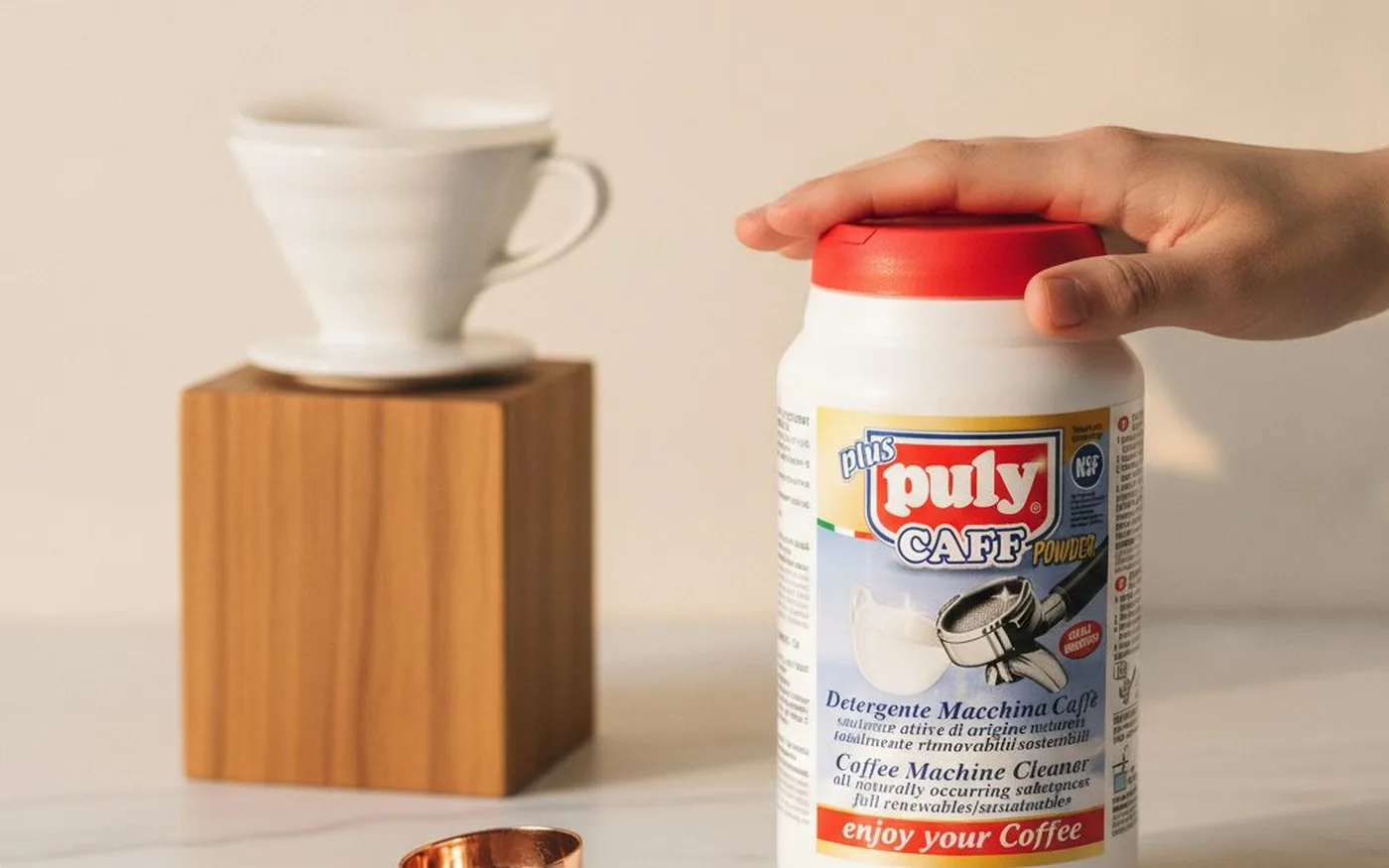
- Puly Caff Plus - the Italian cafe-industry standard. Around £9-11.
- Food-grade citric acid - the DIY route. Around £2-4 for 100g. Use 10-15g per litre of water.
What to avoid: Never use bleach, Milton sterilising fluid, or dish soap inside a machine's water circuit. Never use scouring pads or abrasive cloths on any machine surface. Never use undiluted cleaning agents directly on components - always follow the manufacturer's dilution ratios.
How to Clean an Espresso Machine (Step by Step)
This section covers Sage Barista Express Impress, Gaggia Classic Evo Pro, and De'Longhi Dedica - the three most common home espresso machines in the UK market.
Backflushing is the process of forcing water and cleaning agent backwards through the group head to clear residue from the solenoid valve, group head seal, and internal pipework. Espresso machines with a three-way solenoid valve can be backflushed. Machines without a solenoid valve (including some older manual lever machines) cannot - check your manual.
Backflushing is distinct from descaling. Backflush removes coffee oils and solids. Descaling removes mineral limescale. Both routines are required; one does not substitute for the other.
Daily Routine (2 Minutes)
- After the final shot, run a blank shot (water only, portafilter seated with the blind basket or an empty basket) to flush loose grounds and oils from the group head.
- Remove the drip tray, empty, and rinse under the tap.
- Wipe the group head gasket with a damp microfibre cloth.
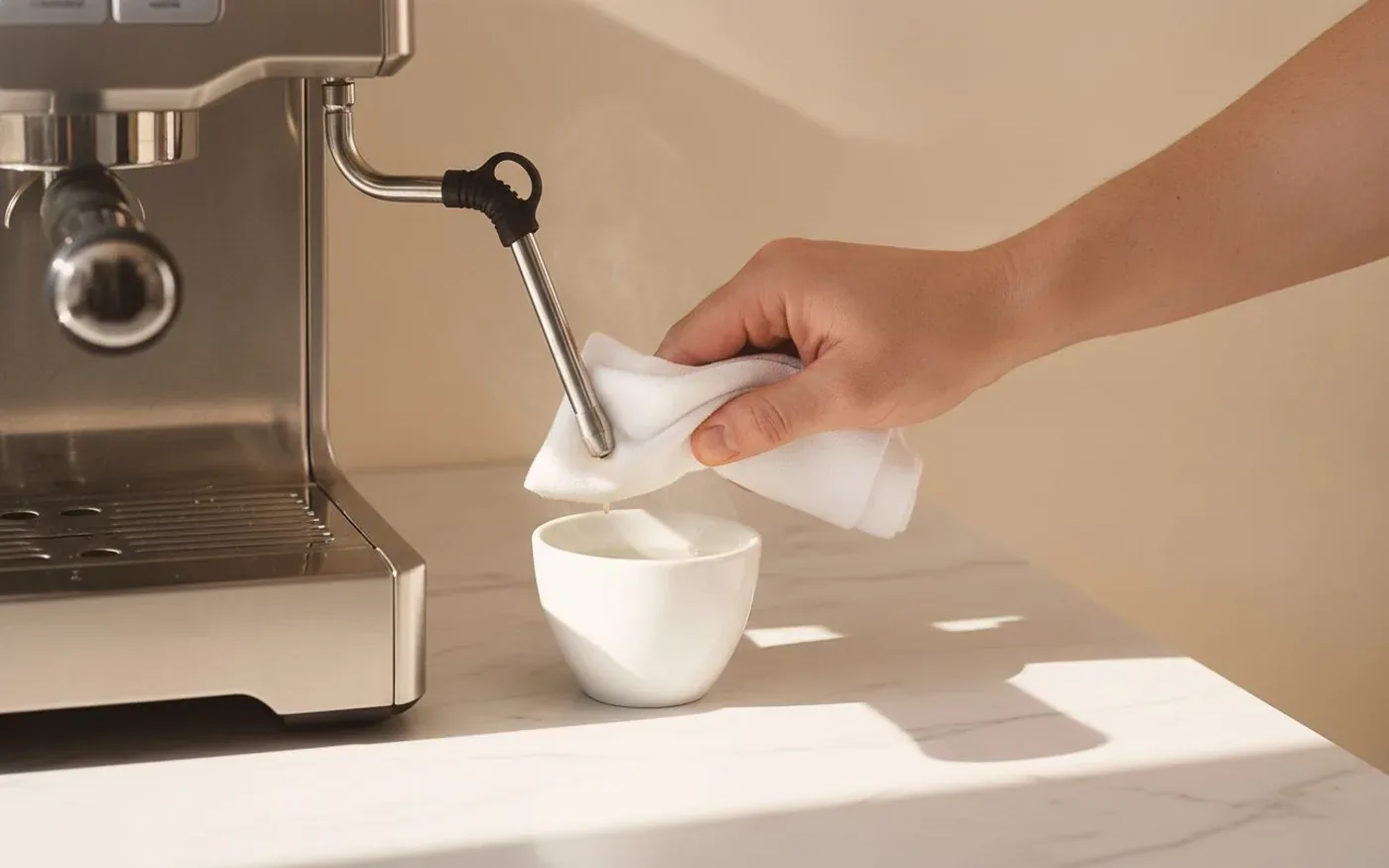
- Steam wand: purge steam briefly (open the steam valve for three to five seconds with the tip submerged in a small cup of water), then wipe the wand with a damp cloth immediately. Never let milk residue dry on the wand.
Weekly Deep Clean (10-15 Minutes)
- Backflush with cleaning agent. Place the blind basket in the portafilter. Add one Cafiza tablet or 1.5-2g of Cafiza powder (or equivalent) to the blind basket. Lock the portafilter into the group head. Run a 10-second pump cycle, pause for five seconds, repeat six to eight times. The water will run dark - that is the oxidised oil residue clearing.
- Final rinse backflush. Repeat the same backflush cycle with the blind basket but no cleaning agent, running clean water through until the flow runs clear and odourless. Residual Cafiza in the group head will contaminate your next shot - this step is not optional.
- Shower screen scrub. Remove the shower screen (one centre screw on most machines). Soak for five to 10 minutes in hot water with a small amount of Cafiza. Scrub with the group head brush. Reattach.
- Steam wand disassembly. Unscrew the steam wand tip. Soak the tip for 10 minutes in hot water. Clear the holes with a pin or small brush. Wipe the wand body.
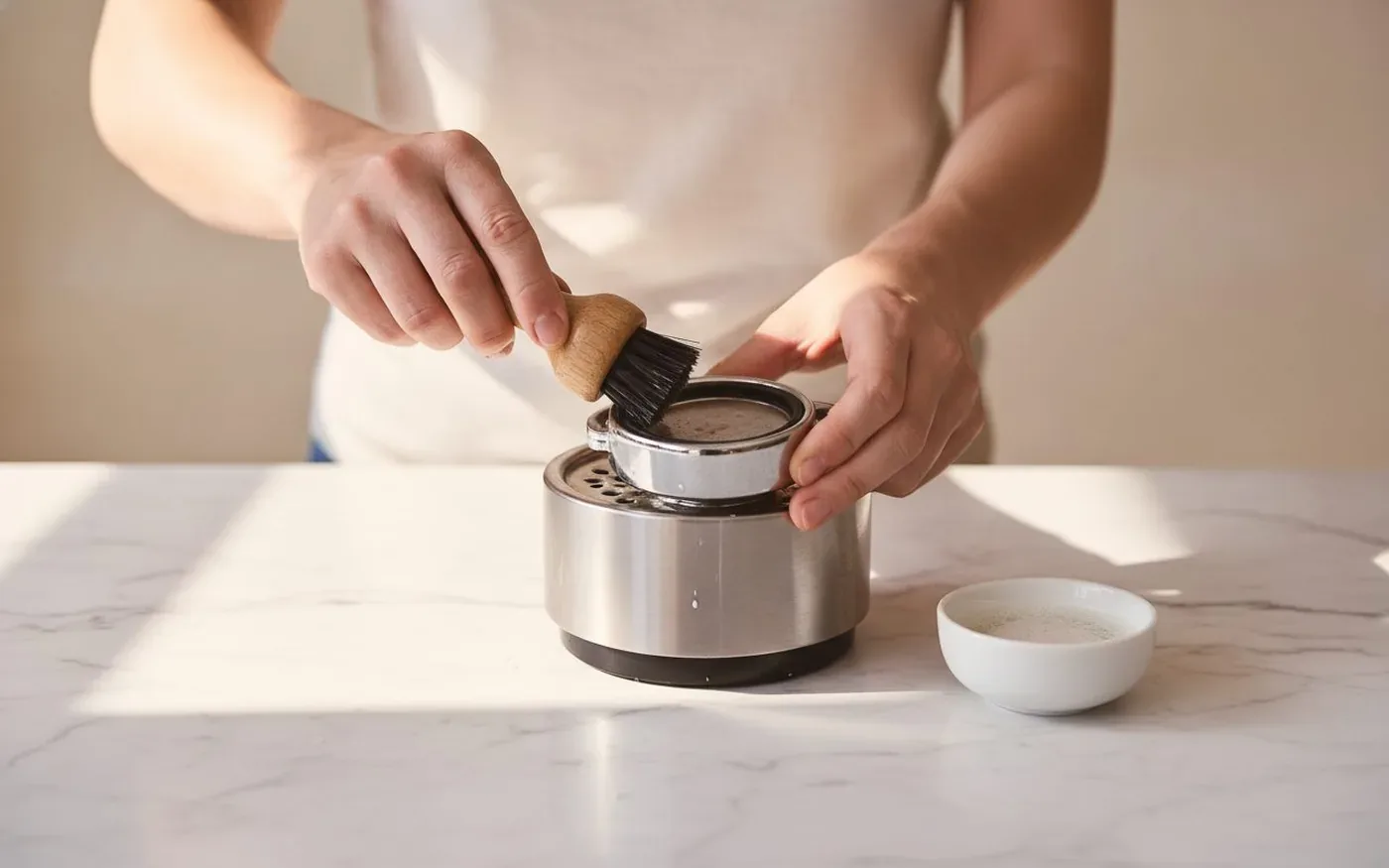
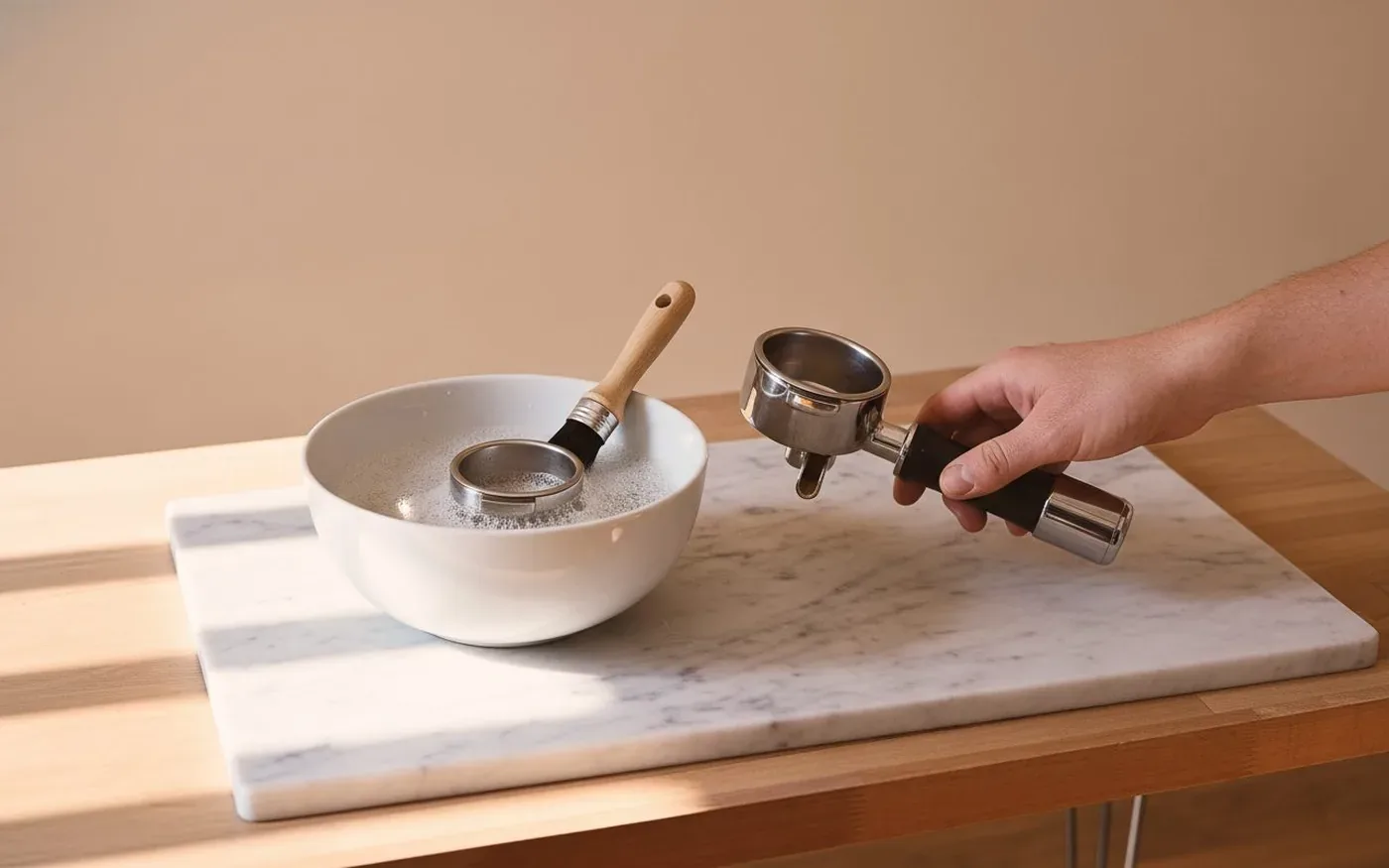
- Portafilter and basket soak. Place in a bowl of hot water with a quarter-teaspoon of Cafiza for 10-15 minutes. Scrub, rinse thoroughly.
- Drip tray and grates. Remove, wash in hot soapy water, rinse, dry.
For Sage Barista Express machines specifically: the cleaning cycle can be initiated via the machine's cleaning cycle button (consult your model's manual). Sage's official cleaning tablets are designed to integrate with this automated cycle. Manual backflushing as described above also works and is more thorough on the group head.
How to Clean a Bean to Cup Coffee Machine
Bean to cup machines automate most of the brewing process but accumulate residue in more places than espresso machines: the brew unit (removable piston mechanism), the milk circuit, the bean hopper, and the internal grind path.
De'Longhi Magnifica Evo and Jura ENA are used as reference models here - both are among the most popular bean to cup machines in the UK home market.
Daily Routine
- Empty the drip tray and grounds drawer when indicated.
- Run the machine's auto-rinse cycle if prompted at start-up or shut-down.
- Wipe the milk system nozzle or carafe connector after every use.
Weekly Deep Clean
- Brew unit removal and rinse. The brew unit is the removable mechanism that compresses and extracts each coffee puck. On De'Longhi Magnifica machines, it slides out from the left side panel (power off, door open, press the release button). Rinse the brew unit under warm running water. Never use soap or dishwasher. Dry before replacing. On Jura machines, the brew unit is internal - follow the specific service menu steps in your manual.
- Cleaning tablet cycle. Insert a cleaning tablet (Cafetto Espresso Clean, Puly Caff Plus, or manufacturer-brand tablet) as directed by your machine's cleaning menu. On De'Longhi machines, place the tablet in the pre-ground coffee chute. The automated cycle runs the tablet through the brew circuit, typically taking 20-30 minutes.
- Milk system clean. If your machine uses an automatic milk carafe (Magnifica Evo ASAM system, Jura fine foam frother), run the machine's dedicated milk-clean programme. This flushes the milk circuit with hot steam and water. For machines with a manual steam wand, follow the espresso machine steam wand protocol above.
- Bean hopper degrease (monthly). Coffee oils accumulate on the interior walls of the bean hopper and transfer to fresh beans. Monthly: empty the hopper completely, wipe with a dry microfibre cloth (no water), then wipe with a food-safe cloth very lightly dampened with diluted white vinegar, followed immediately by a dry wipe. Do not let liquid reach the burrs.
How to Clean a Pod Coffee Machine (Nespresso, Dolce Gusto, Tassimo)
Pod machines are simpler to clean than espresso machines because there is no group head, no portafilter, and no grinding system - but they still require regular descaling and capsule chamber maintenance.
Pod machines need descaling but not backflushing. The piercing and extraction mechanism in a Nespresso or Tassimo machine self-rinses with water between pods. Backflushing as a technique does not apply to pod machines.
After Every Use
- Open the capsule compartment and remove the used capsule. Wipe the chamber with a damp cloth.
- Empty the drip tray and capsule container.
Monthly Routine
- Capsule chamber rinse. Remove the capsule holder if detachable (Nespresso Essenza, Vertuo, and Citiz models all have removable holders). Rinse under warm water.
- Water tank clean. Empty and rinse the water tank weekly. Monthly: wash with mild washing-up liquid, rinse thoroughly, refill.
- Descale cycle. Nespresso machines have a built-in descaling mode - consult your specific model's manual for the button sequence. Use the Nespresso descaling kit or a food-grade citric acid solution (15g per litre). Do not use vinegar in Nespresso machines - Nespresso's manufacturer guidance states that vinegar descalers can damage internal components and affect warranty coverage.
- Tassimo service disc. Tassimo machines use a proprietary yellow service T-Disc for cleaning cycles. Insert it in the disc holder and run the cleaning programme per the machine's instructions.
How to Clean a Filter Coffee Machine (Drip Machine / Cafetiere)
Filter coffee machines - drip machines and cafetieres - are the easiest to maintain but often the most neglected. Their failure mode is gradual: increasingly bitter coffee over months, with no dramatic warning sign.
Drip Filter Machine (Weekly)
- Carafe: After each use, rinse immediately. Weekly: fill with warm water and a drop of washing-up liquid, leave for 15 minutes, rinse three times. Never use a scouring pad inside a glass carafe.
- Showerhead / spray arm: This distributes water over the grounds. Oils and scale accumulate here. Remove it if detachable (most machines: unscrew or unclip). Rinse under warm water, clear any blocked holes with a pin.
- Descale: Monthly or when you notice slower flow or increased bitterness. Fill the reservoir with a 50/50 mix of water and citric acid solution (10g per litre), or use a dedicated descaler. Run a half-cycle, pause for 30 minutes, complete the cycle. Run two full cycles of fresh water to rinse.
For a guide to choosing a best filter coffee machine for your home, our full filter machine roundup covers every format.
Cafetiere / French Press (After Every Use)
- Disassemble the plunger completely: unscrew the spiral plate, mesh filter, and cross plate. These components trap fine grounds and oils.
- Rinse all components under hot running water. Monthly: soak in hot water with a small amount of cafetiere cleaning powder or a drop of washing-up liquid for 10 minutes.
- Never put a glass cafetiere body in a dishwasher unless explicitly marked as dishwasher-safe.
How to Descale a Coffee Machine (The Full Process)
Descaling and cleaning are not the same task. This distinction matters because it affects which product you use and how often.
- Cleaning removes coffee oils, grounds residue, and milk protein. Use backflush agents (Cafiza, Puly Caff), cleaning tablets, or mild detergent.
- Descaling removes calcium and magnesium mineral deposits (limescale). Use acid-based descalers (manufacturer descalers, food-grade citric acid).
Doing one does not substitute for the other.
Manufacturer Descaler vs Citric Acid vs Vinegar
| Product | Effectiveness | Safety | Cost | Recommendation |
|---|---|---|---|---|
| Manufacturer descaler (EcoDecalk, Sage tablets) | High - formulated for your machine | Safest - manufacturer-approved | £8-12 per use | First choice for De'Longhi and Sage owners |
| Food-grade citric acid | High - dissolves calcium effectively | Safe - natural, rinses clean | Around £0.50-1.50 per use | Best value; works across all machine types |
| Vinegar | Moderate - less effective on heavy scale | Risky - degrades rubber seals; leaves residual smell | Near zero cost | Not recommended - see section below |
Citric acid descaling recipe: 10-15g per litre of water. Mix in the water reservoir and run the descale cycle as described for each machine type above.
Step-by-Step Descale (Espresso and Bean to Cup)
- Fill the water reservoir with the descaling solution (manufacturer descaler per instructions, or 10-15g citric acid per litre).
- Place a large container (at least 1.5 litres) under the group head and steam wand or hot water spout.
- Initiate the descale cycle (machine-specific: consult your manual). If your machine does not have a dedicated descale mode, run in brew mode in cycles - 30 seconds on, 30 seconds off - to allow the solution to sit on scale before flushing.
- Once the reservoir is empty, refill with fresh water and run two full rinse cycles. Residual descaling agent affects taste and can cause corrosion on metal internal components.
- After the second rinse, brew a small shot (discard it) and check the flavour. A metallic or acidic note indicates a third rinse is needed.
When the best descaler for coffee machines guide goes live on Balance Journal, it will cover product comparisons with current UK pricing. For now, De'Longhi EcoDecalk and food-grade citric acid cover the vast majority of UK home machines effectively.
Can You Clean a Coffee Machine with Vinegar?
Technically yes. Practically, here is why every machine manufacturer tells you not to.
Vinegar (acetic acid, typically 5% concentration in household white vinegar) does dissolve limescale. But three problems arise when you use it in a coffee machine.
Rubber seal and gasket degradation. Coffee machine water circuits contain rubber O-rings, group head gaskets, pump seals, and check valve rubbers. Acetic acid at 5% does not dissolve rubber immediately, but repeated exposure over months accelerates swelling, cracking, and seal failure. The Home-Barista community has documented repeated instances of group head gasket failure following long-term vinegar use.
Residual smell and flavour transfer. Acetic acid has a boiling point of 118°C and an extremely low odour threshold - detectable at concentrations as low as 1 part per million. Even after two or three rinse cycles, trace acetic acid remains in the water circuit and migrates into brewed coffee. The result is a subtle vinegar note that undercuts even the best beans.
Warranty implications. The Molly Maid descaling comparison references manufacturer guidance that vinegar use can void machine warranties. De'Longhi's support documentation specifically recommends EcoDecalk and states that non-approved descalers may affect warranty coverage.
The honest conclusion: vinegar is a reasonable emergency option if you have no descaler and need to address visible scale immediately. It is not a long-term substitute. Food-grade citric acid at £2-4 per 100g is safer, more effective on heavy scale, and rinses without any residual odour.
How to Clean a Coffee Machine Without Vinegar
If you want to avoid vinegar entirely, three options work well in ascending order of convenience.
1. Food-grade citric acid (best value). 10-15g per litre of water, dissolved fully before use. Available from most supermarkets in the baking or home-brewing aisle, or on Amazon for around £2-4 per 100g. This is the preferred DIY descaling route - a natural compound, genuinely more effective than household vinegar on heavy scale, and rinses completely without odour. Mix fresh for each cycle; do not store citric acid solutions.
2. Commercial descaler (easiest). De'Longhi EcoDecalk, Sage Appliances cleaning tablets, Cafetto Espresso Clean, Puly Caff Plus - all work on their respective machine types and have been tested and approved by their manufacturers. These are the first-choice recommendation for anyone who prefers not to measure and mix. Current UK prices sit between £8-12.
3. Baking soda for milk lines (external only). A quarter teaspoon of bicarbonate of soda dissolved in 500ml of warm water makes an effective rinse for the external parts of a steam wand or milk circuit. Note: baking soda is alkaline, not acidic, so it does not descale - it cleans protein residue from external surfaces only. Never use it inside a machine's water circuit as a descaling agent.
What Happens If You Never Clean Your Coffee Machine?
The failure pathway is predictable, and it is slow enough that most people do not recognise it until the damage is done.
First three months (uncleaned): Coffee begins to taste increasingly bitter and flat. The rancid oil residue from the group head and portafilter has become a permanent flavour note. Even the freshest best coffee beans uk will taste stale if the equipment is dirty.
Three to six months: Flow rate through the group head slows noticeably. Scale is beginning to coat the boiler element and restrict the pump. On filter machines, the showerhead is partially blocked, producing uneven extraction.
Six to twelve months: The machine begins to underextract. Scale on the boiler element means the water never reaches the correct brew temperature of 93-96°C. Steam pressure drops. The machine requires longer warm-up times.
Beyond twelve months: Limescale on the boiler element reaches insulating thickness sufficient to cause element overheating, triggering thermal cut-offs or element failure. Repair costs on a domestic machine typically run £150-350. For machines purchased under £200, the repair bill exceeds replacement cost.
UK professional descaling service costs (if you send the machine to a repair centre) run £60-120 depending on the machine and region. That is the financial case for a £4 bag of citric acid used quarterly.
Frequently Asked Questions
How often should I clean my coffee machine?
The daily minimum is emptying the drip tray and rinsing the group head or chamber with water. Weekly deep cleans - backflush with cleaning agent for espresso machines, cleaning tablet cycle for bean to cup - prevent oil build-up. Descale every two to three months in soft water areas, monthly in hard water regions such as London, the South East, and East Anglia.
Can I use vinegar to clean my coffee machine?
Vinegar dissolves limescale but degrades rubber seals and gaskets with repeated use, and leaves a residual acetic acid smell that transfers to brewed coffee even after multiple rinse cycles. De'Longhi and Sage both recommend against it in their warranty documentation. Food-grade citric acid achieves the same descaling result at around £2-4 per 100g, rinses without odour, and is safe for all machine components.
How do I clean a coffee machine without vinegar?
Food-grade citric acid is the best DIY alternative: dissolve 10-15g per litre and run through your machine's descale cycle. Commercial descalers - De'Longhi EcoDecalk, Sage tablets, Cafetto Espresso Clean, Puly Caff Plus - are manufacturer-approved and straightforward to use. Baking soda in warm water cleans milk protein from external components such as the steam wand but does not descale.
Why does my coffee taste bitter even after cleaning?
Two likely causes. First, limescale on the boiler element is raising the brew temperature beyond 96°C, causing overextraction - this requires a descale, not just a backflush. Second, cleaning agent residue was not fully rinsed out after the backflush. Run two full blank shots of plain water through the group head before brewing. If bitterness persists after both, check your grind size - too fine also overextracts.
Can I use bleach or Milton to clean my coffee machine?
No. Bleach and Milton (both sodium hypochlorite-based) corrode metal components and degrade rubber seals irreversibly. Residual chlorine transfers to brewed coffee as a chemical taste that does not rinse away. Cafiza or Puly Caff (sodium percarbonate) handles backflushing; citric acid or EcoDecalk handles descaling. These two products cover every cleaning task a home coffee machine requires.
How do I clean the milk frother or steam wand?
Purge the steam wand immediately after every use: open the steam valve for three to five seconds with the tip in water, then wipe the wand with a damp cloth while still warm. Weekly: unscrew the tip, soak in hot water for 10 minutes, clear the holes with a pin, and scrub clean. Never let milk dry on the wand - dried protein creates the fastest pathway for bacterial growth.
Final Word: The 5-Minute Weekly Routine I Actually Do
Full machine breakdowns take time, and most weeks I am not setting aside 20 minutes for a thorough clean. What I actually do every week without exception is this: Monday morning, after the first shot, I lock the portafilter with the blind basket and run six backflush cycles with water only - no cleaner. I wipe the steam wand and group head gasket. I empty the drip tray. Five minutes, done.
Every three or four weeks, I run a full backflush with Cafiza. Every two to three months, a descale with citric acid.
The honest truth about coffee machine maintenance is that the minimum viable routine is very short. What kills machines is not failing to do the monthly deep clean - it is failing to do the daily and weekly basics. Rancid oils build up fast. Limescale builds slowly. The five-minute weekly routine holds back the oils; the quarterly descale holds back the scale.
If you are choosing a machine and maintenance is a factor, the best coffee machine guide covers every type with notes on real-world upkeep requirements. If you are considering a De'Longhi specifically, the best De'Longhi coffee machine guide includes notes on each model's cleaning cycle design. And for anyone who wants to understand what a properly maintained traditional espresso machine looks like in use, the best Gaggia coffee machine guide covers the full Gaggia lineup.
Recommended Cleaning Products
| Product | Type | Why We Recommend It | Price (June 2026) | Link |
|---|---|---|---|---|
| Urnex Cafiza | Backflush / espresso cleaner | Sodium percarbonate formula. The industry standard in specialty cafes worldwide. | Around £10-12 (566g) | Amazon UK |
| Sage Appliances Cleaning Tablets | Espresso cleaner | Designed for Sage machines. Integrates with automated cleaning cycles on Barista Express and Barista Touch. | Around £9-11 (8 tablets) | Amazon UK |
| De'Longhi EcoDecalk | Descaler | Manufacturer-approved for all De'Longhi machines. Effective general-purpose descaling. | Around £8-10 (500ml) | Amazon UK |
| Cafetto Espresso Clean | Backflush / espresso cleaner | Certified organic, OMRI listed. Best option for sustainability-conscious buyers. | Around £10-12 (100g) | Amazon UK |
| Puly Caff Plus | Backflush / espresso cleaner | Italian cafe-industry standard. Used by professional baristas across Europe for 30+ years. | Around £9-11 (100g) | Amazon UK |
| Food-grade citric acid | Descaler (DIY) | Best-value descaling option. No smell, safe for all components, widely available. | Around £2-4 (100g) | Supermarket baking aisle or Amazon |
A wellness entrepreneur and biohacker, James explores the intersection of hospitality and health - from clean fuel and recovery tools to mindful routines that build balance into daily life.