The Best Pour Over Coffee Maker (9 Drippers Tested for Cup Quality, Forgiveness, and Build)

Coffee & Wellness Writer
The dripper changes your cup less than most reviews admit. We blind-tested nine to find where it actually matters.
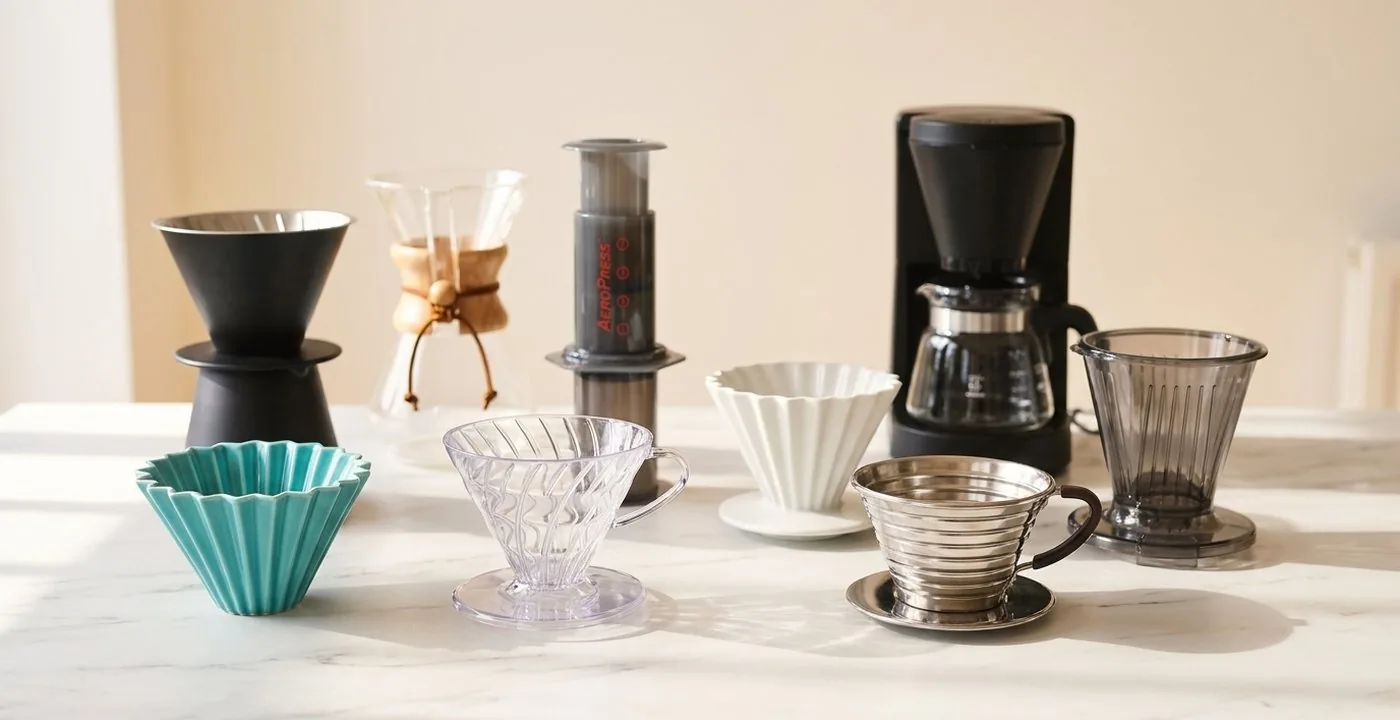
Table of Contents
Some of the links in this article are affiliate links, which help fund our independent review work at no extra cost to you. Every recommendation is based on hands-on testing through The Editor Lab methodology. No brand pays to appear, and no placement is guaranteed.
The best pour over coffee maker for most people is the Origami Dripper, because it combines a flat-bottom bed with steep cone ridges, so it works with cheap paper and gives you control over flow rate. A pour over coffee maker is a manual brewing device that holds a paper filter and lets hot water drain through ground coffee by gravity. That is the short answer. The longer answer is what the rest of this guide is for, because the dripper you choose changes the cup less than most reviews admit, and you deserve to know that before you spend.
I have brewed pour over by hand since 2014, when I pulled my first V60 in a small Camden flat and watched the coffee bed collapse on a grind that was far too coarse. That is the day I understood the word 'channelling'. The grind was wrong, the water ran straight through, and the cup tasted of nothing. The dripper was fine. I was the problem. Keep that in mind as you read, because it sets up the one honest point this whole guide rests on: for around 80 percent of your result, grind size and pour technique matter more than the brewer in your hand. Pick the right dripper anyway, and you remove the last bit of friction between you and a clean cup. This guide is part of our wider best coffee machines coverage, sitting alongside the espresso and bean-to-cup buying guides for people who have already chosen filter as their method.
We tested nine drippers across three blind sessions. Below is the ranked shortlist, the methodology, full reviews of every brewer, a five-question decision framework, and the answers to the questions readers actually ask.
Pour Over Coffee Makers at a Glance
Nine drippers, one bean, one grinder, one water recipe. The table below summarises where each one landed before you read the detail. The full specification table, with capacity and material for every model, sits lower down the page where reference detail belongs.
| Brand | Model | Material | Cup Score | Forgiveness | Price (GBP) | Verdict |
|---|---|---|---|---|---|---|
| Origami | Dripper M | Ceramic | 9.1/10 | 7.5/10 | from £25 | Best overall |
| Hario | V60 02 | Plastic, ceramic, glass | 8.7/10 | 6.5/10 | from £8 | Best classic |
| Fellow | Stagg X / XF | Double-wall steel | 8.9/10 | 7.0/10 | from £69 | Best premium |
| Kalita | Wave 185 | Stainless, ceramic, glass | 8.4/10 | 9.5/10 | from £28 | Best for beginners |
| Clever | Dripper L | BPA-free plastic | 8.3/10 | 9.8/10 | from £24 | Best hybrid |
| Chemex | Classic 6-Cup | Glass, wood, leather | 8.2/10 | 6.0/10 | from £42 | Best no-plastic |
| Wilfa | Svart Pour Over | Plastic, glass carafe | 8.1/10 | 8.5/10 | from £99 | Best electric |
| Aeropress | Original | BPA-free plastic | 8.0/10 | 9.0/10 | from £30 | Best for travel |
| Melitta | Porcelain 1x4 | Porcelain | 7.6/10 | 7.0/10 | from £15 | Best budget |
Three picks carry the guide. The Origami wins on cup quality, the plastic Hario V60 wins on value, and the Kalita Wave wins for anyone still learning to pour. Everything else earns its place for a specific job.
How We Tested
Every dripper went through The Editor Lab using one fixed protocol, because a fair test changes one variable and holds the rest still. We brewed 100g of the same bean through every dripper: Balance Coffee Aurora Reserve, a light-roast Brazilian single origin with a chocolatey base and delicate fruity undertones that suits manual brewing. The manual coffee grinder was a Timemore C3 set to the same click count each time. The water was remineralised to roughly 80mg per litre total hardness, in line with the kind of brewing-water targets the Specialty Coffee Association sets out in its Gold Cup standard. The ratio was fixed at 1:16. We brewed, scored blind, and repeated across three sessions.
Three of us tasted: me and two SCA-certified Q-graders, scoring without knowing which dripper produced which cup. The scores were weighted across six criteria.
- Cup quality (clarity, sweetness, body): 35 percent
- Forgiveness (how much it punishes a bad pour): 20 percent
- Build quality and longevity: 15 percent
- Cleaning and daily usability: 10 percent
- Travel and durability: 10 percent
- Value for money: 10 percent
Cup quality carries the most weight because it is the point. Forgiveness comes next, because a brewer that only sings in expert hands is no use to most readers. The remaining four split the practical reality of living with the thing. One note on water, since it matters more than most people think: UK tap water hardness varies enormously by region, and very hard water mutes acidity and sweetness. Standards bodies such as the British Standards Institution publish the frameworks utilities work to, but for brewing you want soft, balanced water regardless of what comes out of your tap.
The Best Pour Over Coffee Maker Overall: Origami Dripper
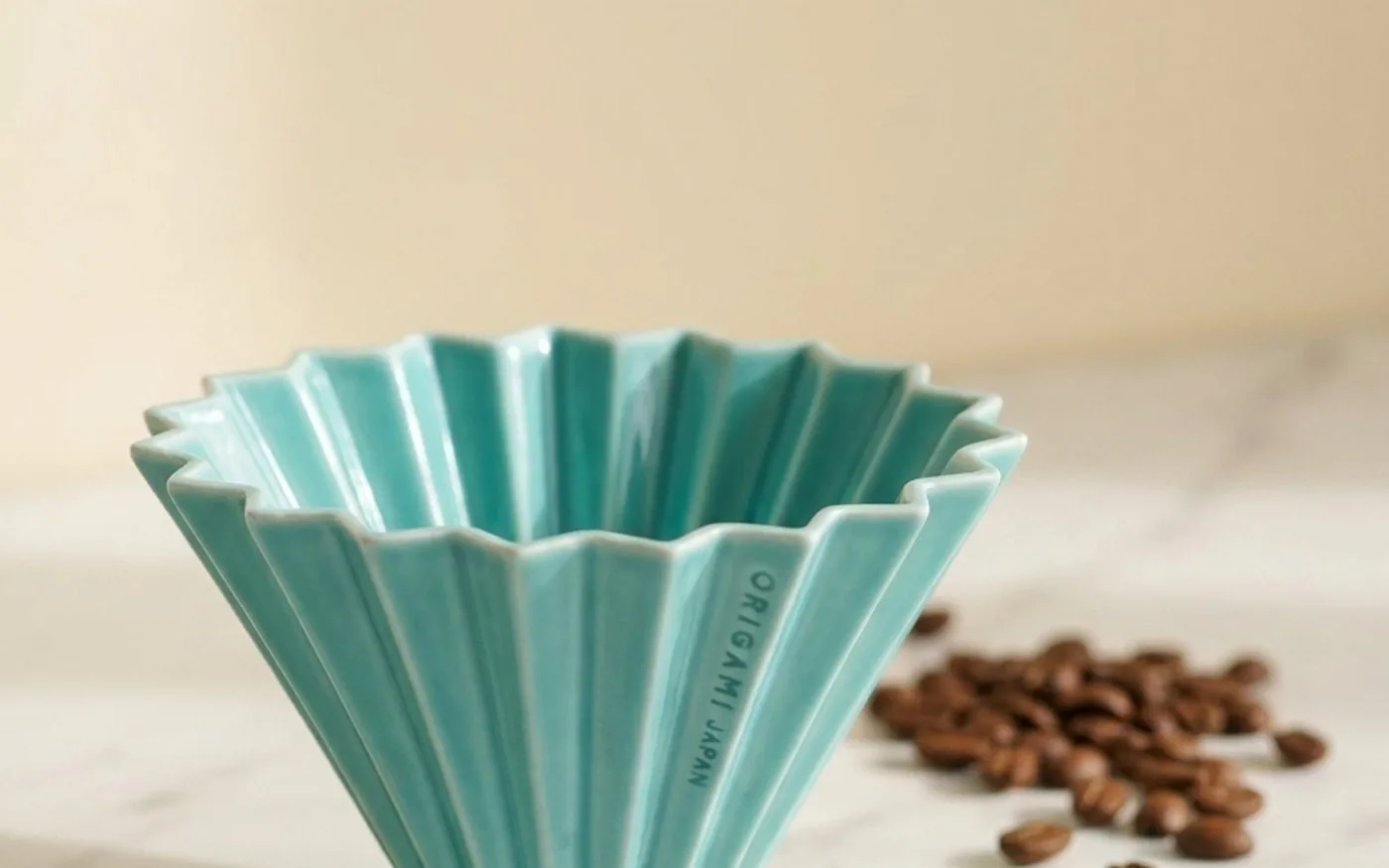
The Origami took the top cup score in blind tasting, and it was not close. What makes it work is a clever piece of geometry. The bed sits flat like a Kalita Wave, which keeps extraction even, but the walls are a steep cone lined with twenty pronounced ridges. Those ridges hold the paper off the wall, so water moves freely around the whole filter rather than choking against a flat surface. The result is a cup with the clarity of a V60 and more of the sweetness you get from a flat bed.
It is also genuinely flexible. Use a flat-bottom Kalita Wave 155 filter and the flow slows down for sweeter, rounder coffee. Use a cone-shaped V60 02 filter and it speeds up for a brighter, cleaner cup. One dripper, two flow characters, decided by which paper you drop in. That is rare, and it is why so many competition brewers reach for it. The Origami earned its reputation on the biggest stage in filter coffee when Du Jianing used it to win the 2019 World Brewers Cup, and its popularity among home brewers has climbed ever since.
In the cup, Aurora Reserve came through with clean milk chocolate on the nose, a rounded sweetness through the body, and a finish that stayed bright without tipping into sourness. Across three sessions it was the most consistent brewer on the bench. The one trade-off is stability. The Origami needs its matching wood or resin holder to sit securely on a cup or carafe, and that is an extra purchase. Buy the holder with it and the friction disappears.
“The Origami earns the top spot: a V60's clarity and a Kalita's sweetness from one brewer, with the paper deciding the lean. Start here.”
| Criteria | Our Findings |
|---|---|
| Cup score | 9.1/10 |
| Forgiveness | 7.5/10 |
| Build quality | 8.5/10 |
| Cleaning | 9.0/10 |
| Travel | 6.0/10 |
| Value | 7.5/10 |
| Best for | Best overall, the most complete brewer we tested |
| Retailers | The Bean Shop (from £25), Amazon (from £27) |
| Full review | Origami dripper review (coming soon) |
| Shop | Shop → |
You will get the best out of any of these brewers with a single origin that has something to say. We brewed every dripper here with Aurora Reserve, and you can match it to your new dripper at home through the link.
Best Classic Pour Over: Hario V60 02
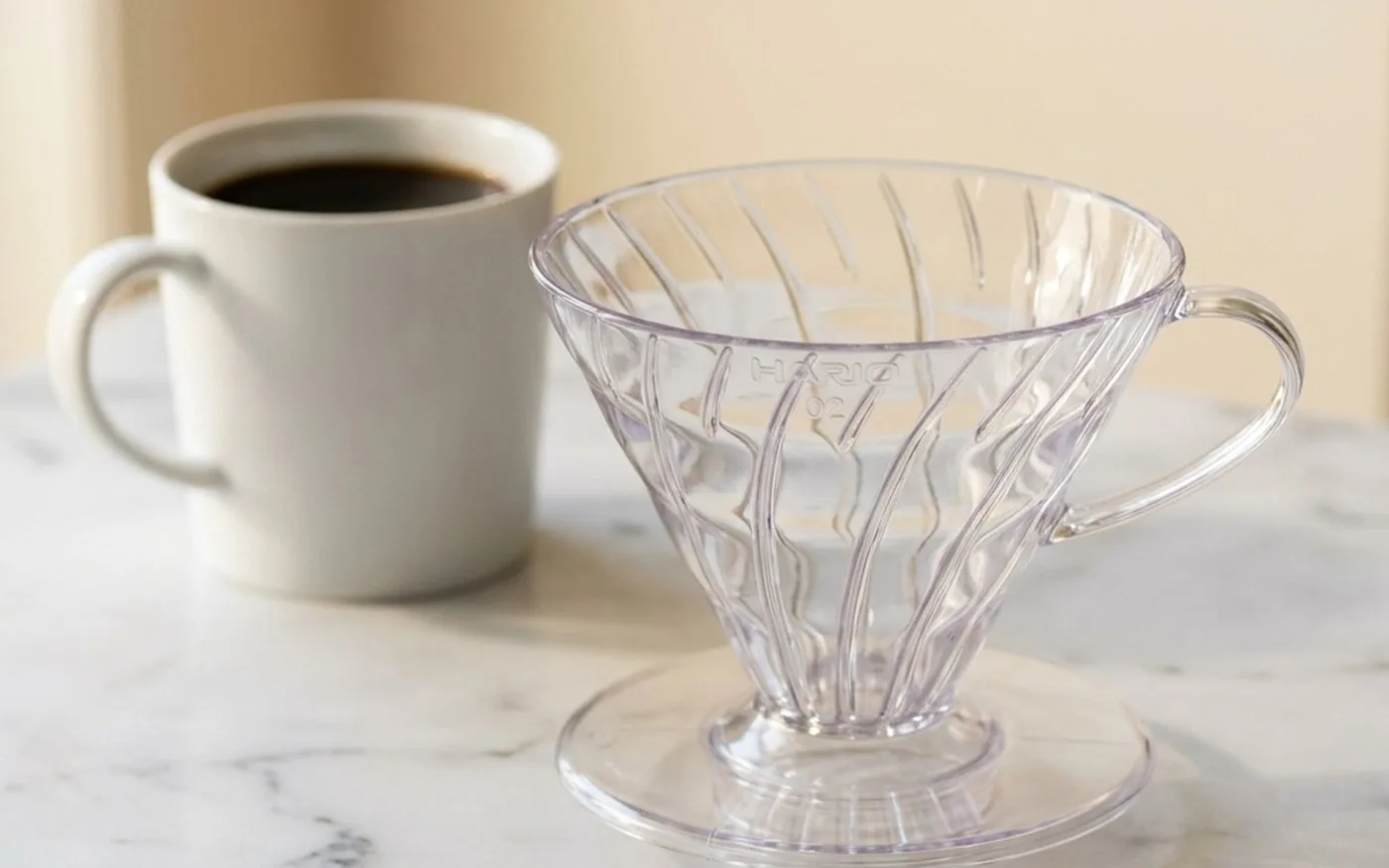
The V60 is the brewer every other dripper gets measured against, so it earns its place by being the reference rather than the winner. It is a 60-degree cone with a single large hole and tall spiral ribs, and it has defined what most people picture when they hear 'pour over'. It rewards a steady, controlled pour and punishes a sloppy one, which is exactly why it taught a generation of home brewers how to pour properly.
Here is the detail most reviews skip. The plastic V60 outperforms the ceramic version for the first two minutes of a brew, and that is when most of your extraction happens. Ceramic looks better and feels more permanent, but it pulls heat out of your water while you bloom and pour, because you cannot realistically preheat a ceramic cone to brew temperature and hold it there. Plastic barely steals any heat at all. If you want the most stable extraction and you do not care about the look, the plastic V60 is the one to buy, and it costs under a tenner. Choose glass only if you want the visual and you are happy to preheat it thoroughly first.
In the cup, the V60 gave Aurora Reserve a bright, articulate character: cocoa on the nose, a lighter body than the Origami, and a clean, fast finish. It bloomed well every time. If your pour is uneven you will taste it as a thinner, slightly hollow cup, but that feedback is the point. For UK buyers, the V60 is everywhere, from Hario's own V60 range to specialty roasters and Amazon.
“Hario V60 vs Kalita Wave: the V60 rewards a steady pour, the Kalita forgives an uneven one. Buy the plastic V60 for taste, price, and practice.”
| Criteria | Our Findings |
|---|---|
| Cup score | 8.7/10 |
| Forgiveness | 6.5/10 |
| Build quality | 7.5/10 |
| Cleaning | 9.5/10 |
| Travel | 6.5/10 |
| Value | 9.5/10 |
| Best for | Best classic, the benchmark and the best value in pour over |
| Retailers | Hario UK (from £8), Amazon (from £9) |
| Full review | Hario V60 review (coming soon) |
| Shop | Shop → |
Best Premium Pour Over: Fellow Stagg X
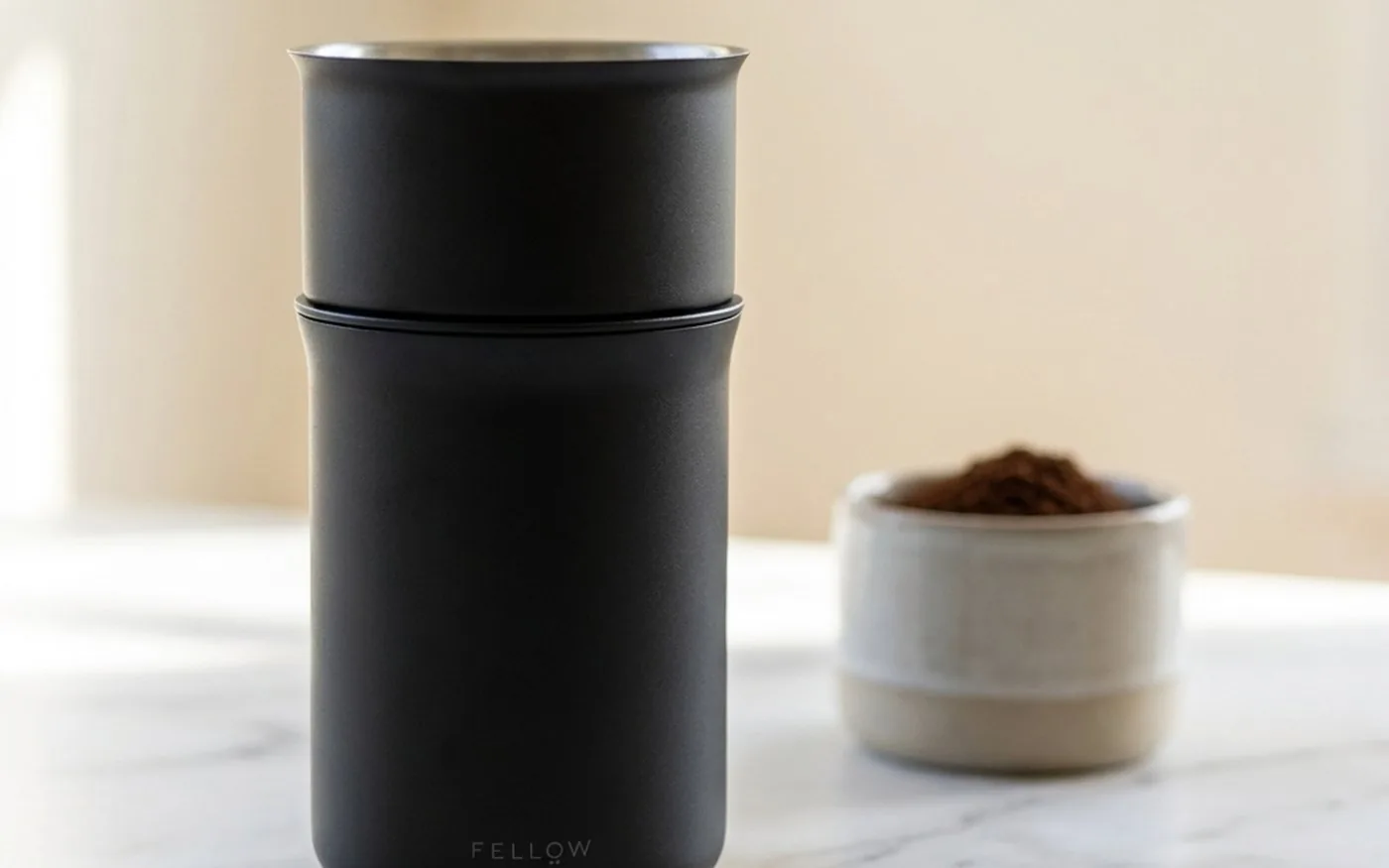
Spend the money and the Fellow Stagg makes a quiet, specific argument. It is a double-wall stainless steel cone, vacuum-insulated like a flask, and it holds brew temperature better than any ceramic or glass dripper on the bench. There is a real debate in coffee about whether this matters. One camp says thermal stability is everything and an insulated brewer protects your extraction from start to finish. The other camp says thermal mass is overrated, that the difference at the cup is marginal, and that you are paying for engineering you cannot taste.
After three sessions, my honest read sits between the two. The Stagg holds heat measurably better, and on a cold morning with a cool kitchen, that showed up as a slightly fuller, more even extraction than the plastic V60 managed in the same conditions. In a warm room the gap narrowed to almost nothing. So you are buying insurance against cold conditions and a beautifully made object, not a transformation in flavour. Aurora Reserve came through rich and even, with milk chocolate sweetness and a long, warm finish that held as the cup cooled.
For most homes, the better buy is the XF rather than the plain X. The XF comes with a matching glass carafe, so you brew straight into a vessel that keeps the coffee hot, which is the whole point of an insulated system. Buying the X alone and dripping into a cold mug undoes half the benefit.
“Fellow Stagg X vs Origami: the Stagg holds temperature longer, the Origami offers more flow flexibility. Buy the XF set.”
| Criteria | Our Findings |
|---|---|
| Cup score | 8.9/10 |
| Forgiveness | 7.0/10 |
| Build quality | 9.5/10 |
| Cleaning | 8.0/10 |
| Travel | 7.0/10 |
| Value | 6.5/10 |
| Best for | Best premium, best temperature retention, buy the XF |
| Retailers | Fellow (from £69), Amazon (from £75) |
| Full review | Fellow Stagg X review (coming soon) |
| Shop | Shop → |
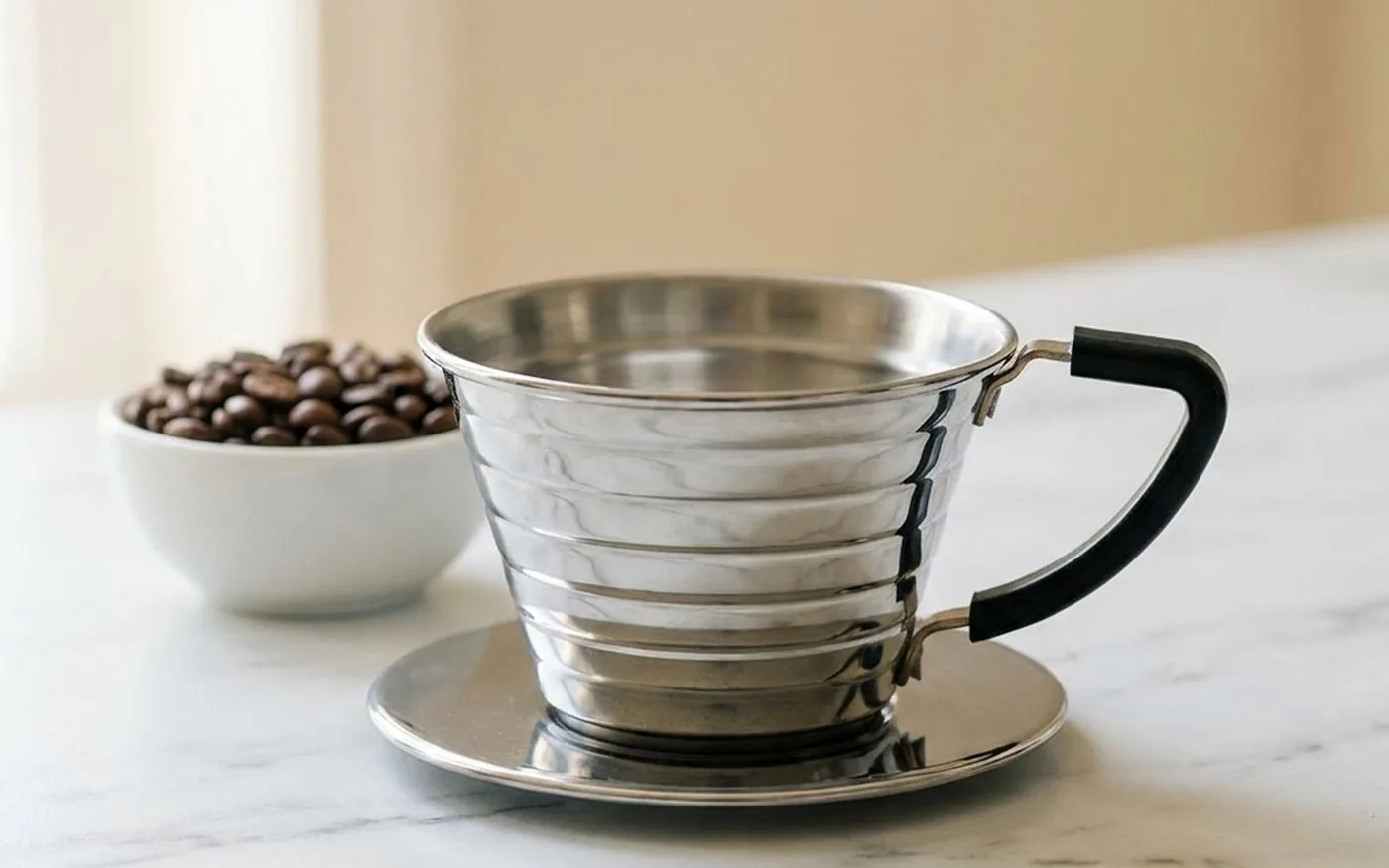
Best Pour Over Coffee Maker for Beginners: Kalita Wave 185
If you have never poured coffee in your life, this is where you should start. The Kalita Wave is a flat-bottom dripper with three small holes in the base and a fluted paper filter that holds itself away from the walls. Both features do the same job: they slow the water down and even it out, so an uneven, wobbly pour still produces a balanced cup. It is the closest thing pour over has to training wheels, and I mean that as a compliment.
It scored highest on forgiveness by a clear margin, 9.5 out of 10. Where the V60 will expose a rushed pour, the Kalita absorbs it. The flat bed means the coffee sits in an even layer rather than a deep cone, so water passes through more uniformly even if your kettle technique is all over the place. You get better results faster, and the cup is consistently sweet and rounded rather than bright and demanding.
It is at its best paired with a gooseneck kettle, which gives you the slow, controlled stream the design rewards, but it is forgiving enough to work with a normal kitchen kettle if you pour carefully. In the cup, Aurora Reserve was sweet and comfortable, with a softer body than the V60 and very little risk of the sour, under-extracted finish that catches out new brewers. The cup score sits a little below the cone drippers because that even, gentle extraction trades a touch of clarity for safety, which is exactly the right trade for a beginner.
“The Kalita Wave forgives the mistakes everyone makes when learning. Buy this if you want good coffee on day one, not day thirty.”
| Criteria | Our Findings |
|---|---|
| Cup score | 8.4/10 |
| Forgiveness | 9.5/10 |
| Build quality | 8.0/10 |
| Cleaning | 9.0/10 |
| Travel | 7.5/10 |
| Value | 8.0/10 |
| Best for | Best for beginners, the most forgiving cone-free brewer here |
| Retailers | The Bean Shop (from £28), Amazon (from £30) |
| Full review | Kalita Wave review (coming soon) |
| Shop | Shop → |
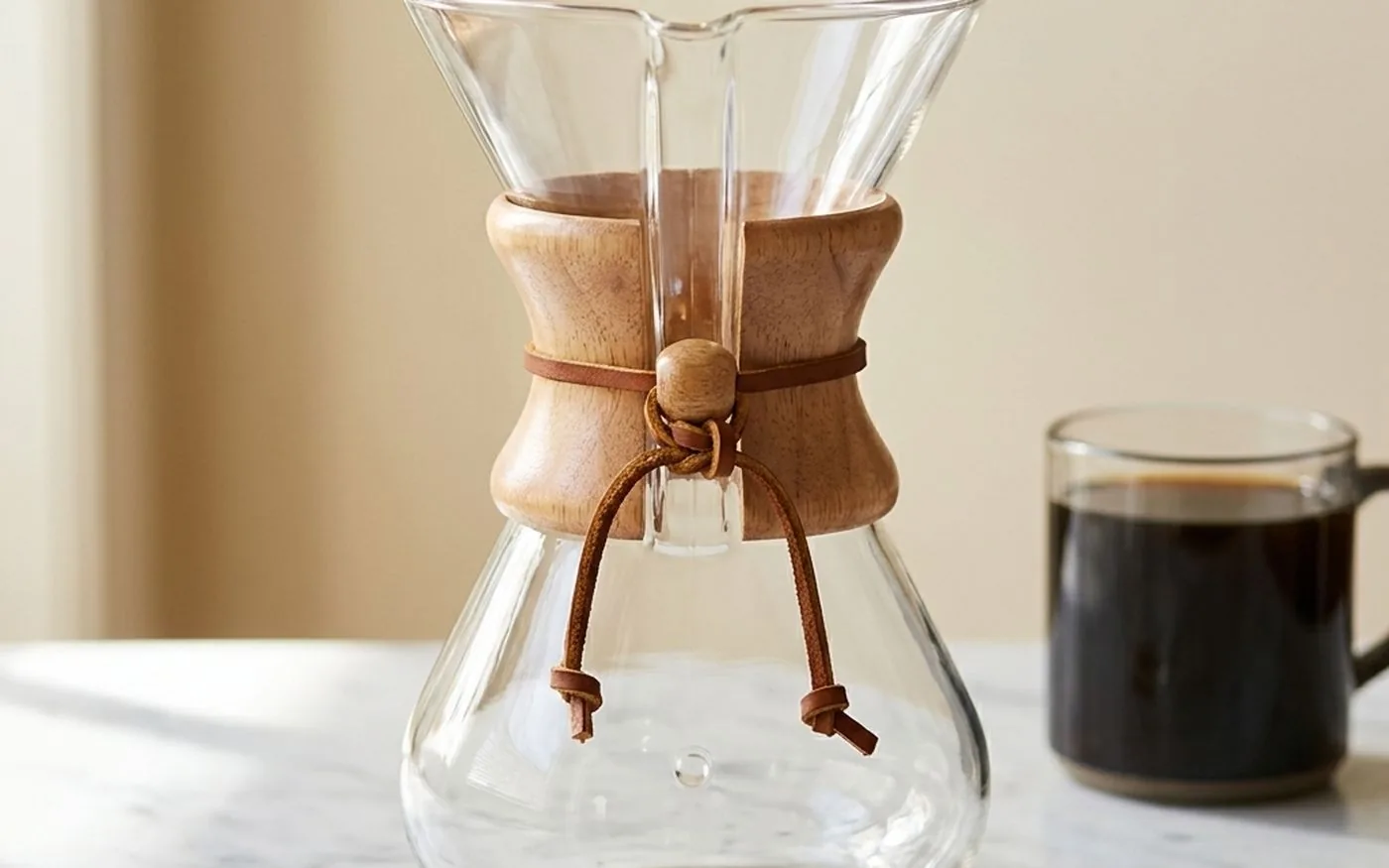
Best No-Plastic Pour Over: Chemex Classic 6-Cup
The Chemex is the one brewer here that doubles as an object you would happily leave on the counter. It is a single piece of borosilicate glass with a wooden collar and a leather tie, and it has been in the Museum of Modern Art's collection since the 1940s. None of that would matter if the coffee was poor. It is not, but it is different, and you should know how different before you buy.
The Chemex uses a famously thick bonded paper filter, heavier than any other dripper's paper. That thick filter strips out oils and fine sediment far more aggressively than a V60 or Origami, so the cup it produces is clean, light, and almost tea-like. With Aurora Reserve, that meant a delicate, transparent cup that showed off the fruit notes but gave up most of the body. If you love a bright, crisp filter coffee, this is the cup of the bunch. If you like weight and texture, it will taste thin to you. Neither is wrong, but they are genuinely different styles.
Two practical notes. UK filter availability is good for the standard squares but patchier for the prefolded circles, and the prefolded ones are the easy option for the bonded filters, so buy a stock when you find them. Cleaning is also a small chore, because the narrow neck means you cannot get a hand inside, though a bottle brush solves it.
“Chemex vs V60: Chemex uses a thicker filter for a cleaner, tea-like cup; V60 leaves more body. Buy the Chemex for the cleanest cup.”
| Criteria | Our Findings |
|---|---|
| Cup score | 8.2/10 |
| Forgiveness | 6.0/10 |
| Build quality | 8.0/10 |
| Cleaning | 6.5/10 |
| Travel | 4.0/10 |
| Value | 7.0/10 |
| Best for | Best no-plastic, the cleanest brightest cup in the prettiest brewer |
| Retailers | John Lewis (from £42), Amazon (from £44) |
| Full review | Chemex review (coming soon) |
| Shop | Shop → |
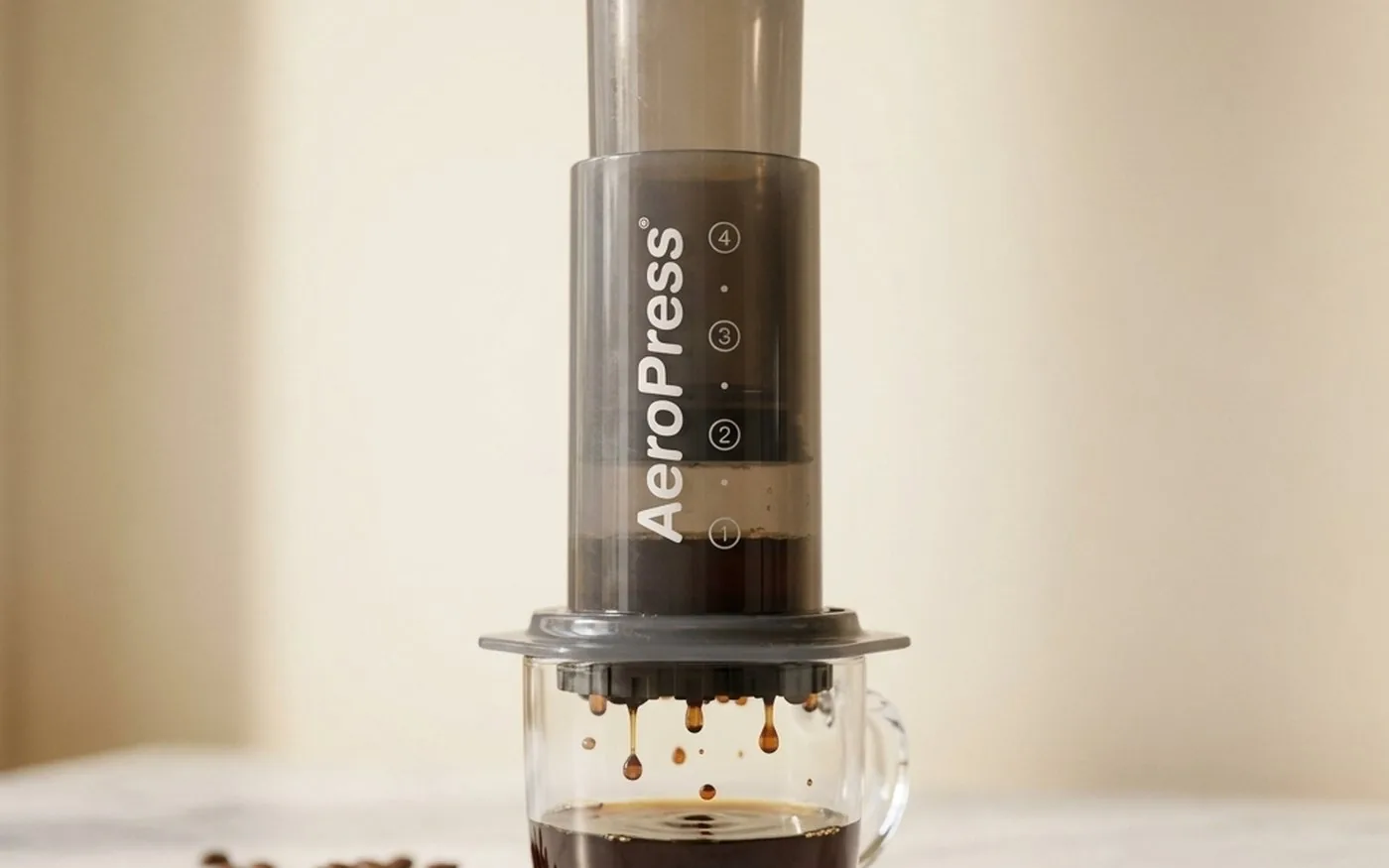
Best Pour Over Coffee Maker for Travel: Aeropress Original
Let me be straight about why the Aeropress is on a pour over list. It is not a strict drip brewer. It uses immersion and a little gentle pressure from a plunger, so a purist would put it in its own category. I have included it because it is the brewer you should pack, and because for a traveller asking 'best pour over coffee maker for travel', the honest answer is the one that survives a rucksack and still makes a great cup.
It is close to indestructible. The body is thick BPA-free plastic, the parts nest together, and there is a travel cap and case so the whole thing rides in a side pocket. I have taken one across three continents and it has never let me down. The cup it makes is rich, low in acidity, and very consistent, because immersion brewing forgives almost everything. It scored 8.0 in the cup, lower than the cone drippers on outright clarity, but it is the most reliable brewer here when conditions are against you.
The recipe most enthusiasts settle on is the inverted method: build the brew upside down so nothing drips through early, stir, then flip onto your cup and press. It gives you full control over steep time and a cleaner cup than the standard orientation. Aurora Reserve came through as a comforting, chocolatey cup with the brightness rounded off, which is exactly what you want from a hotel kettle and a cup of unknown quality.
“The Aeropress is the brewer you take when the dripper has to survive the journey. Buy it for travel, the office, and unreliable kit.”
| Criteria | Our Findings |
|---|---|
| Cup score | 8.0/10 |
| Forgiveness | 9.0/10 |
| Build quality | 9.0/10 |
| Cleaning | 9.5/10 |
| Travel | 10/10 |
| Value | 8.5/10 |
| Best for | Best for travel, near-indestructible and endlessly consistent |
| Retailers | Aeropress (from £30), Amazon (from £30) |
| Full review | Aeropress review (coming soon) |
| Shop | Shop → |
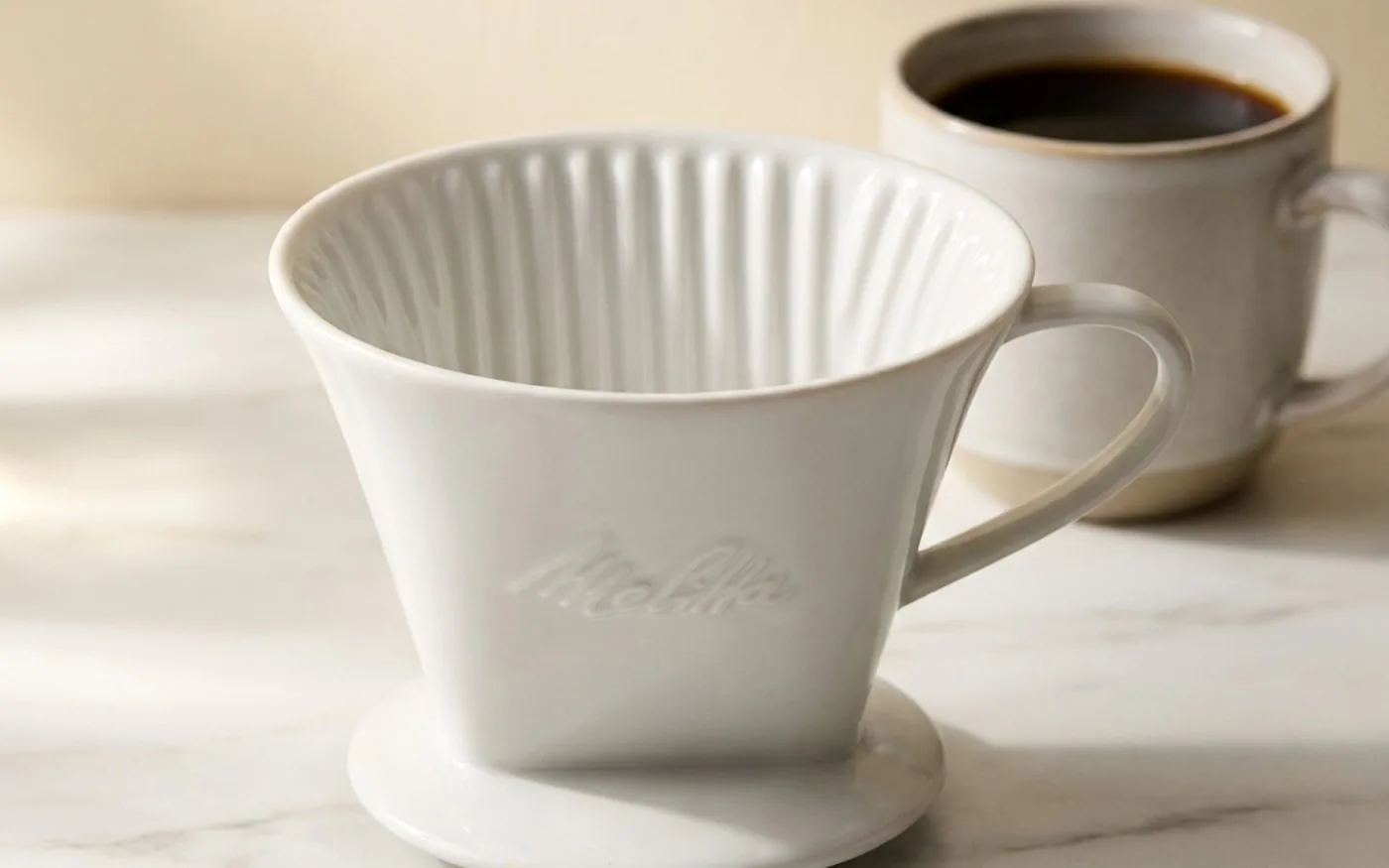
Best Budget Pour Over: Melitta Porcelain 1x4
The Melitta is the original pour over, and it still costs about the price of two coffees out. Melitta Bentz patented the paper filter cone in 1908, so every brewer above owes this design something. The modern porcelain 1x4 is a flat-bottom cone with a single hole, and it does exactly what it has always done, quietly and cheaply.
It punches well above £15. The single-hole flat-bottom design sits between a Kalita and a V60 in behaviour, slowing the water enough to be reasonably forgiving while still giving a clean cup. Where it gives ground to the pricier drippers is in flow control and the last few percent of clarity, because a single hole cannot match the even drainage of the Kalita's three or the Origami's ridged cone. Get your grind and pour tight, though, and the gap to a £25 brewer is smaller than the price suggests. Aurora Reserve came through sweet and clean, a little softer and less articulate than through the cone drippers, but genuinely good coffee.
The porcelain version is worth the small premium over the plastic one, because it feels better, preheats fine, and lasts forever. Standard Melitta 1x4 filters are cheap and stocked everywhere, which matters more than it sounds.
“The Melitta proves you do not need to spend to brew well. Buy it as a first dripper, a travel spare, or an office cup.”
| Criteria | Our Findings |
|---|---|
| Cup score | 7.6/10 |
| Forgiveness | 7.0/10 |
| Build quality | 7.5/10 |
| Cleaning | 9.0/10 |
| Travel | 6.0/10 |
| Value | 9.5/10 |
| Best for | Best budget, the £15 brewer that brews like a £40 one |
| Retailers | Amazon (from £15), John Lewis (from £18) |
| Full review | Melitta review (coming soon) |
| Shop | Shop → |
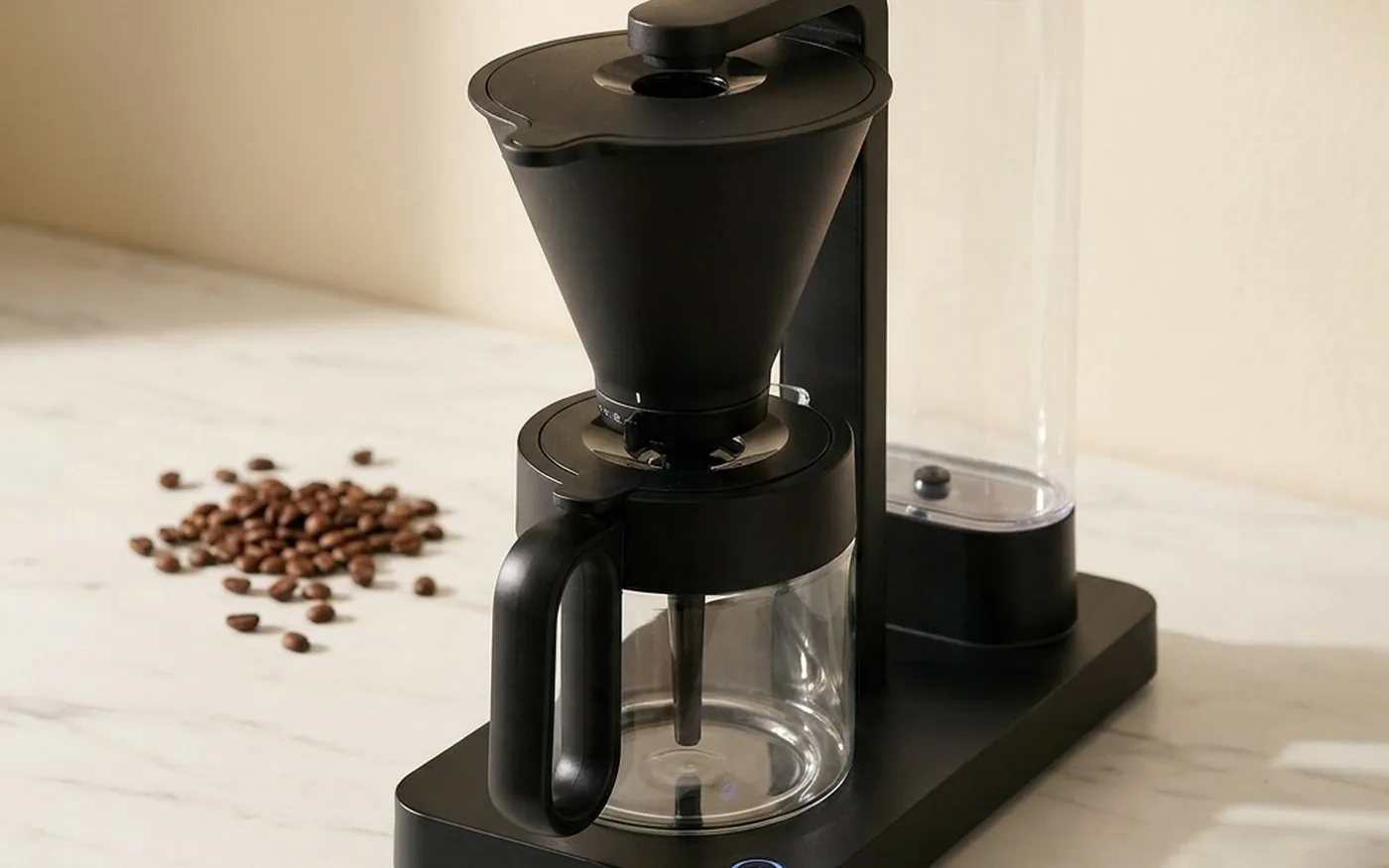
Best Electric Pour Over: Wilfa Svart Pour Over
Some mornings you do not want to stand over a kettle pouring in slow circles, and that is the entire pitch for an electric pour over. The Wilfa Svart automates the bloom and the pulse pours, heats the water, and drips through a flat-bottom basket into a glass carafe. It carries SCA certification, which means an independent body has verified that it brews at the right temperature and contact time to hit the Gold Cup standard.
Here is the honest take, because you deserve it before you spend £99 or more, the same question as whether a coffee machine is worth it. An automated pour over is convenient, not better. The Wilfa makes a reliably good cup, and it scored a respectable 8.1, but a careful hand pour through the Origami or V60 still beat it in blind tasting. What you are buying is consistency and a free pair of hands, not a higher ceiling. Aurora Reserve came through clean and balanced, a touch less expressive than the same bean hand-poured, but better than most people manage half-asleep.
Where it earns its place is real life. If you are brewing for a busy household, making coffee before you are properly awake, or want filter coffee at your desk without the ritual, an electric pour over removes the variability that catches out a tired brewer. It is the right call when convenience genuinely outranks the last ten percent of cup quality.
“The Wilfa trades a little cup quality for a lot of convenience. Buy it if you want hands-off filter coffee at the same standard daily.”
| Criteria | Our Findings |
|---|---|
| Cup score | 8.1/10 |
| Forgiveness | 8.5/10 |
| Build quality | 8.0/10 |
| Cleaning | 7.5/10 |
| Travel | 2.0/10 |
| Value | 6.5/10 |
| Best for | Best electric, hands-off SCA-certified and genuinely consistent |
| Retailers | The Bean Shop (from £99), Amazon (from £105) |
| Full review | Wilfa Svart review (coming soon) |
| Shop | Shop → |
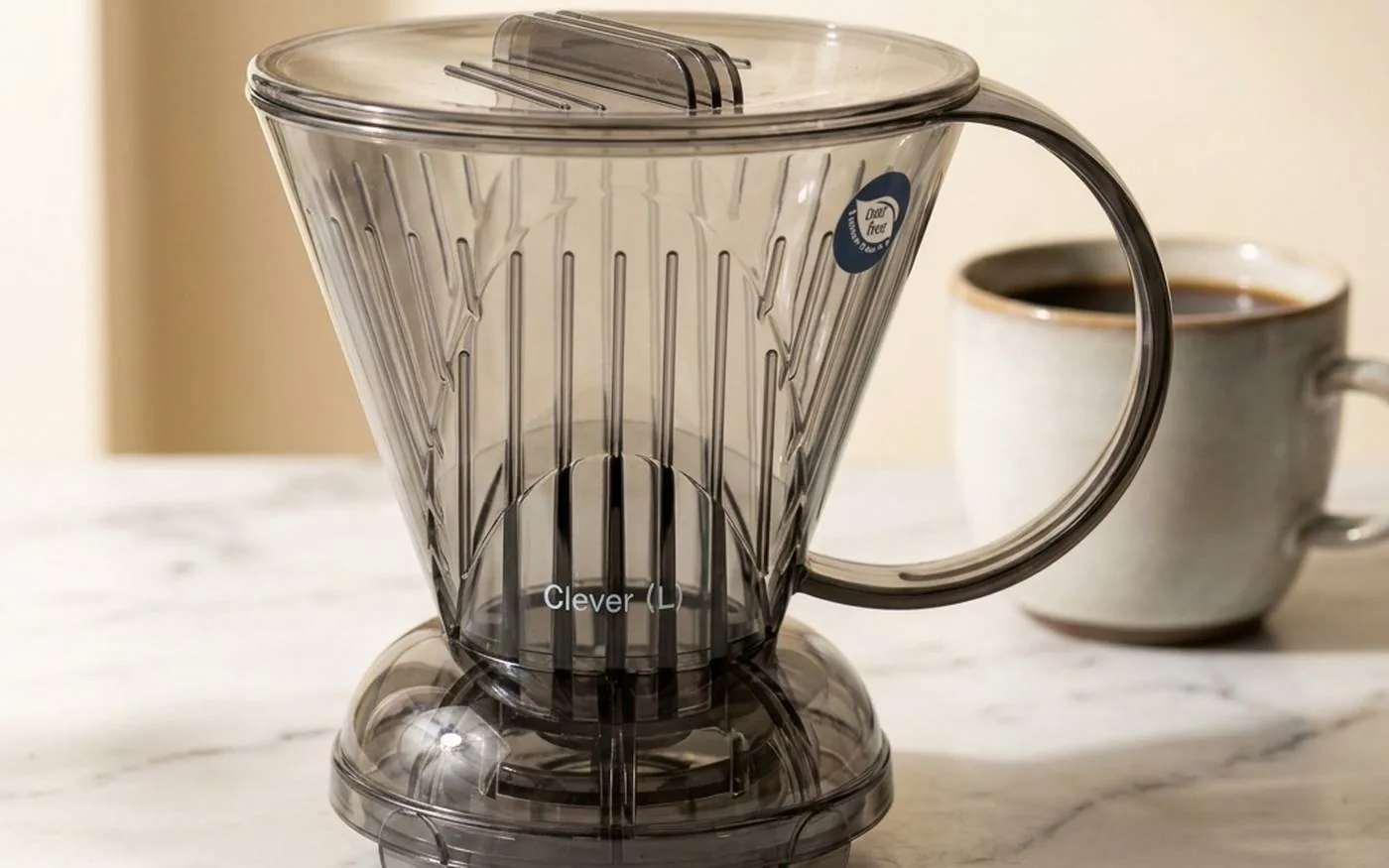
Best Immersion-Style Pour Over: Clever Dripper
The Clever is the clever one, and the name is earned. It looks like an oversized flat-bottom dripper, but it has a valve in the base that stays shut until you set it on a cup. So you add coffee and water, let it steep like a cafetiere for as long as you like, then place it on your mug and let it drain through the paper like a V60. It brews by immersion and finishes by filtration, which gives you the body of a full-immersion brew with the clarity of a paper-filtered one.
That hybrid trick is why it scored the highest forgiveness number on the entire bench, 9.8 out of 10. There is no pour technique to get wrong, because there is barely any pouring. You control the result through grind, dose, and steep time, all of which are easy to repeat exactly. For anyone who finds the V60's demand for a perfect pour stressful, the Clever removes the stress entirely while still giving a cleaner cup than a French press. Aurora Reserve came through with a fuller body than any cone dripper managed, holding its milk chocolate sweetness with a little more weight, and a clean finish from the paper.
The trade-off is a slightly less articulate cup than the very best cone brewers, because long immersion rounds off the sharp clarity that a fast percolation pour preserves. For hands-off brewing, though, nothing here beats it.
“The Clever brews like a cafetiere and drains like a V60, with none of the pour pressure. Buy it for body, clarity, and zero anxiety.”
| Criteria | Our Findings |
|---|---|
| Cup score | 8.3/10 |
| Forgiveness | 9.8/10 |
| Build quality | 7.5/10 |
| Cleaning | 8.5/10 |
| Travel | 6.0/10 |
| Value | 8.5/10 |
| Best for | Best hybrid, immersion body with paper clarity and no pour skill |
| Retailers | Amazon (from £24), The Bean Shop (from £26) |
| Full review | Clever Dripper review (coming soon) |
| Shop | Shop → |
Full Specification Comparison
This is the reference table. It carries the detail you scan rather than read: material, capacity, filter type, and price as tested. Use it once you have narrowed your choice from the reviews above.
| Brand | Model | Material | Capacity | Filter Type | Price (GBP) |
|---|---|---|---|---|---|
| Origami | Dripper M | Ceramic / resin | 1-4 cups | Kalita 155 or V60 02 | from £25 |
| Hario | V60 02 | Plastic, ceramic, glass | 1-4 cups | V60 02 cone | from £8 |
| Fellow | Stagg X / XF | Double-wall steel | 1-2 cups | Stagg flat or V60-style | from £69 |
| Kalita | Wave 185 | Stainless, ceramic, glass | 2-3 cups | Wave 185 fluted | from £28 |
| Clever | Dripper L | BPA-free plastic | 1-4 cups | Standard #4 cone | from £24 |
| Chemex | Classic 6-Cup | Glass, wood, leather | 4-6 cups | Chemex bonded | from £42 |
| Wilfa | Svart Pour Over | Plastic, glass carafe | 4-10 cups | Flat-bottom basket | from £99 |
| Aeropress | Original | BPA-free plastic | 1-3 cups | Aeropress micro | from £30 |
| Melitta | Porcelain 1x4 | Porcelain | 2-6 cups | Melitta 1x4 | from £15 |
How to Choose a Pour Over Coffee Maker
Nine good brewers is not a help if you do not know which one is for you. Five questions narrow it down fast, and they route you to the right pick rather than the most expensive one. James Hoffmann's V60 technique guide is worth watching alongside this, because the pour matters more than the brewer, but the questions below sort the hardware.
How many cups do you make at once? For one or two, the V60 02 or the Stagg is ideal. For a household of three or four, the Chemex 6-Cup or a Wilfa Svart makes sense. The Kalita 185 sits comfortably in the middle for two to three.
Do you own a gooseneck kettle? If not, lean toward the Kalita Wave or the Clever, both of which forgive a clumsy pour from a standard kettle. If you do, anything here is open to you, and the cone drippers will reward the control.
What flow rate do you like? Faster-draining drippers such as the V60 and Origami give a brighter, cleaner cup. Slower ones such as the Kalita and Melitta give a sweeter, rounder one. Match the dripper to the cup you enjoy, not the one a review prefers.
What cup style do you want? For a bright, tea-like cup, choose the Chemex. For a balanced, articulate cup, the V60. For a sweet, rounded one, the Origami or Kalita. You can pair any of them with the right dripper for your beans once you know your preference.
Do you travel with your coffee? The Aeropress is the only real answer for a rucksack. Among the non-electric drippers, the Origami is the lightest serious option for a weekend bag.
What to Avoid
Some things in this category are not worth your money, and a good guide should say so. Avoid the cheap stainless mesh 'pour over' inserts that sit on top of a mug. They have no paper, so they percolate rather than drip, and they let oils and fine sediment straight through. The cup is muddy and the bypass is uncontrolled, which is the opposite of what pour over is for.
Avoid thin fluted plastic drippers that warp at brewing temperature. Water comes off a kettle at around 96 degrees, and the cheapest plastic cones soften and lose their shape, which changes how the paper sits and ruins consistency. Spend the few extra pounds on a brand that holds its form.
Finally, be wary of branded drippers locked to proprietary paper that costs five times the price of a standard cone filter. A clever cone shape is no bargain if every brew costs you a premium on filters you can only buy from one place. The brewers ranked above all use widely available, sensibly priced paper.
Final Verdict
Nine drippers, one bean, three sessions, and a clear set of answers. The best pour over coffee maker overall is the Origami Dripper, because it gives you a V60's clarity and a Kalita's sweetness from a single brewer and lets the paper decide the balance. The best value is the plastic Hario V60, which costs under a tenner and outperforms its own ceramic version on temperature stability. The best for beginners is the Kalita Wave 185, the most forgiving brewer here by a clear margin.
Whichever you choose, hold on to the point this guide opened with. The dripper is the third most important variable after your grind and your pour, and for most of your result those two matter more than the brewer in your hand. Buy the right dripper to remove the last bit of friction, get your grind and technique consistent, and use a bean worth the effort. We brewed every cup here with Aurora Reserve, and a good single origin will do more for your cup than trading up from one good dripper to another.
Frequently Asked Questions
What is the best pour over coffee maker for beginners?
The Kalita Wave 185 is the best pour over coffee maker for beginners. Its flat bottom and three-hole base slow the water and even out extraction, so an uneven pour still produces a balanced cup. It scored 9.5 out of 10 for forgiveness in our testing, the highest of any cone-free dripper, which means good coffee on your first attempt rather than your thirtieth.
Is pour over coffee better than drip?
Pour over coffee is generally cleaner and more flavour-forward than standard machine drip, because you control water temperature, pour speed, and bloom time by hand. A good filter machine can match it for convenience and consistency, but it cannot match the control. For the same beans, a careful hand pour usually produces a more articulate, sweeter cup than an entry-level drip machine.
What is the difference between a V60 and a Chemex?
The V60 uses a thin paper filter and a wide hole, so it drains fast and leaves more body and oils in the cup. The Chemex uses a much thicker bonded filter that strips oils and sediment, producing a cleaner, lighter, almost tea-like cup. The V60 makes a more textured coffee; the Chemex makes a more transparent one. Both are excellent, just different styles.
Do you need a gooseneck kettle for pour over?
You do not strictly need a gooseneck kettle, but it helps a great deal. A gooseneck gives a slow, precise stream that controls where and how fast water hits the coffee bed, which improves even extraction. If you do not own one, choose a forgiving brewer such as the Kalita Wave or the Clever Dripper, both of which produce good coffee from a standard kitchen kettle.
Is plastic safe for pour over coffee?
Yes, the plastic used in reputable pour over drippers is safe at brewing temperature. Brands such as Hario and Aeropress use BPA-free, food-grade plastics rated well above the roughly 96 degrees water reaches off the kettle. The plastic V60 actually holds brew temperature better than ceramic, because it draws less heat from the water. Choose a known brand rather than an unbranded cone.
How much coffee should I use for pour over?
Use a ratio of 1 gram of coffee to 16 grams of water as your starting point. For a single mug, that is roughly 18 grams of coffee to 290 grams of water. Weigh both with a scale rather than guessing, because consistency in the ratio matters more than the exact number. Adjust to taste from there, going stronger or weaker by small steps.
Why does my pour over taste sour?
A sour pour over almost always means under-extraction. The water has not pulled enough from the grounds, usually because the grind is too coarse, the water is too cool, or the brew finished too fast. Try grinding finer, using water just off the boil, and slowing your pour. Sourness is the most common beginner fault, and a finer grind fixes it most of the time.
What grind size for pour over coffee?
Pour over wants a medium grind, roughly the texture of table salt or coarse sand. Too fine and the water drains slowly, over-extracting into bitterness; too coarse and it runs through fast, under-extracting into sourness. Cone drippers such as the V60 take a slightly finer grind than flat-bottom brewers such as the Kalita. Adjust grind first whenever the cup tastes off.
Can you make pour over without a special kettle?
Yes, you can make good pour over without a gooseneck kettle. Pour slowly and steadily from a normal kitchen kettle, keeping the stream gentle and aimed at the centre of the bed. A forgiving brewer such as the Kalita Wave or the Clever Dripper matters more than the kettle here, because their designs even out an imperfect pour. The kettle improves control, but the dripper does the heavy lifting.
Which pour over coffee maker makes the smoothest cup?
For the smoothest, sweetest cup, the Origami Dripper and the Kalita Wave lead the field, because their flat-bottom extraction rounds off harshness and brings out sweetness. The Clever Dripper is a close third, since its immersion brew gives a fuller, softer body. If you want clean and tea-like rather than smooth and rounded, the Chemex is your brewer instead.
A wellness entrepreneur and biohacker, James explores the intersection of hospitality and health - from clean fuel and recovery tools to mindful routines that build balance into daily life.