Cymbiotika Magnesium Review UK: Nutritionist Rated
Cymbiotika's liposomal magnesium is well-formulated - but does the science justify paying three times more than a standard bisglycinate?
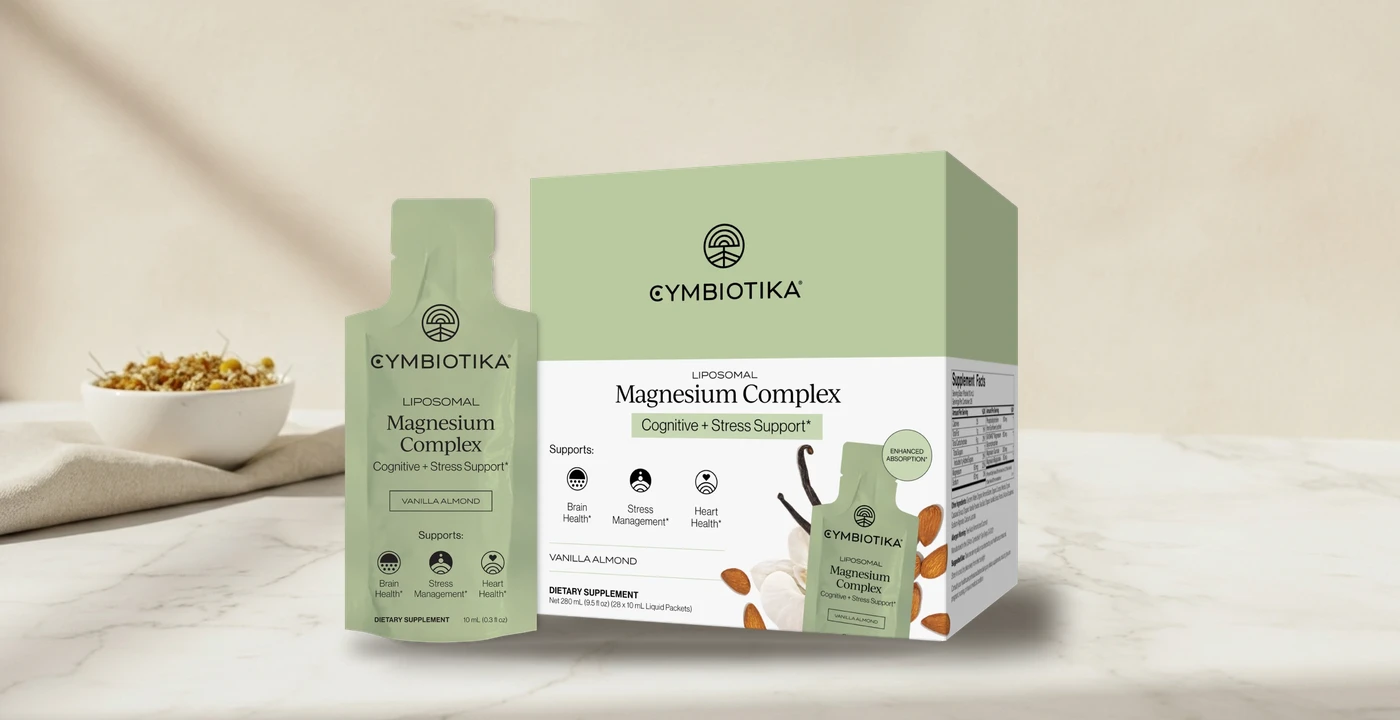
Table of Contents
Some of the links in this article are affiliate links, which help fund our independent review work at no extra cost to you. Every recommendation is based on hands-on testing through The Editor Lab methodology. No brand pays to appear, and no placement is guaranteed.
“In short: Cymbiotika Magnesium Complex is a well-formulated liquid supplement combining magnesium bisglycinate, magnesium taurate, and GIVOMAG Magnesium Glycerophosphate. For most UK buyers, a quality bisglycinate delivers comparable results at a fraction of the price.”
Cymbiotika Magnesium Complex carries a specific promise: that liposomal delivery technology makes its magnesium meaningfully more absorbable than the capsules and tablets most people already take. That claim is central to its pricing, its marketing, and the decision facing anyone spending close to £60 per month on a supplement. My job, as a BANT member and registered Nutritional Therapist who has applied data-driven nutritional assessment through The Kyros Project at Google DeepMind, is to test that claim against the available evidence. I reviewed the ingredient forms, the published label information, and the human trial literature on liposomal magnesium, and compared the monthly cost against standard UK magnesium bisglycinate supplements.
What I found is a product with a genuinely considered magnesium form profile, a vanilla almond flavour, a 90mg magnesium dose that covers about a third of the NHS adult intake, and a liposomal delivery argument that the science does not yet fully support at the dose and price point involved. That does not make it a bad supplement. It makes it an expensive one that deserves honest scrutiny before you commit to a monthly order.
Cymbiotika Magnesium: The Verdict
Cymbiotika Magnesium Complex earns a qualified recommendation from me - but not an unconditional one.
The formula uses three magnesium forms: magnesium bisglycinate, magnesium taurate, and GIVOMAG Magnesium Glycerophosphate. This is a considered combination. Bisglycinate is a chelated form of magnesium bound to glycine, well-absorbed and gentle on the gut, with good evidence for sleep support and general magnesium repletion. Taurate adds cardiovascular and nervous system support through its taurine component. GIVOMAG is a proprietary magnesium glycerophosphate form claimed to offer high bioavailability.
The liquid packet format is convenient, and the flavour is vanilla almond, so it is not suitable for anyone with a tree nut allergy. The Supplement Facts panel lists 90mg of magnesium per 10 mL packet, about a third of the NHS adult intake of 270 to 300mg a day. That makes it a top-up to dietary magnesium rather than a full daily supply.
Where I hesitate is on the liposomal premium. Liposomal delivery technology works well for fat-soluble compounds and certain poorly-absorbed nutrients. The evidence for liposomal encapsulation providing a clinically meaningful advantage for magnesium specifically - a mineral that absorbs via intestinal transport rather than passive diffusion - is limited at this dose and in this format. I cover this in detail below.
Who Cymbiotika magnesium is for: UK buyers who have tried lower-cost magnesium supplements and not noticed a benefit; people who struggle with capsules or tablets; those interested in taurine's cardiovascular and nervous system co-benefits; and buyers for whom the clean-label, liquid format is genuinely important. For general magnesium repletion and sleep support, a quality magnesium bisglycinate from a certified UK supplier delivers most of the benefit at a significantly lower monthly cost.
How We Rated It
I assessed Cymbiotika Magnesium Complex across six criteria, the same framework I use for any supplement brand review.
| Evaluation Criteria | Our Findings |
|---|---|
| Full review | Cymbiotika Magnesium Complex (liposomal liquid packet) |
| Best for | Buyers wanting a multi-form liquid magnesium with taurate and proprietary glycerophosphate inclusion |
| Flagship product | Magnesium Complex (liposomal, 28-serving box) |
| Shop | cymbiotika.co.uk (direct); proactivehealthcare.co.uk (UK stockist) |
Scoring rubric:
| Criteria | Score (out of 10) | Notes |
|---|---|---|
| Magnesium form and bioavailability | 8/10 | Bisglycinate + taurate + GIVOMAG glycerophosphate = considered multi-form profile |
| Dose adequacy | 5/10 | 90mg magnesium per packet is about a third of the NHS 270-300mg adult intake; a top-up dose, not a full one |
| Delivery-tech evidence | 5/10 | Liposomal benefit for magnesium not robustly demonstrated in human trials at this dose |
| Taste and format usability | 7/10 | Liquid packet, vanilla almond flavour per the label; contains almonds and coconut (tree nut allergen) |
| Price per month | 4/10 | £53.96-£59.95 per 28-serving container; three to four times the cost of quality bisglycinate alternatives |
| Label transparency | 9/10 | Panel lists 90mg magnesium and the weight of each compound (650mg, 200mg, 150mg); allergens declared; certificate of analysis linked |
Overall: 6.3/10. A well-intentioned, clean-label formula let down by a premium price that the delivery-tech evidence does not fully justify.
Which Magnesium Form and Dose
Cymbiotika uses a three-form magnesium combination in its complex.
Magnesium bisglycinate is the workhorse of the formula. It is magnesium in chelated form, bound to the amino acid glycine, which improves intestinal absorption and reduces the laxative effect associated with cheaper forms such as magnesium oxide. Bisglycinate is the form most nutritional therapists would reach for first when recommending a standalone magnesium supplement - it is well-tolerated, highly bioavailable, and the evidence base for sleep and anxiety support is strong. The NHS lists magnesium as a mineral that helps turn food into energy and keeps the parathyroid glands working normally, and sets adult intakes at 300mg a day for men and 270mg a day for women aged 19 to 64.
Magnesium taurate is magnesium bound to taurine, an amino acid with its own physiological roles in cardiovascular function and nervous system regulation. This combination positions taurate as a form suited to heart health and neurological support rather than simply mineral repletion. The evidence base is less extensive than bisglycinate for general use, but the addition of taurine is a meaningful functional choice rather than a filler ingredient.

GIVOMAG Magnesium Glycerophosphate is a proprietary form developed by ISALTIS, claimed to offer high bioavailability and excellent tolerability. Glycerophosphate forms have a reasonable bioavailability profile in the published literature, and the GIVOMAG branding reflects an attempt to standardise and quality-control that delivery. As a proprietary ingredient, independent comparative data on GIVOMAG specifically is limited; its inclusion signals a product positioning itself at the premium-formulation end of the market.
For readers exploring magnesium form comparisons further, our guides on magnesium glycinate vs malate and magnesium citrate vs glycinate cover the evidence in detail.
The Supplement Facts panel on Cymbiotika's UK product page lists 90mg of magnesium per 10 mL packet. The same panel gives the compound weights: 650mg GIVOMAG magnesium glycerophosphate, 200mg magnesium taurinate, and 150mg magnesium bisglycinate. The label directs one packet a day and says not to exceed the stated dose.
Against the NHS adult intake of 270 to 300mg a day, one packet supplies roughly a third. That NHS figure covers all sources, food included, so this product works as a top-up rather than a full replacement for dietary magnesium.
The NIH Office of Dietary Supplements puts the adult upper limit for magnesium from supplements and medications at 350mg a day. The EFSA tolerable upper intake level summary sets supplemental magnesium at 250mg a day. At 90mg, one packet sits well under both limits. For the wider picture on intake and forms, see our magnesium guide.
The Liposomal Claim: Does It Justify the Price?
This is the question that most determines whether Cymbiotika's premium is warranted, and it deserves an honest answer rather than a marketing one.
Liposomal technology encapsulates the active ingredient in a lipid (fat-based) sphere, designed to protect it through the digestive tract and improve cellular absorption. The approach is aimed at nutrients that are poorly absorbed or break down in digestion. The logic for applying liposomal delivery to magnesium is less straightforward.
Magnesium is a mineral. It absorbs primarily through active transport and passive diffusion across the intestinal wall. The rate-limiting step in magnesium absorption is not digestive breakdown - it is the capacity of intestinal transport mechanisms, which are regulated by magnesium status and dietary intake. Wrapping magnesium in a lipid sphere does not obviously address this mechanism.

The published human trial data on liposomal magnesium specifically is limited. There are no large, independent, peer-reviewed trials demonstrating that liposomal magnesium achieves meaningfully higher serum magnesium levels than a well-formulated standard magnesium bisglycinate at equivalent elemental doses. Cymbiotika's marketing points to absorption claims, but these are not supported by independent clinical data that I can locate in the published literature.
This does not mean liposomal magnesium performs identically to a poorly absorbed form like magnesium oxide. The baseline form quality in Cymbiotika's formula - bisglycinate, taurate, and GIVOMAG glycerophosphate - is already high. But the liposomal layer on top of already well-absorbed forms is where the evidence thins out.
My assessment: the multi-form approach (bisglycinate, taurate, GIVOMAG) accounts for most of this product's functional value. The liposomal delivery adds marketing differentiation that the clinical evidence does not yet fully support. If you are drawn to Cymbiotika because of the liposomal claim specifically, I would encourage scepticism. If you are drawn to it because of the form combination and liquid format, that is a more defensible reason to consider it.
Taste, Format and Daily Use
Cymbiotika Magnesium Complex comes in individual 10 mL liquid packets, one per day. The product page says to squeeze the contents into your mouth or stir them into a drink. The format suits people who dislike swallowing capsules or want a portable, pre-dosed option.
The product page lists the flavour as vanilla almond. The label names almond butter, coconut nectar, organic vanilla powder, and vanilla extract among the ingredients. A verified-buyer review on the page describes it as creamy and nutty. This review rests on the label and public product information, not a tasting.
The ingredient list also includes pectin and sodium alginate, both thickening agents, so expect a liquid thicker than water.
Allergen warning: the label carries a tree nut warning (almond and coconut), and the product page states that the product contains almonds. Avoid it if you have a tree nut allergy.
The brief for when to take it is straightforward. Magnesium bisglycinate and taurate are both well-tolerated at any time of day, but many people find magnesium supplementation easiest to maintain as part of an evening routine. The relaxation association is partly physiological - magnesium is involved in normal muscle and nerve function - and partly habitual. Taking it at the same time each day improves consistency regardless of timing.

One practical consideration: if you are already winding down your evening caffeine intake and replacing late-day coffee with something lower-stimulation, Cymbiotika's magnesium works naturally in an evening routine. For readers curious about what else fits that calmer wind-down slot, our guide on the best lion's mane coffee UK covers functional options that support a less stimulating late-day habit.
The packets are individually sealed and easy to carry, which makes compliance easier than with a large tub of capsules. For frequent travellers or people with inconsistent routines, this format advantage is real.
Timing guidance: Take one packet daily, ideally in the evening, with or without food. Magnesium bisglycinate is well-tolerated with meals. Avoid taking magnesium within two hours of iron or calcium supplementation, as these minerals can compete for absorption pathways.
Price and Value vs Alternatives
Cymbiotika Magnesium Complex is priced at £59.95 per 28-serving container one-time, or £53.96 on subscription through cymbiotika.co.uk. That works out to roughly £1.93 to £2.14 per serving.
For context, a quality magnesium bisglycinate supplement from a certified UK supplier - with comparable bioavailability and a clean ingredient list - typically costs between £12 and £22 per month. The cost-per-serving difference is significant: Cymbiotika is three to four times more expensive than functionally comparable alternatives.
| Supplement | Approx. monthly cost | Magnesium form(s) | Notes |
|---|---|---|---|
| Cymbiotika Magnesium Complex | £53.96-£59.95 (28 servings) | Bisglycinate, taurate, GIVOMAG glycerophosphate (liposomal) | Subscription or one-time via cymbiotika.co.uk |
| Quality magnesium bisglycinate (UK, certified) | £12-20 | Bisglycinate | Multiple certified UK suppliers available |
| Quality magnesium complex (UK, certified) | £15-25 | Bisglycinate + malate or taurate | Broader form coverage at lower price points |
The gap between Cymbiotika and a quality standard bisglycinate is real. Whether it is justified depends on what you value: the convenience of the liquid format, the taurate and GIVOMAG inclusion, the brand's clean-label positioning, or the liposomal delivery claim. The first two are defensible reasons to pay more. The latter two are not, in my assessment, sufficiently supported by evidence to justify a £30 to £40 monthly premium over standard alternatives.
For readers who want to compare the wider magnesium supplement market before deciding, our guide to the best magnesium supplements UK and the dedicated roundup of the best magnesium glycinate UK provide independently scored alternatives at a range of price points.
Pros and Cons
| Pros | Cons |
|---|---|
| Considered three-form profile (bisglycinate, taurate, GIVOMAG glycerophosphate) | Liposomal delivery evidence for magnesium is limited in human trials |
| Liquid packet format - no capsules, easy compliance | Premium price: three to four times the cost of quality bisglycinate alternatives |
| Every compound weight published: 650mg GIVOMAG, 200mg taurinate, 150mg bisglycinate | 90mg magnesium per packet is about a third of the NHS 270-300mg adult intake |
| Clean label with a brand-reported third-party test and linked certificate of analysis | Contains almonds and coconut (tree nut allergen) |
| Vanilla almond flavour, gentle forms | Labelled for one packet a day, so the dose cannot be raised without exceeding the stated serving |
| Convenient, portable, travel-friendly | No independent certification scheme (e.g. Informed Sport) confirmed |
Important
What to avoid: Paying a premium for a delivery claim the human evidence does not yet support. Treating one 90mg packet as your whole daily magnesium. Exceeding the stated dose or stacking several magnesium products without checking the total against the 250mg EFSA level. Taking it if you have a tree nut allergy.
Frequently Asked Questions
Is Cymbiotika magnesium good?
Cymbiotika Magnesium Complex is a well-formulated supplement. It combines magnesium bisglycinate, magnesium taurate, and GIVOMAG Magnesium Glycerophosphate, with a clean ingredient list. The weak points are the liposomal delivery claim, which lacks robust human trial support, and a price well above standard magnesium. A quality bisglycinate usually delivers similar results for far less money.
Do Cymbiotika supplements really work?
The ingredients are genuine and evidence-based. Magnesium contributes to normal energy release, according to the NHS, and the forms used here are well absorbed. Whether liposomal delivery adds benefit over standard bisglycinate is not established in human clinical trials. The product works as a magnesium supplement; the premium delivery technology remains unproven at this dose.
When should you take Cymbiotika magnesium?
Take one packet daily, ideally in the evening, with or without food. Many people find an evening routine easiest to keep. Bisglycinate is well tolerated with meals. Avoid taking magnesium within two hours of iron or calcium supplements, as these minerals can compete for absorption. Consistent daily timing matters more than any specific hour.
Why shouldn't you take magnesium every day?
Most adults without kidney disease can take magnesium daily. The safe upper level for supplemental magnesium listed by EFSA is 250mg per day. Going above that regularly may cause loose stools. People with impaired kidney function should speak to a healthcare professional first, because the kidneys clear excess magnesium. Daily use within limits suits those with low dietary intake.
Is Cymbiotika magnesium worth the price?
For most UK buyers, no. A quality magnesium bisglycinate from a certified UK supplier provides comparable bioavailability evidence and similar sleep support at roughly a quarter of the cost. Cymbiotika's premium is most defensible for buyers who specifically want taurate's cardiovascular co-benefits, cannot tolerate capsules, or value the liquid packet format as a genuine compliance tool. The liposomal premium alone does not justify the cost gap.
Does Cymbiotika have a discount code?
Cymbiotika occasionally offers promotional codes through its own website and email list, and codes are sometimes available through wellness influencer partnerships. At the time of writing, no permanent discount code is available to share. The most reliable way to find current offers is through the Cymbiotika website directly. Balance Journal does not invent codes or list expired promotions.
What magnesium form does Cymbiotika use?
Cymbiotika Magnesium Complex combines three forms in a liposomal liquid. Each 10 mL packet contains 650mg GIVOMAG magnesium glycerophosphate, 200mg magnesium taurinate, and 150mg magnesium bisglycinate. Together they supply 90mg of magnesium, roughly a third of the NHS adult intake of 270 to 300mg a day.
What are the side effects of Cymbiotika magnesium?
Cymbiotika Magnesium Complex is generally well tolerated at one packet daily. The most common side effect of magnesium supplements is loose stools, especially at higher doses. At 90mg per packet, the dose sits well under the EFSA 250mg level. The product contains almonds and coconut, so avoid it with a tree nut allergy. People with kidney disease should seek medical advice first.
Clemmie Rose is a registered Nutritional Therapist and BANT member, who has applied data-driven nutritional assessment through The Kyros Project at Google DeepMind and run nutrition clinics at The Wellness Clinic at Harrods. She reviewed this product on the basis of publicly available product information, ingredient disclosure, and the published scientific literature on magnesium forms and liposomal delivery technology. Balance Journal is published alongside Balance Coffee, founded by James Bellis. Balance Coffee does not sell magnesium supplements. This article contains no financial relationship with Cymbiotika.


A registered Nutritional Therapist and member of BANT, Clemmie blends science with a holistic approach to wellbeing.