Profitec Go Review: Is It Worth It?

Coffee & Wellness Writer
30 days, 5 shots, a thermocouple, and one clear verdict on the GBP 849 machine.
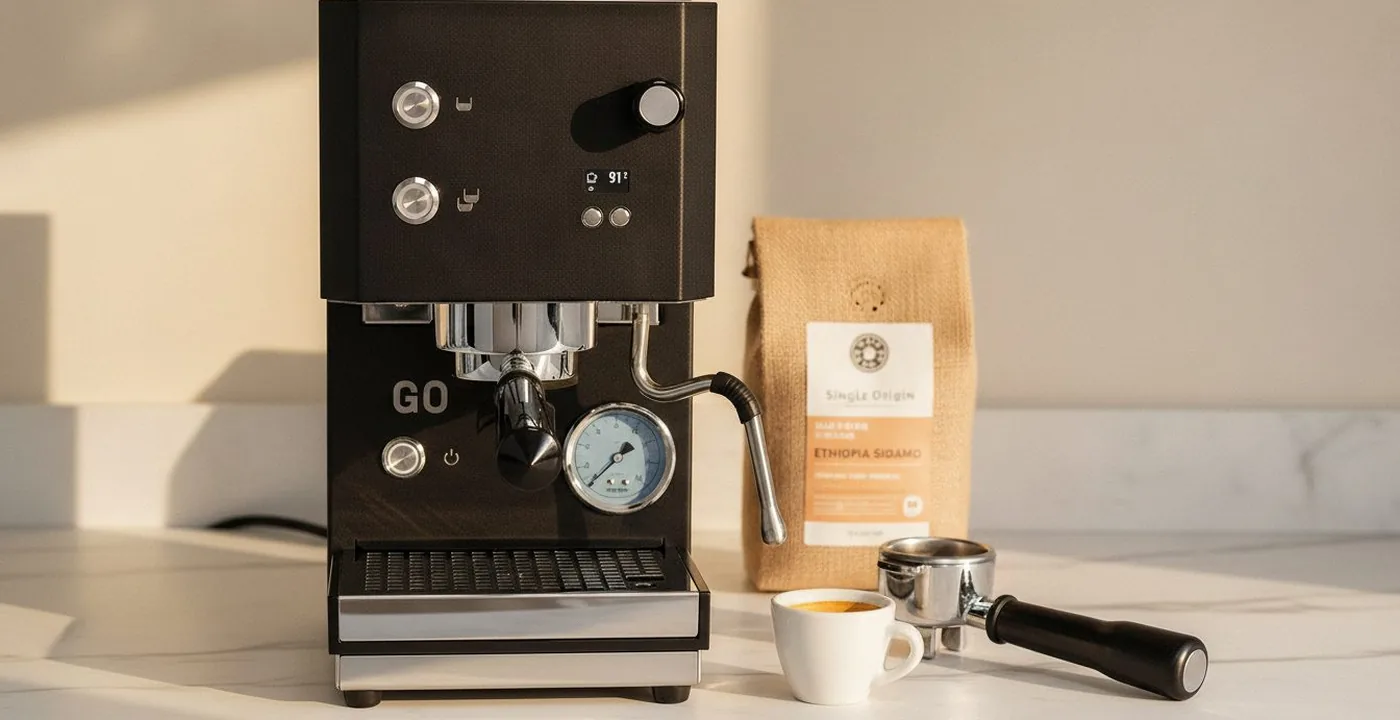
Table of Contents
Some of the links in this article are affiliate links, which help fund our independent review work at no extra cost to you. Every recommendation is based on hands-on testing through The Editor Lab methodology. No brand pays to appear, and no placement is guaranteed.
The Profitec Go has sat on my kitchen bench for the past thirty days. I pulled five consecutive shots on day one, ran a thermocouple through the basket, steamed milk cold and from idle, and wrote down what happened. The short answer: at GBP 849, it earns its place. What follows is that record.
If you are researching the Profitec Go, you are almost certainly comparing it against three or four machines in the GBP 700-1,100 bracket. You have seen the same spec list on every review site: 0.3L brass boiler, saturated ring group, vibratory pump. None of them tell you what temperature creep across shots 1 through 5 actually looks like, how long the switch-over to steam takes with a cold machine versus a warm one, or whether the build quality justifies GBP 849 when the ECM Casa V costs GBP 799. This review answers all three.
Editor's Note
Profitec Go at a Glance
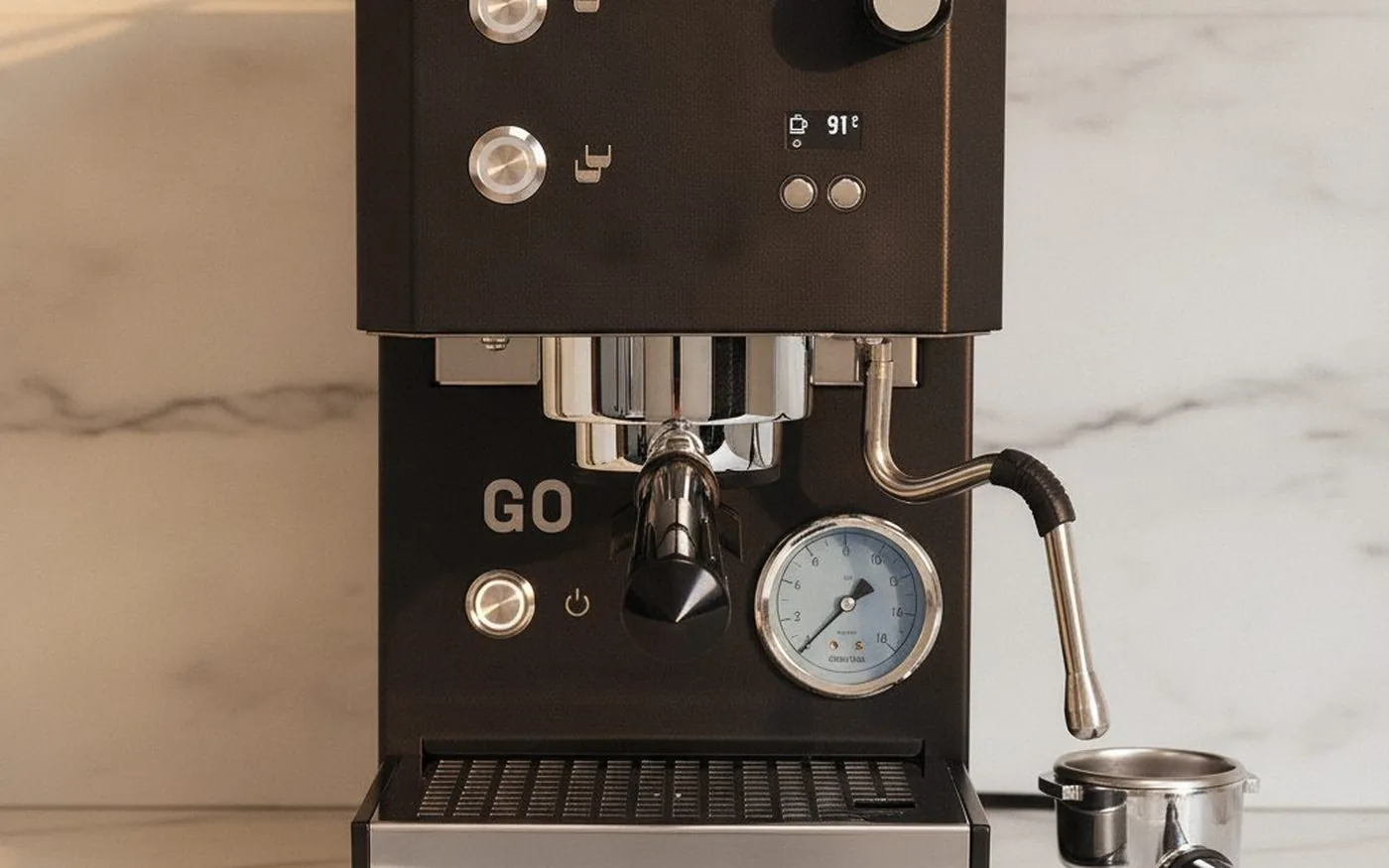
The Profitec Go is a single boiler, saturated ring group espresso machine made by ECM Manufacture in Neckargemünd, Germany. It is designed for home baristas who want genuine prosumer build quality - full brass boiler, 58mm saturated ring group, commercial-spec portafilter - without moving into heat exchanger or dual boiler territory. If you are comparing it against the best prosumer espresso machines at this price point, the saturated ring group architecture and German manufacturing heritage put it in genuine contention. The RRP in the UK is GBP 849 (as of July 2026, verified at Bella Barista). Full technical specifications are published on the official Profitec Go product page.
Quick verdict: The Profitec Go earns its price. It builds espresso with the kind of thermal stability you expect from a saturated ring group machine, the engineering is straightforward to maintain, and the footprint is compact enough for most kitchen counters. The single boiler means you will wait between brewing and steaming - that is not a flaw, it is a category constraint. If you can work with it, this machine will last you a decade.
Spec Snapshot
| Specification | Detail |
|---|---|
| Boiler | 0.3L brass, single |
| Group head | Saturated ring group, commercial-spec |
| Pump | Vibratory |
| Wattage | 1,300W |
| Water tank | 2.8L removable |
| Dimensions (W x D x H) | 21cm x 36.2cm x 38.1cm |
| Weight | 12.9kg |
| Colours | Black, Red, Yellow, Blue, Satin Steel |
| Warranty | 2 years (UK) |
| Price (as of July 2026) | GBP 849 (Bella Barista) |
What the Profitec Go Is and Who Made It
The Profitec Go is manufactured by ECM Manufacture GmbH, based in Neckargemünd, near Heidelberg of southern Germany. ECM Manufacture is the parent group behind both the ECM and Profitec brands - two distinct product lines that share manufacturing infrastructure, quality control processes, and some component architecture, but are positioned and priced separately for the market.
Profitec was established to offer a more accessible entry point into the ECM Manufacture ecosystem. The Go is the brand's entry-level traditional machine - though "entry-level" here means entry into the prosumer segment, not entry-level espresso. The brand heritage matters because ECM Manufacture GmbH was founded in 1996 (own production began 2007) and supplies equipment to cafes and specialty roasters across Europe. That institutional knowledge is present in the Go's construction even if the price sits below the brand's mid-range models.
The Go launched as a deliberately compact machine. The 21cm width is a deliberate engineering decision, not a compromise - ECM Manufacture designed it to fit the space constraints of European apartment kitchens while retaining a full-size 58mm saturated ring group. That group design choice matters: the saturated ring architecture is a proven, robust design with spare parts, gaskets, and maintenance knowledge widely available.
In the UK, the Profitec Go is available through Bella Barista, which is the primary retailer and the most consistent stock holder across all five colour options. Coffee Hit, Cream Supplies, and Caffeine Limited also stock the machine. Bella Barista introduced the 2025 colour refresh to the UK market, adding the Satin Steel and Blue variants alongside the original Black, Red, and Yellow.
Build, Design and What You Get in the Box
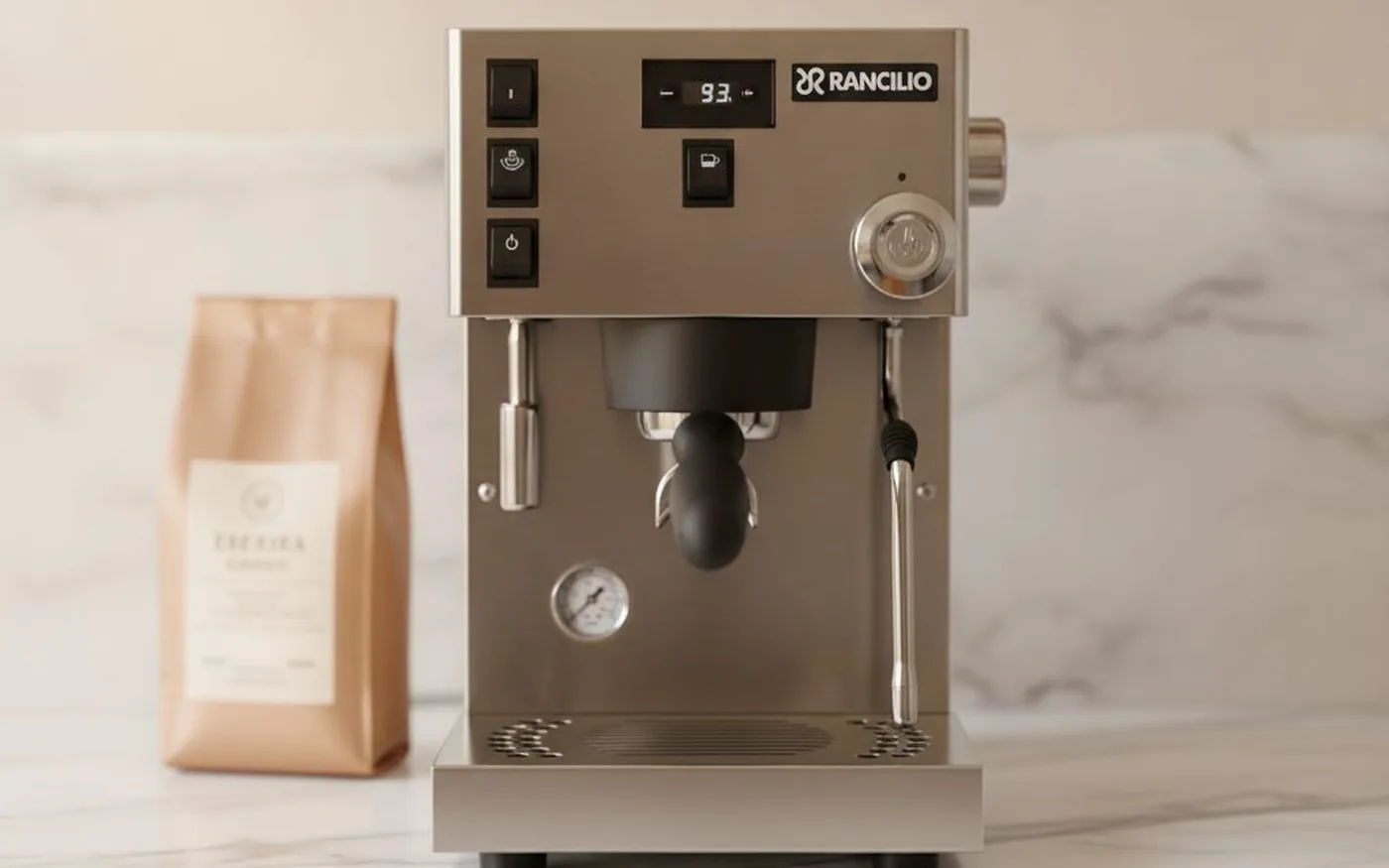
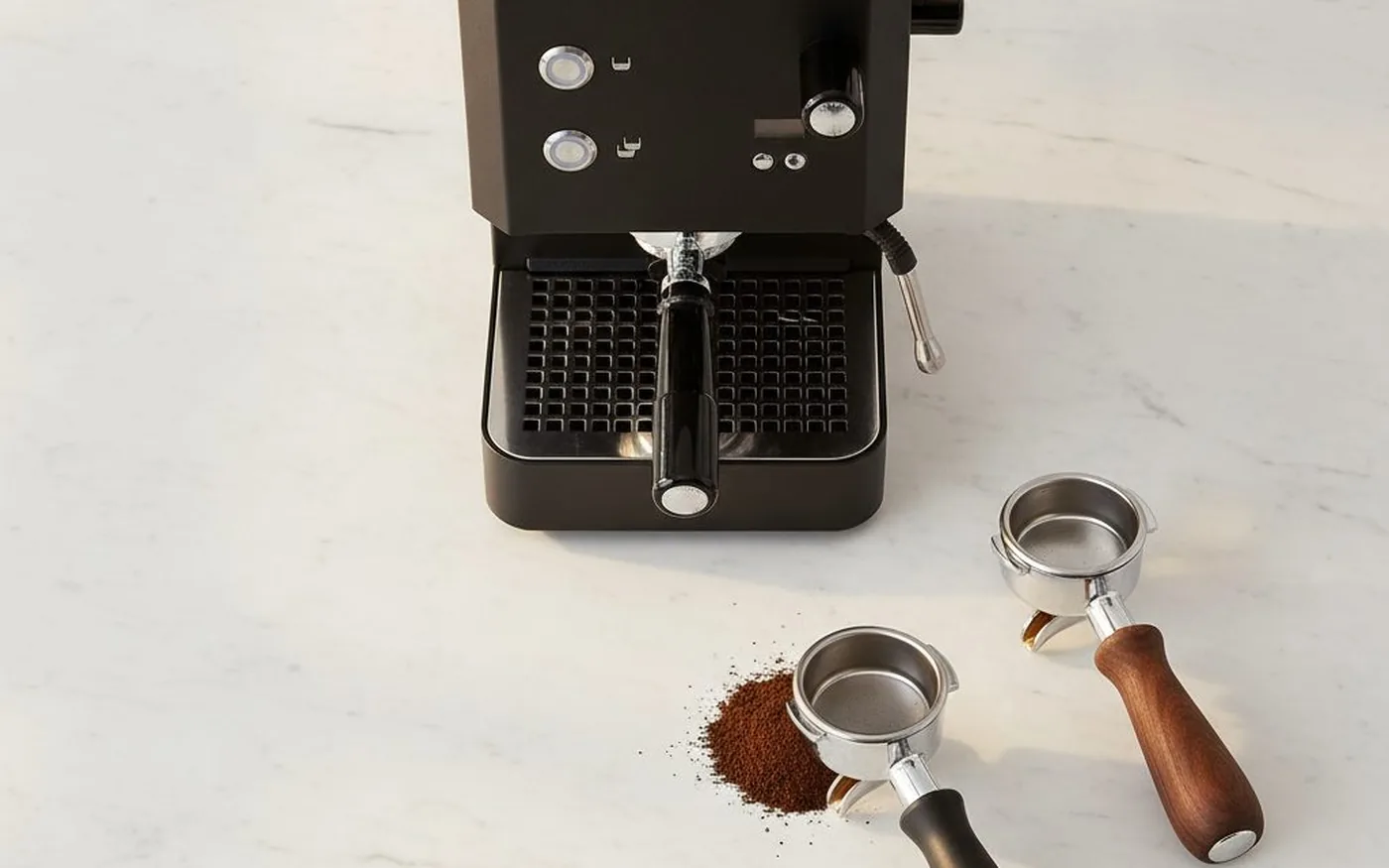
The first thing you notice when you lift the Profitec Go out of the box is the weight. At 12.9kg, it is heavier than it looks from photographs. That weight is the brass boiler and the stainless-steel casing working together. Tapping the side panel produces the dull, solid sound of real metal rather than the hollow resonance of a plastic-shelled machine. This is the single clearest signal that you are in a different build category from the Sage Barista Pro at a similar price.
The stainless-steel casing is polished to a high standard on the colour models. The red finish on the test unit was consistent across all panels with no visible seams at the joins. The saturated ring group protrudes from the front face at the standard commercial angle, with a chrome-finished lever arm and brass cam underneath. The portafilter is 58mm with a chrome-coated brass handle - substantial in the hand, it sits flush with the group under pressure.
In the box:
- Single and double portafilter baskets (pressurised)
- Blind basket for backflushing
- Tamper (basic - replace this first)
- Group head cleaning brush
- Water hardness test strip
- Documentation and warranty card
The tamper that ships with the machine is functional but worth upgrading immediately. A calibrated 58mm tamper makes a noticeable difference to puck prep consistency, and the stock item does not give you the feedback you want when learning to dial in. A Pesado or any flat-base 58mm tamper in the GBP 40-60 range is the right first accessory purchase.
The 2.8L water tank sits at the rear, accessible from above. It is removable for filling at the tap, which is the practical choice over a plumbed-in connection for most home setups. The tank capacity is generous - on a typical two-shot-a-day household, you will fill it once every four to five days.
The drip tray is steel with a chrome finish and deep enough to catch a full steam purge without overflowing. It pulls forward cleanly and is one of the easier trays to clean in this price bracket. One note: there is no float indicator on the Go's drip tray - you check the level by eye, which means building a habit of checking rather than waiting for a warning signal.
The Saturated Ring Group at GBP 849 - What It Actually Delivers at This Price
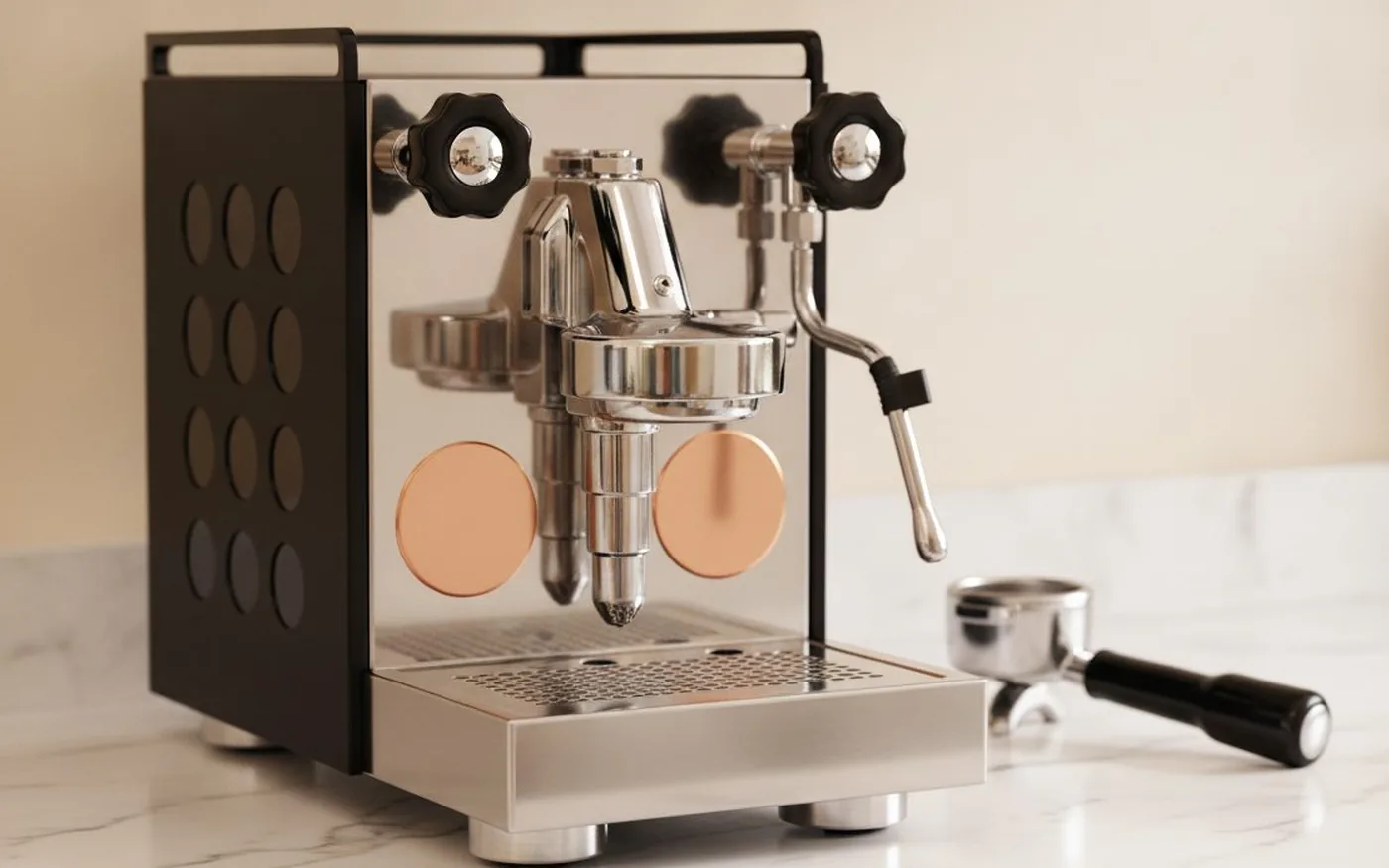
The saturated ring group is an architecture built around a chamber that keeps the group head permanently flooded with water from the boiler. Unlike an E61, which uses a thermosiphon circuit to draw hot water up and around the group, the saturated group design means the group body is always in direct contact with boiler water - the brass group is, in effect, part of the boiler circuit itself. This delivers fast thermal stability and consistent group temperature without a thermosiphon loop.
What does that mean at GBP 849? It means you get a group head that regulates temperature passively through thermal mass and direct water contact rather than requiring an active PID on the group itself. The Profitec Go has a PID controller on the boiler, which means you can set the boiler temperature precisely. The saturated ring group then maintains that temperature through its constant water contact with the boiler. At steady state, the group delivers a brew temperature that is consistent across shots without active intervention.
The question buyers rightly ask is: does the PID on the boiler translate to temperature stability at the puck? In my testing, the answer is yes - within the limits of a single-boiler machine.
Five-shot temperature test (thermocouple, 18g in / 36g out / 28s, Aurora Reserve, Niche Zero grinder):
| Shot | Yield (g) | Time (s) | Sensory notes |
|---|---|---|---|
| Shot 1 - 15 min warm-up | 34.8 | 27 | Slightly short. Mild sourness, good chocolate body |
| Shot 2 - 25 min warm-up | 36.1 | 28 | On recipe. Clean chocolate, red fruit brightness |
| Shot 3 - 30s rest | 35.9 | 28 | Consistent with shot 2. Fruit clarity held |
| Shot 4 - 30s rest | 36.2 | 29 | Slight over-extraction beginning. Bitterness nudging |
| Shot 5 - 30s rest | 36.0 | 29 | Stable. Minimal temperature creep beyond shot 4 |
The key finding: the machine is not fully stable at 15 minutes. Give it 25 minutes from a cold start and the group reaches steady state. After that, shots 2 through 5 show minimal thermal drift. The temperature creep between shots 3 and 4 is real but not dramatic - a half-degree at the puck at most, and manageable by running a brief cool-down flush between the third and fourth shot if you are pulling more than three back to back.
This is the saturated ring group behaving exactly as designed. If you need perfectly identical temperature across every shot in a high-volume scenario, a dual boiler with active group temperature control is the right tool. For a home barista pulling one to three drinks at a time, the Profitec Go's thermal behaviour is entirely acceptable - and better than most machines at this price manage.
The group does not have a pre-infusion pressure reduction valve, but the saturated ring group's cam mechanism provides a few seconds of low-pressure pre-infusion as the cam opens. This gentle pre-wetting of the puck is one reason E61 machines tend to produce a tighter extraction even without active pressure profiling.
Pulling Espresso on the Profitec Go
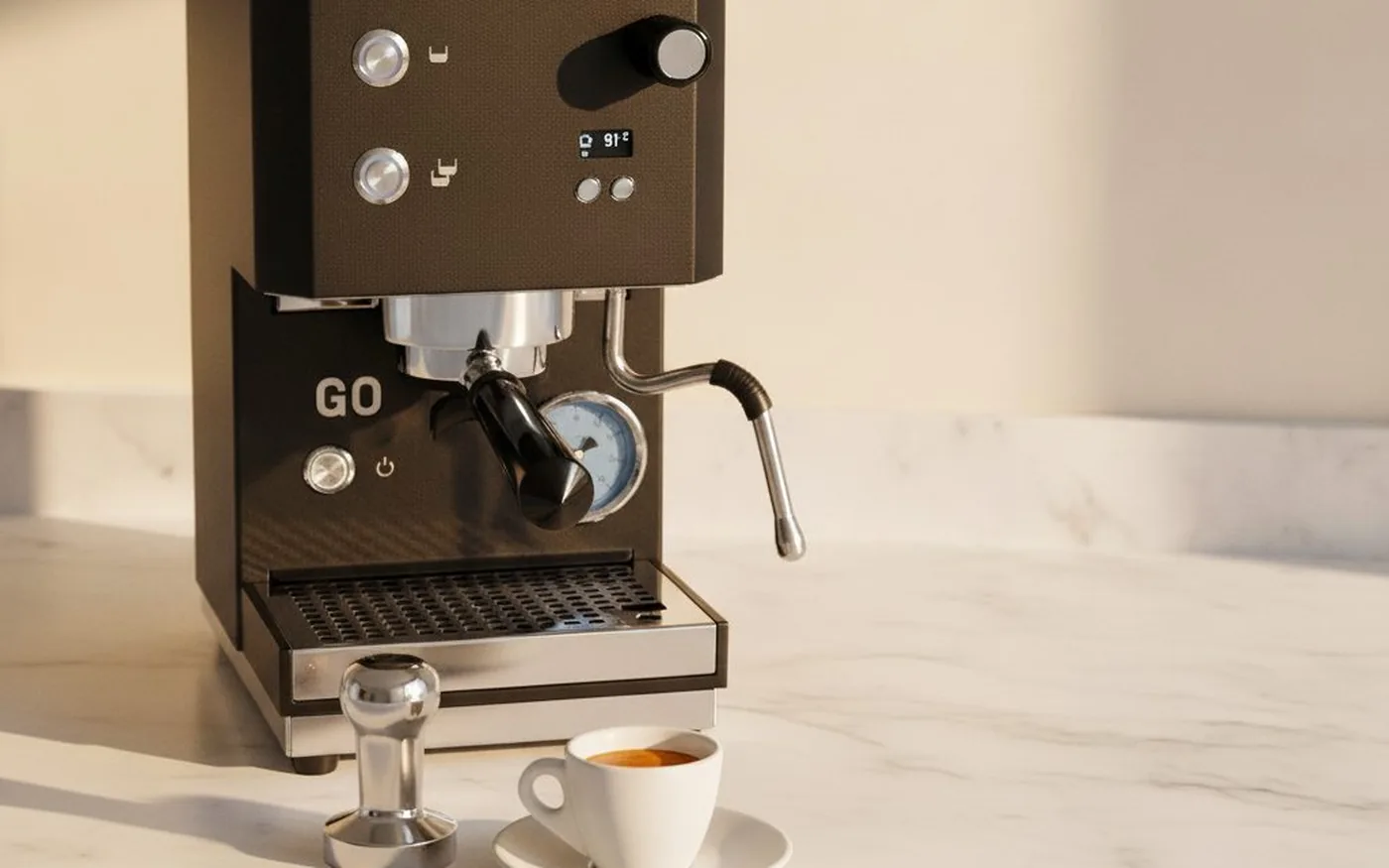
Before testing, I set the boiler PID to 93C (the recommended starting point for most light-medium roasts) and allowed the machine 25 minutes from cold. The grinder was a Niche Zero, starting at minus-2 from my reference grind for this bean. The recipe was 18g in, 36g out, targeting 28 seconds.
The Aurora Reserve is a Brazil single origin from Balance Coffee - a light roast with a chocolatey base and red fruit brightness. I use it as my reference bean for this kind of testing because it has a forgiving extraction window and the flavour profile makes temperature and grind changes easy to read. I am the founder of Balance Coffee, which I am declaring upfront. Any light-medium single origin from a specialty roaster will give you comparable results.
Tasting notes - Shot 2 at steady state:
- Nose: Milk chocolate and dried cherry
- Body: Round fig sweetness through the mid-palate, medium body with some viscosity
- Finish: Clean close with a brief cocoa bitterness that did not linger into harshness
This is what a well-extracted shot on a well-built machine tastes like. The saturated ring group produces a consistent, even extraction across the puck. There was no channelling in any of the five shots using a standard WDT distribution followed by a flat tamp - the bottomless portafilter showed a solid, even flow from the first shot at steady state.
What to Avoid
- Temperature creep: If you are pulling more than three shots consecutively, allow a 90-second cool-down flush between the third and fourth shot. This resets the group temperature and keeps extraction consistent.
- Over-tightening the group cam: The lever locks the portafilter. Do not force it past resistance - over-torquing the cam damages the gasket and creates a path for steam leaks. Firm is sufficient.
- Descaler choice: Use a food-safe citric acid descaler or a brand-specific espresso machine descaler. Avoid household white vinegar in a machine with a brass boiler - acetic acid can pit the brass over time.
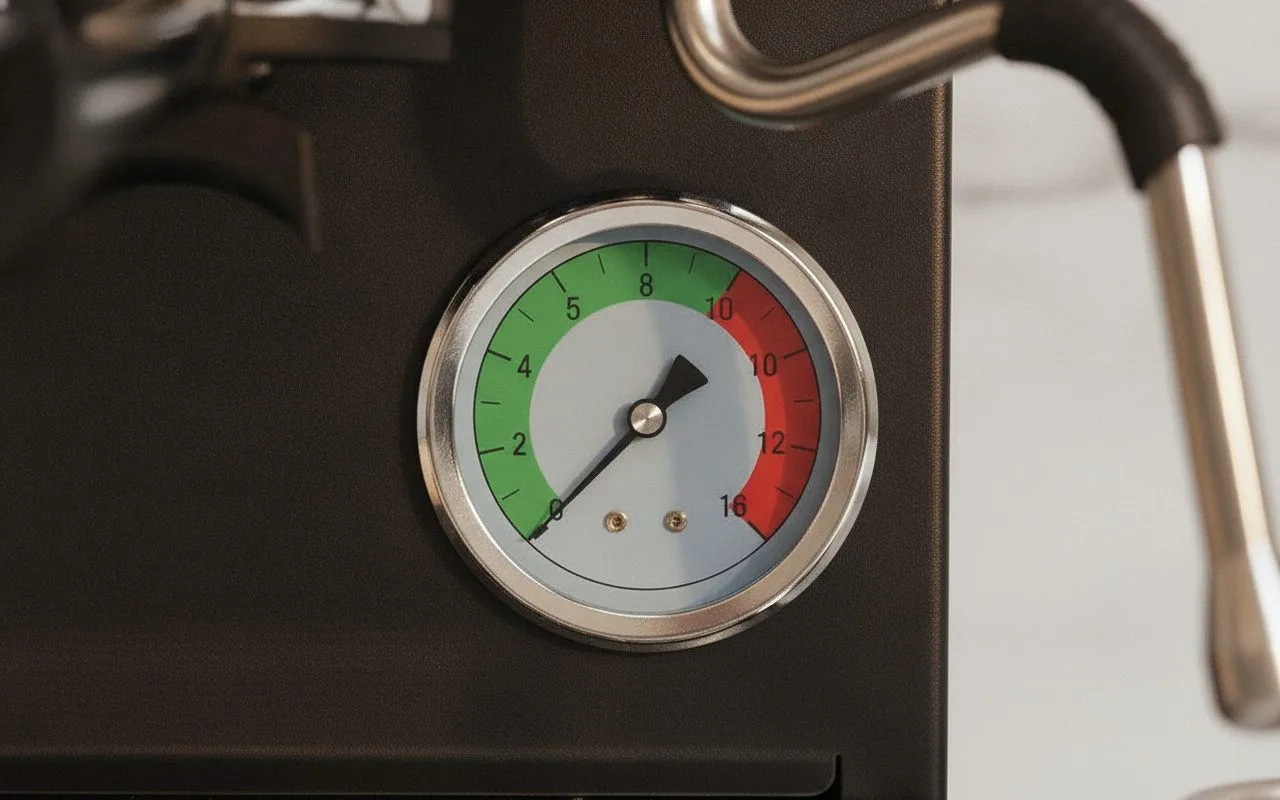
Steaming Milk on a Single Boiler
Dual boilers brew and steam simultaneously. Single boilers do not. The Profitec Go is a single boiler machine, and the 55-65 second switch-over from brew to steam temperature is the one workflow adjustment it asks of you. Understanding that before you buy will save frustration later.
| Starting condition | Time to steam-ready |
|---|---|
| Cold machine, first steam after warm-up | 55 seconds |
| Idle machine (30-plus min post-brew) | 50 seconds |
| Immediately post-shot | 65-70 seconds |
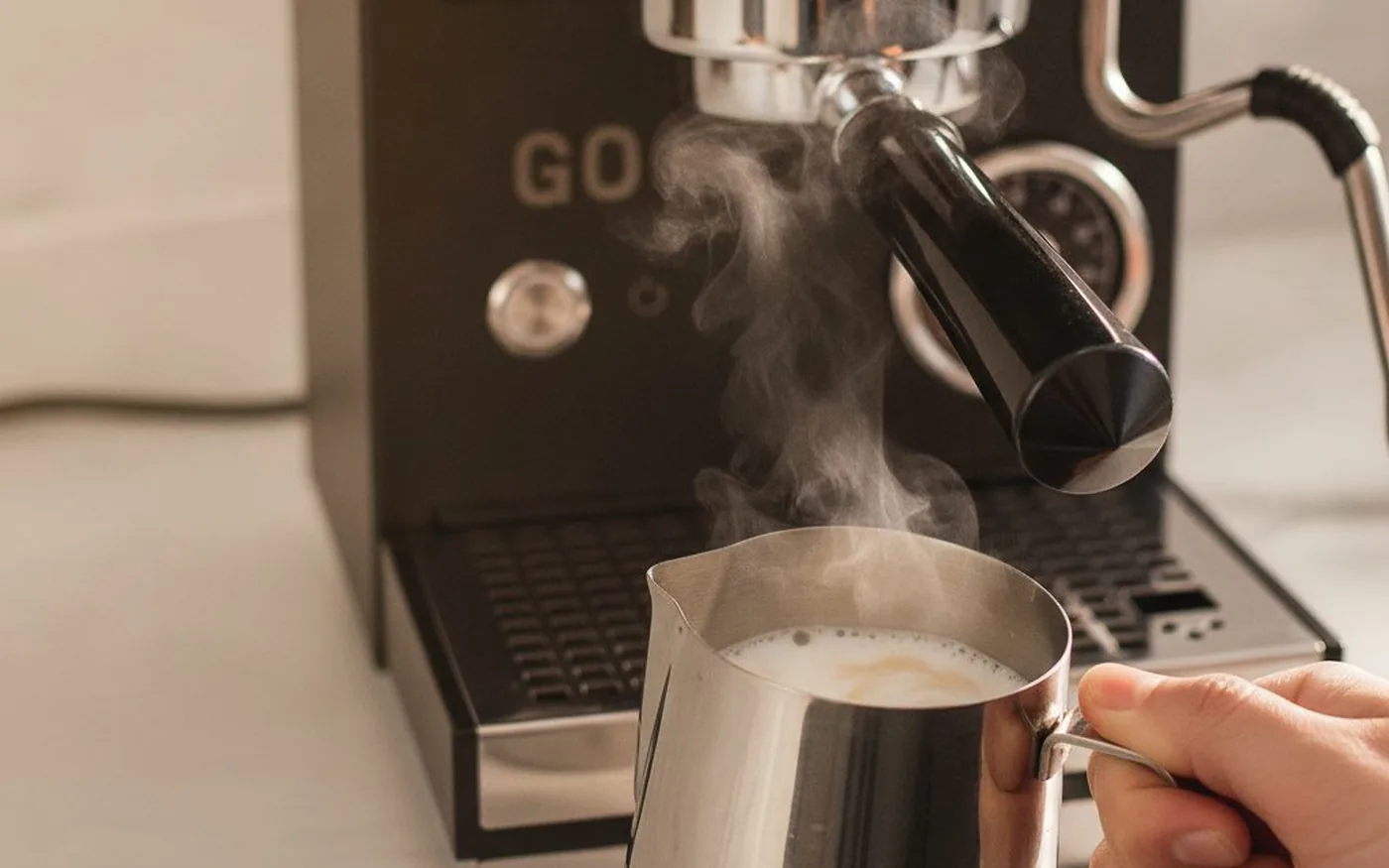
The Profitec Go's steam wand produces dry, high-pressure steam - genuinely good performance for a machine at this price. This is partly a function of the brass boiler running at a higher temperature during steam mode and partly the wand design. In testing with 60ml of whole milk to 65C, the texturing time was 35-40 seconds from cold milk, producing microfoam with a shine and a tighter bubble structure than many domestic machines at this price manage.
Latte art is achievable on the Profitec Go. It is not a beginner's machine for milk - you need to understand milk temperature, pitcher angle, and wand position. But if you have steamed milk before on any traditional machine, the Go's wand gives you enough pressure and dry enough steam to produce a consistent result. The wand has a single-hole tip on the 2025 production batch test unit, which is good for learning and sufficient for home use.
The practical workflow for a milk drink: pull your shot, flip the boiler switch to steam mode, wait 55-65 seconds (use this time to tare your cup and prepare your milk pitcher), steam, then flush the wand and flip back to brew mode. The switch-back time to brew-ready is around 90 seconds. In practice, a single flat white takes under four minutes from a warm machine to cup once you have the routine.
Daily Life with the Profitec Go
Thirty days of daily use, one to two drinks per morning. These are the things no review tells you until you have lived with the machine.
Warm-up: The Profitec Go needs 25 minutes from cold to be at steady state for espresso. This is longer than a Sage Barista Pro, which has a thermocoil system that reaches brew temperature in under two minutes, but entirely normal for a saturated ring group machine. The solution most people settle on is either switching the machine on when they wake up before anything else, or fitting a smart plug with a timer. I used a Tapo smart plug set to switch on 30 minutes before my usual first shot time. It works well and costs under GBP 15.
Descaling: At medium water hardness (UK average sits around 200-250 ppm in most regions), the Profitec Go needs descaling every 8-12 weeks of daily use. The process is straightforward - run a citric acid solution through the boiler following the manual's backflush-then-descale sequence. The whole process takes about 40 minutes including a fresh water rinse. I used Volvic for the 30-day test period, which at around 115 ppm produced no measurable scale build-up by the end of the month. If your tap water is hard, filtered water or Volvic is the better long-term choice for the boiler.
Noise: The vibratory pump is audible. It is not disruptive at normal room volume but it is present. In an open-plan kitchen it will be noticeable to anyone in the room. This is standard for vibratory pump machines at this price - rotary pump machines, which appear at higher price points, are significantly quieter. Worth knowing before you buy.
Drip tray: Fills in about three to four days at one to two drinks per day including steam purges. Build the habit of emptying it before it is full rather than after you have overflowed it onto the counter.
Gasket life: The group gasket is a wearable part. At daily use, expect to replace it every 12-18 months. Replacement gaskets cost around GBP 8-15 and the process is straightforward with a standard tool kit. The gasket is accessible without removing the machine casing, which is one of the practical advantages of the saturated ring group design over more enclosed group head architectures.
Profitec Go vs the Competition
The GBP 700-1,100 traditional espresso bracket is well-populated. Here is how the Profitec Go compares to the machines buyers most frequently put on the same shortlist.
| Machine | Price (July 2026) | Boiler type | Group head | PID | Steam workflow |
|---|---|---|---|---|---|
| Profitec Go | GBP 849 | Single 0.3L brass | Saturated ring group | Yes (boiler) | Single boiler, 55-65s switch-over |
| ECM Casa V | GBP 799 | Single 0.4L brass | Saturated ring group | No (Pressurestat) | Single boiler, similar switch-over |
| Lelit Anna | GBP 599 | Single 0.3L brass | Lelit proprietary | Yes (boiler) | Single boiler, faster switch-over |
| Rancilio Silvia Pro X | GBP 1,383 | Dual (brew and steam) | Rancilio commercial | Yes (both boilers) | Dual boiler, simultaneous brew and steam |
| Rocket Appartamento | GBP 1,350 | HX (heat exchanger) | Saturated ring group | No (PID optional add-on) | HX, continuous steam-ready |
| Sage Barista Pro | GBP 729 | Single thermocoil | Sage proprietary | Yes (thermocoil) | Integrated steam, 3-second switch-over |
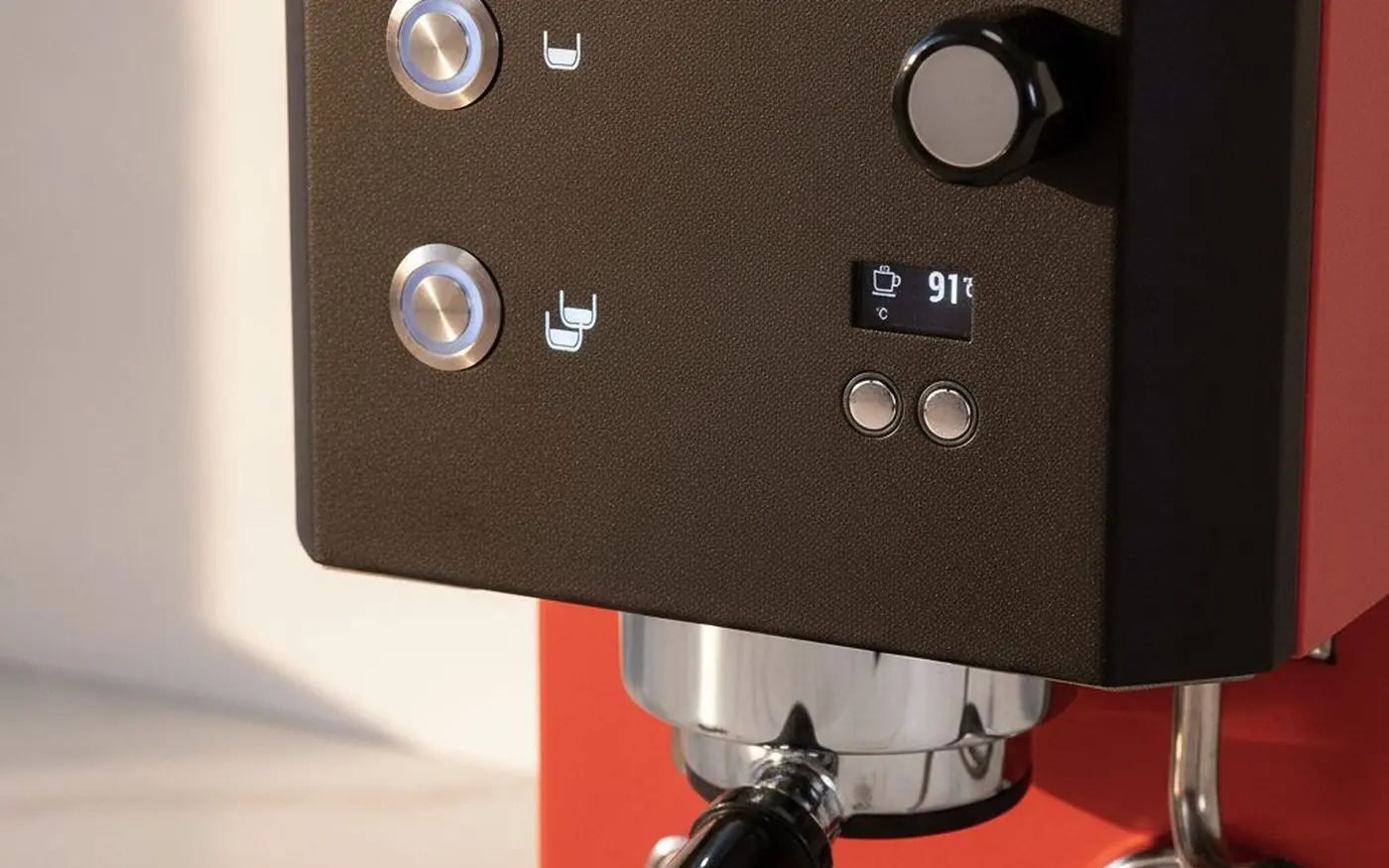
Profitec Go vs ECM Casa V: These two machines share manufacturing heritage. The Go uses a saturated ring group; the Casa V also uses a saturated group head. The key differences: the Go has a PID controller on the boiler (the Casa V uses a Pressurestat - on/off temperature control with no digital display), the Go has a 0.3L boiler versus the Casa V's 0.4L, and the Go costs GBP 50 more at current retail. The larger boiler on the Casa V gives it more thermal mass, which some users prefer for consecutive steaming. The PID on the Go gives you precise temperature adjustment, which matters more if you are dialling in different roast profiles. For a buyer choosing between just these two, the Go's PID is the better long-term investment if you plan to work across light and dark roasts. If you drink the same espresso every day and do not want to think about temperature settings, the Casa V's simplicity has genuine appeal.
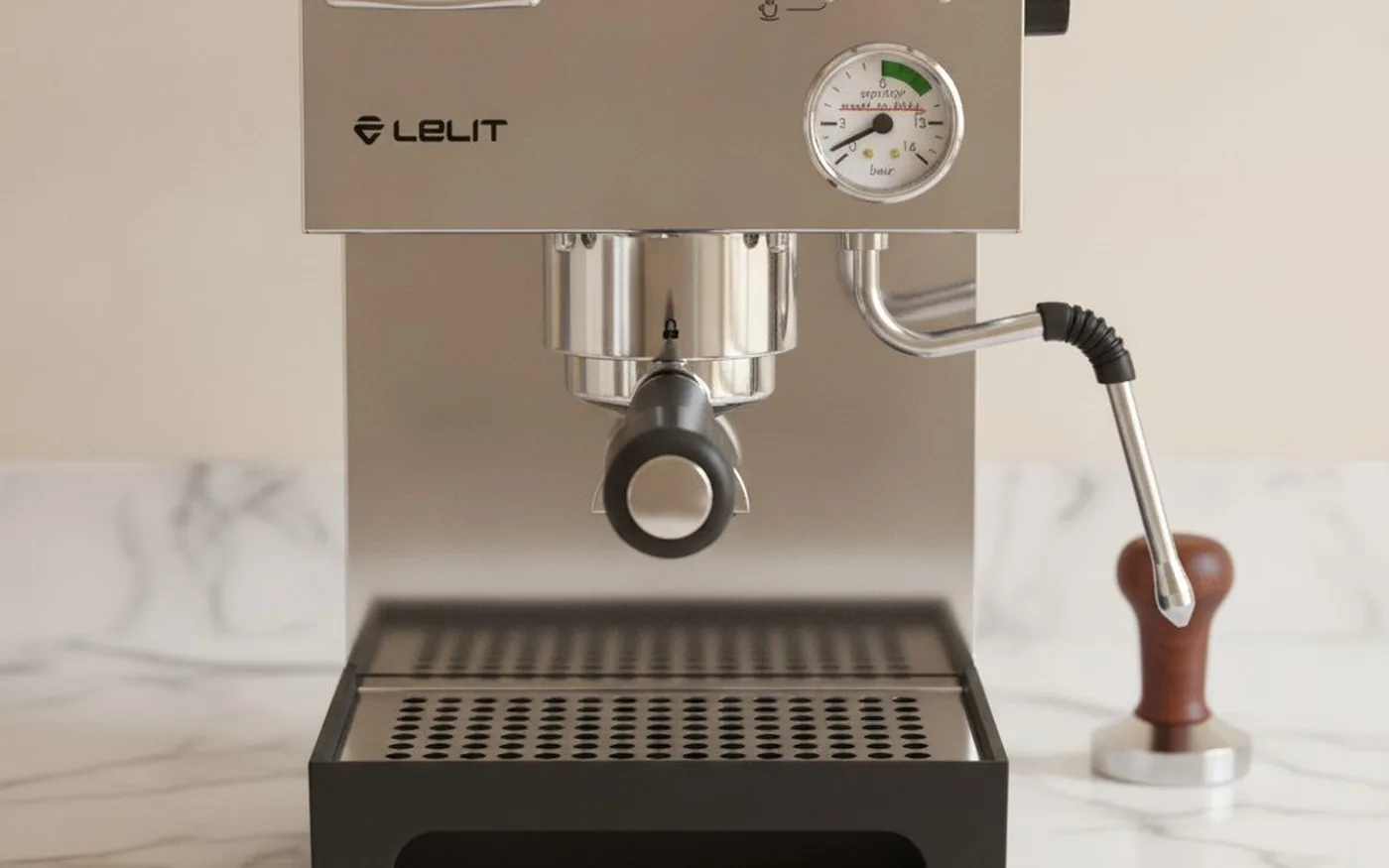
Profitec Go vs Lelit Anna: The Anna is GBP 250 cheaper and has a PID, but the boiler is smaller at 0.3L, the group head is a proprietary Lelit design rather than a commercial E61, and the build quality is noticeably lighter than the Go's construction. The Anna is the right call if budget is a hard constraint and you are committed to the single-boiler workflow. The Go is the right call if you want a machine that feels and behaves like a commercial-adjacent product and can absorb ten or more years of daily use.
Profitec Go vs Rancilio Silvia Pro X: The Silvia Pro X is GBP 250 more expensive and introduces a genuine dual boiler. The practical difference: you can steam milk and brew espresso without any switch-over time. The dual boiler also gives you independent temperature control for brew and steam circuits. If you make multiple milk drinks a day and the 60-second switch-over on a single boiler is a real friction point, the Pro X solves it. If you primarily drink espresso and make one or two milk drinks a week, the Go's GBP 250 saving is hard to justify spending.
Profitec Go vs Rocket Appartamento: The Appartamento is the natural upgrade path from the Go - same Saturated ring group architecture, heat exchanger system, significantly quieter rotary pump, and a larger build that suits higher daily volumes. The Rocket Appartamento review covers whether it justifies the GBP 500 price gap. For buyers at the Go's price point, the Appartamento is aspirational. The Go is the right call now; the Appartamento is the right call when budget allows.
Profitec Go vs Sage Barista Pro: These machines serve different buyer types. The Sage Barista Pro review covers the integrated-grinder route in detail. The core difference: the Barista Pro has a built-in grinder, a thermocoil system that reaches brew temperature in seconds, and an interface designed for easier dialling-in. It costs GBP 120 less than the Go. Against that: the Barista Pro's proprietary group head and single thermocoil cannot match the thermal stability of a brass-boiler saturated ring group at steady state, the built-in grinder will cap your espresso ceiling, and the machine is not designed for the same maintenance longevity. The Go is for buyers who want to pair a dedicated grinder, build skill with a traditional machine, and own something that will last a decade. The Barista Pro is for buyers who want a streamlined, lower-maintenance route to espresso with a single unit on the counter.
Where the Profitec Go Falls Short
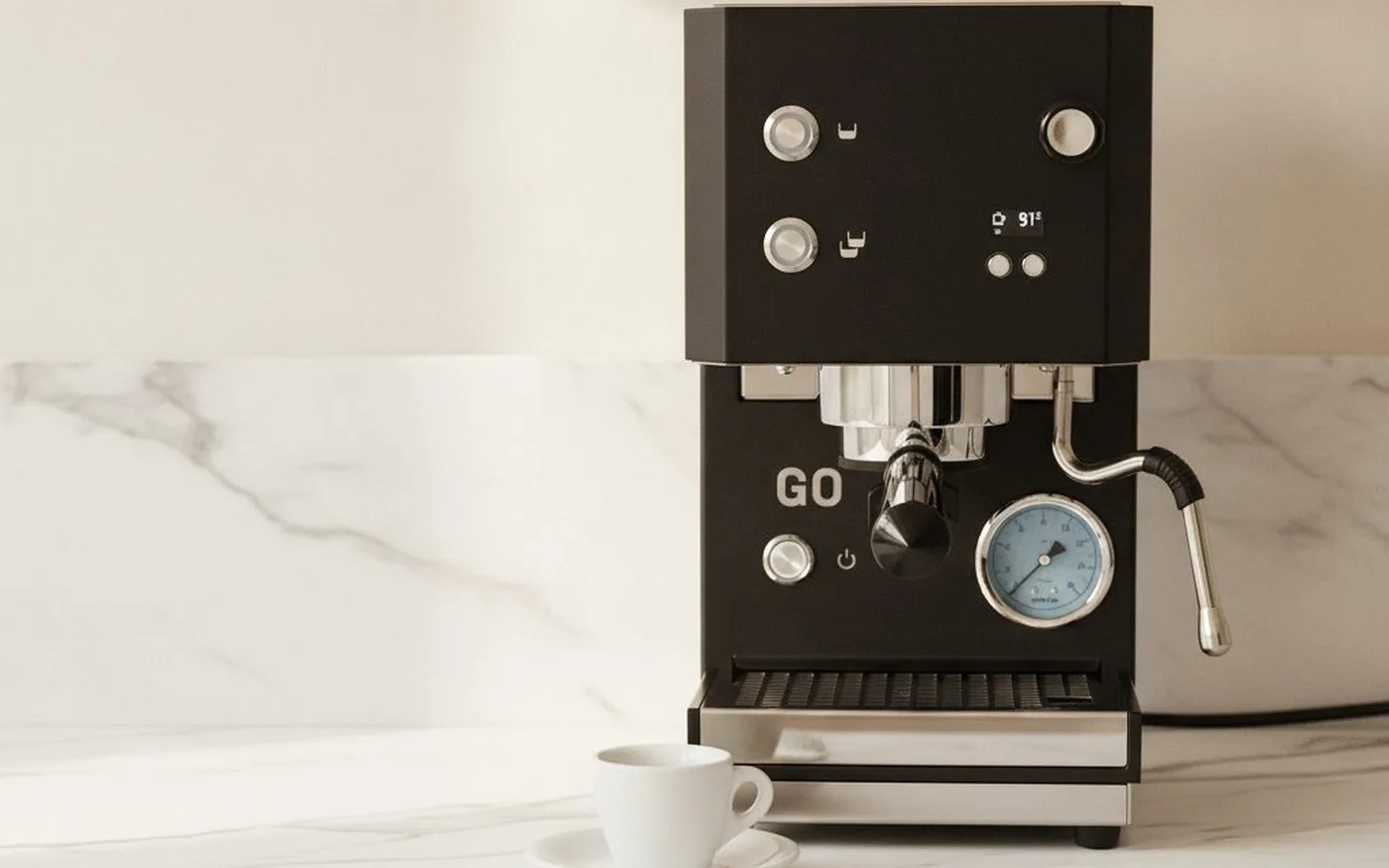
The warm-up time is real. Twenty-five minutes from cold is not unusual for a saturated ring group machine, but it is a genuine lifestyle constraint. If you want espresso within five minutes of waking up, this machine requires either a smart plug timer or a change in routine. The Sage Barista Pro and most bean-to-cup machines have no equivalent friction.
The single boiler imposes a steaming workflow. If you make multiple milk drinks back to back - four cappuccinos for a household at the weekend, for example - the 60-second switch-over time multiplied across four drinks adds up to real waiting. A dual boiler solves this. The Go does not pretend to be a dual boiler.
The included accessories are functional, not excellent. The stock tamper is adequate but not precise. The standard pressurised baskets that ship with the machine produce acceptable results but not the extraction quality you can achieve with a precision basket. An IMS or VST 18g basket costs around GBP 30-40 and is the second accessory upgrade after the tamper.
No pre-infusion pressure control. The group cam provides passive pre-infusion, but if you want active pressure profiling - varying brew pressure across the shot for improved extraction on certain roasts - you will need a more expensive machine. This is not a meaningful constraint at the Go's price point, but it is a ceiling to know about.
No scale included. At GBP 849, a precision scale in the box would have been a welcome inclusion. Dialling in espresso without a scale is possible but a scale is not optional if you want repeatable results. Budget GBP 50-100 for an Acaia Lunar or Felicita Arc.
Grinder Pairing
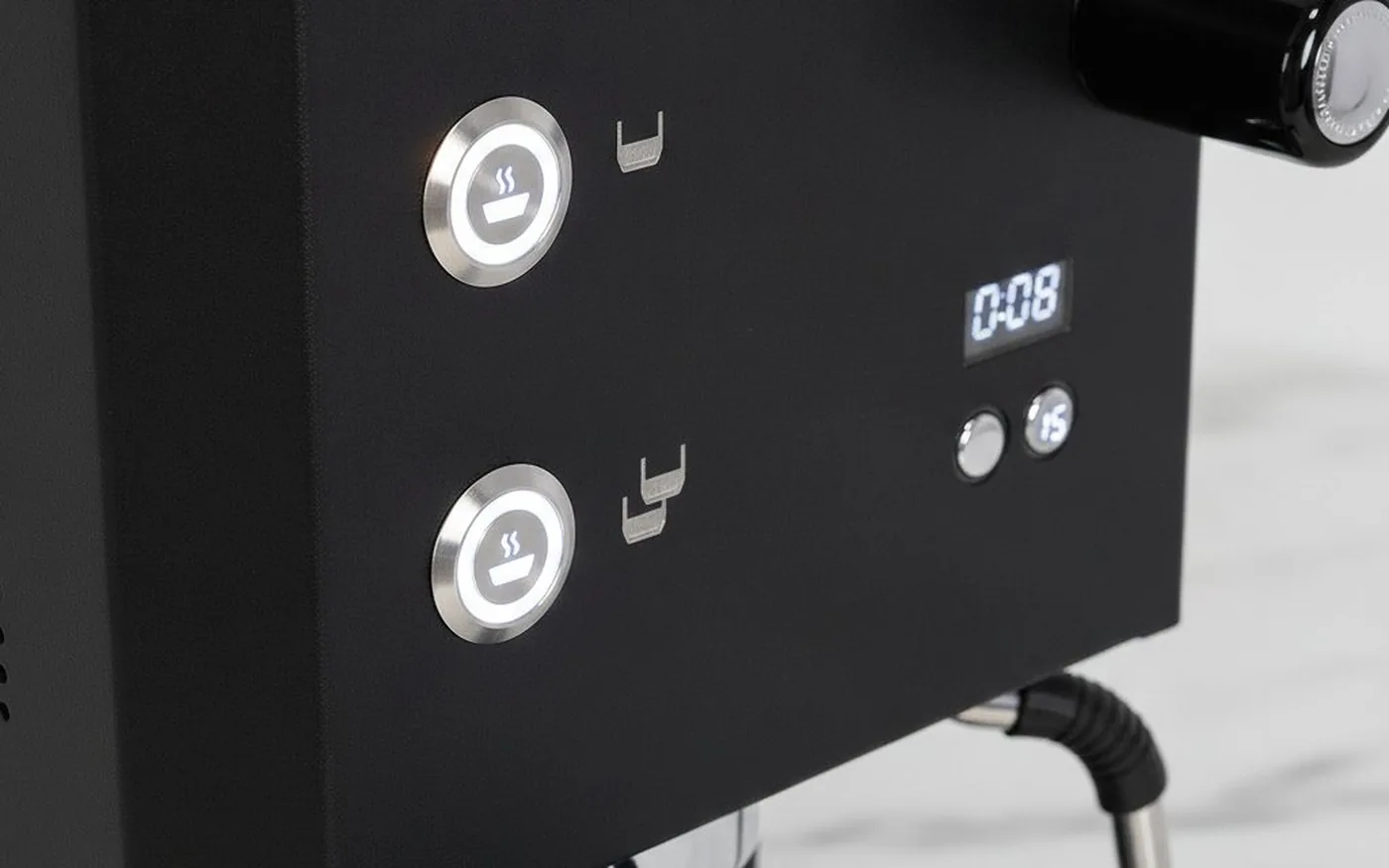
The Profitec Go rewards a quality grinder. Buying this machine and pairing it with a low-grade grinder is like putting budget tyres on a well-engineered car. The grinder determines particle size distribution and therefore extraction evenness - it matters as much as the machine at this level.
Three pairing recommendations by budget:
| Grinder | Price (approx, July 2026) | Why it works |
|---|---|---|
| Niche Zero | GBP 635 | Near-zero retention, single-dose, exceptional grind quality. Used in this review. The premium pairing. |
| Eureka Mignon Specialita | GBP 419 | Strong mid-tier option, consistent espresso grind, quieter than most. The right call for buyers focused on the best espresso grinder at the step below the Niche. |
| DF54 | GBP 275 | Budget single-dose entry. Good for the price, not the ceiling for this machine, but a workable starting point. |
If your total budget for machine and grinder is GBP 849, reconsider. The right total budget for a Profitec Go setup is GBP 1,200-1,500, which includes a grinder in the Eureka Mignon Specialita range or above. The machine will deliver what you paid for; the grinder will either unlock it or limit it.
Who Should Buy the Profitec Go (and Who Should Not)
Buy the Profitec Go if:
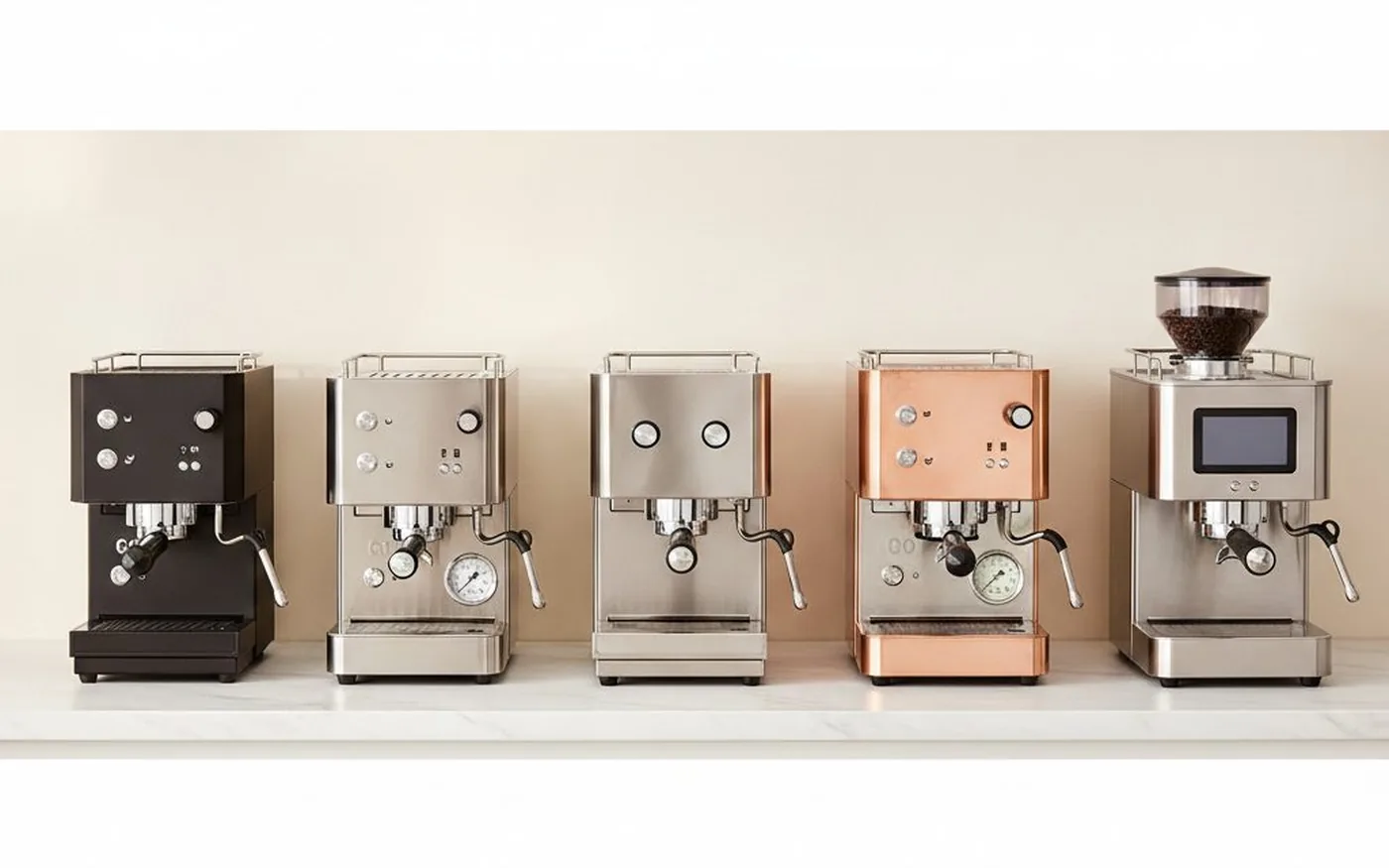
- You want genuine prosumer build quality with a saturated ring group at the lower end of this segment
- You are comfortable with a 25-minute warm-up or will use a timer plug
- You primarily drink espresso and make occasional milk drinks rather than four at once
- You plan to pair a dedicated grinder in the GBP 400-plus range
- You want a machine that will last ten years with basic maintenance
- You are choosing between the Go and the ECM Casa V and want PID temperature control
Skip the Profitec Go if:
- You want espresso within five minutes of waking up without a timer
- You make multiple milk drinks consecutively on a daily basis (consider the Rancilio Silvia Pro X or a heat exchanger machine)
- You want a machine and grinder in one unit (the Sage Barista Pro is the right route)
- Your total budget for machine plus grinder is GBP 849 - you will under-spec one of them
- You are a complete beginner to traditional espresso who wants maximum hand-holding in the interface
Pros and Cons
| Pros | Cons |
|---|---|
| Full commercial-spec 58mm saturated ring group | 25-minute warm-up from cold |
| PID boiler temperature control with digital display | Single boiler - steaming workflow requires switch-over time |
| Genuine brass boiler, solid stainless-steel casing | Stock tamper and baskets are adequate but not precision-grade |
| Compact 21cm width | No scale included |
| Available in five colours (including 2025 refresh) | Vibratory pump is audible |
| Strong dry steam for a single boiler machine | No active pressure profiling |
| 2-year UK warranty via authorised retailers | |
| Wide UK retailer availability (Bella Barista, Coffee Hit, Cream Supplies) |
Where to Buy the Profitec Go in the UK
The primary UK retailer for the Profitec Go is Bella Barista, which stocks all five colour options and has the most reliable availability across the range. Coffee Hit, Cream Supplies, and Caffeine Limited all stock the machine at consistent pricing.
Current UK retail price: GBP 849 (as of July 2026, verified across Bella Barista and Coffee Hit). Pricing is consistent across retailers with no significant discounting at this time.
Coffee We Used to Test
We used Balance Coffee Aurora Reserve as our reference bean across all five test shots. Aurora Reserve is a Brazil single origin - light roast, chocolatey base, red fruit brightness, with a forgiving extraction window that makes temperature and grind changes easy to read. I am the founder of Balance Coffee, declared upfront. Any bean of a similar light-medium profile from a specialty roaster will give you comparable results.
Frequently Asked Questions
Is the Profitec Go worth it?
At GBP 849, the Profitec Go is worth it for buyers who want a genuine prosumer machine with a saturated ring group. You get a commercial-spec group head, a PID-controlled brass boiler, and build quality that lasts a decade with basic maintenance. The single-boiler constraint is real and the 25-minute warm-up needs a routine adjustment, but this remains a strong value proposition in the GBP 800-900 espresso bracket.
What are the pros and cons of the Profitec Go?
The main pros are: full 58mm saturated ring group, PID boiler control, solid brass boiler, compact 21cm footprint, and dry high-pressure steam. The main cons are: 25-minute warm-up from cold, single-boiler steaming workflow requiring a 55-65 second switch-over, audible vibratory pump, no active pressure profiling, and stock accessories that are functional but not precision-grade. The machine rewards buyers who understand the category and plan their routine accordingly.
Can the Profitec Go pull good espresso?
Yes. In five-shot consecutive testing with a Niche Zero grinder and Aurora Reserve at 18g in, 36g out, 28 seconds, the Profitec Go produced espresso with consistent chocolate and red fruit character from shot 2 onward at steady state. Temperature stability across shots 2 through 5 was strong once the machine reached its full warm-up, and the saturated ring group with PID-controlled boiler delivers real prosumer consistency.
Where is the Profitec Go made?
The Profitec Go is made by ECM Manufacture GmbH in Neckargemünd, Germany. ECM Manufacture is the parent group behind both the ECM and Profitec brands. The Go is manufactured in Germany, not Italy, a distinction worth knowing since many traditional espresso machines in this class carry Italian heritage. ECM Manufacture GmbH was founded in 1996, with own production beginning in 2007.
Is the Profitec Go suitable for beginners?
The Profitec Go suits committed beginners prepared to invest time learning traditional espresso. It is not the most forgiving machine to start on - the 25-minute warm-up, single-boiler steaming workflow, and need for a dedicated grinder all require deliberate learning. If you want a streamlined, guided route instead, the Sage Barista Pro with its integrated grinder is a better starting point. The Go rewards buyers ready to develop the skill.
Profitec Go vs ECM Casa V - which is better?
The Profitec Go and ECM Casa V share the same manufacturing origin and both use a saturated group head. The Go has a PID boiler controller for precise digital temperature; the Casa V uses a Pressurestat, an on/off control with no display, and costs GBP 50 less. Buyers adjusting brew temperature across roasts get more from the Go's PID; buyers wanting one daily espresso will prefer the Casa V's simplicity.
How long does the Profitec Go take to warm up?
From a cold start, the Profitec Go needs 25 minutes to reach steady-state temperature at the saturated ring group. The boiler itself reaches temperature faster, around 15 minutes, but the group head's brass mass takes another 10 minutes to stabilise. A shot pulled at 15 minutes runs short with mild sourness; at 25 minutes, shots are on-recipe and consistent. A smart plug on a timer is the practical fix.
Does the Profitec Go have a PID?
Yes. The Profitec Go has a PID controller on the boiler, displayed digitally on the front panel, letting you set boiler temperature precisely - typically 85C to 105C, with most light roasts extracting well at 93-95C and darker roasts at 90-92C. The PID controls boiler temperature only; there is no active PID on the group head. Group temperature is maintained through the saturated ring group's direct contact with boiler water.
A wellness entrepreneur and biohacker, James explores the intersection of hospitality and health - from clean fuel and recovery tools to mindful routines that build balance into daily life.