Best Coffee Grinder: Tested and Ranked for 2026

Coffee & Wellness Writer
The grinder is the bottleneck. Six months, ten grinders. Here is the ranking that holds.
Table of Contents
Some of the links in this article are affiliate links, which help fund our independent review work at no extra cost to you. Every recommendation is based on hands-on testing through The Editor Lab methodology. No brand pays to appear, and no placement is guaranteed.
The grinder is the bottleneck. Most people learn this the hard way. They buy a £400 espresso machine, pair it with a £40 blade grinder, and wonder why their shots taste flat and sour. After six months testing ten of the best coffee grinder options in my kitchen and the roastery cupping room in 2026, the verdict has not shifted: spend more on the grinder than you do on the bag of beans you put through it, and the cup quality follows.
This guide ranks the ten grinders that actually deserve consideration in 2026 across espresso, filter, and all-method use. Every one was tested with Balance Coffee's Cerrado Brazil naturals and our Rotate Espresso blend, on four brew methods, over rotating panels lasting a minimum of three weeks per grinder. The pillar that sits at the top is paired with deeper guides for best burr coffee grinder, best manual coffee grinder, and best espresso grinder searchers further down their decision.
“For most home buyers, the Baratza Encore ESP is the strongest sub-£300 burr grinder you can buy in the UK in 2026. If your budget stretches to £550, the Niche Zero is the grinder you keep for ten years.”
I founded Balance Coffee in 2020 after fourteen years working alongside the UK's specialty roasters, and the relationship between grind size and extraction is something I see at production scale every week. The grinders below were tested using the same approach we apply at the roastery cupping room: rotating panels, named beans, the same dose and brew ratio across each method. I own three of the grinders ranked here. Karan at Garage Coffee in London, who roasts our lineup, contributed the burr geometry observations that shaped how the education section reads.
Quick Picks: Best Coffee Grinder by Use Case
| Brand | Best For | Price | Shop |
|---|---|---|---|
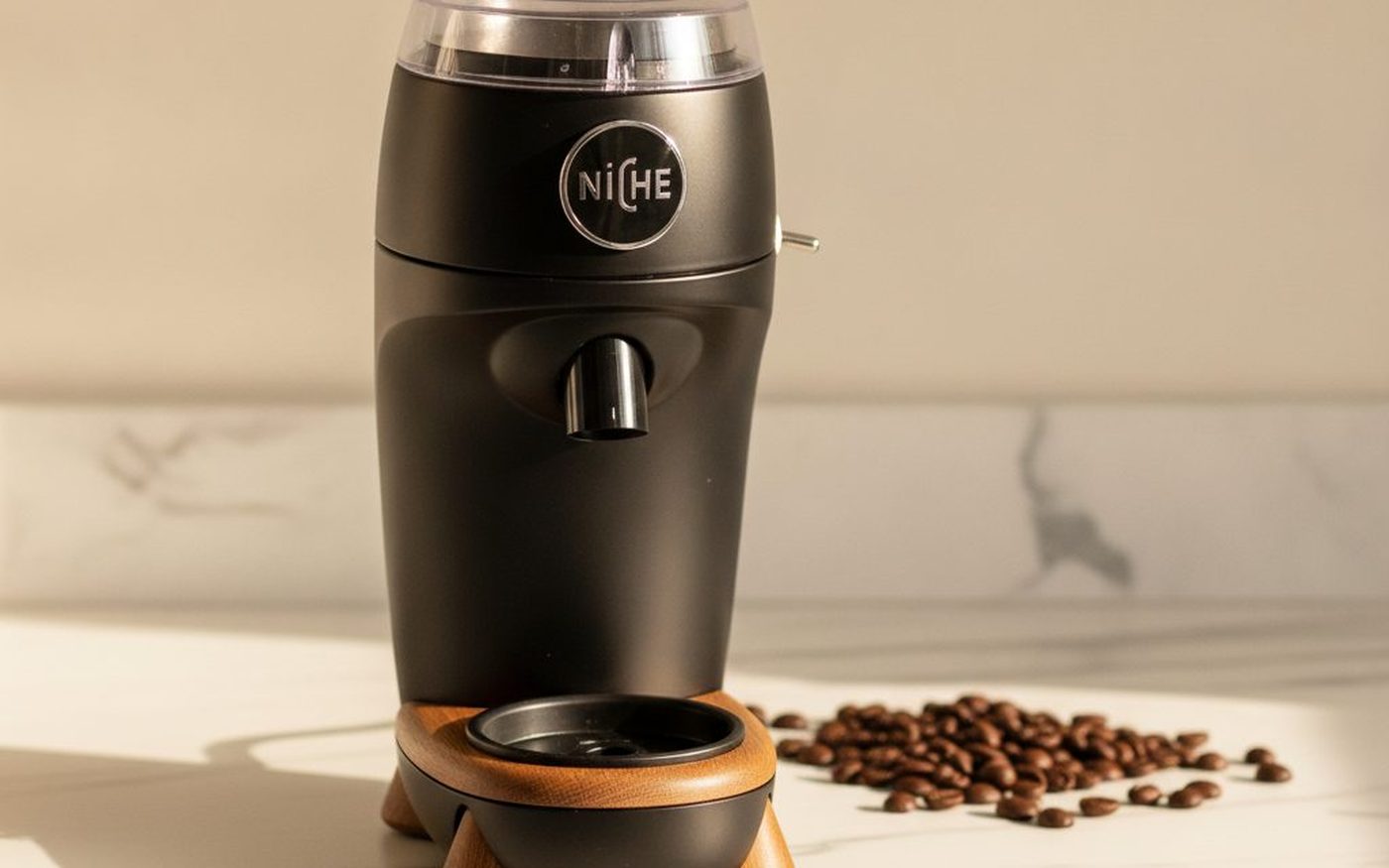 Top Pick Top Pick | £550 | Buy at Niche Coffee | |
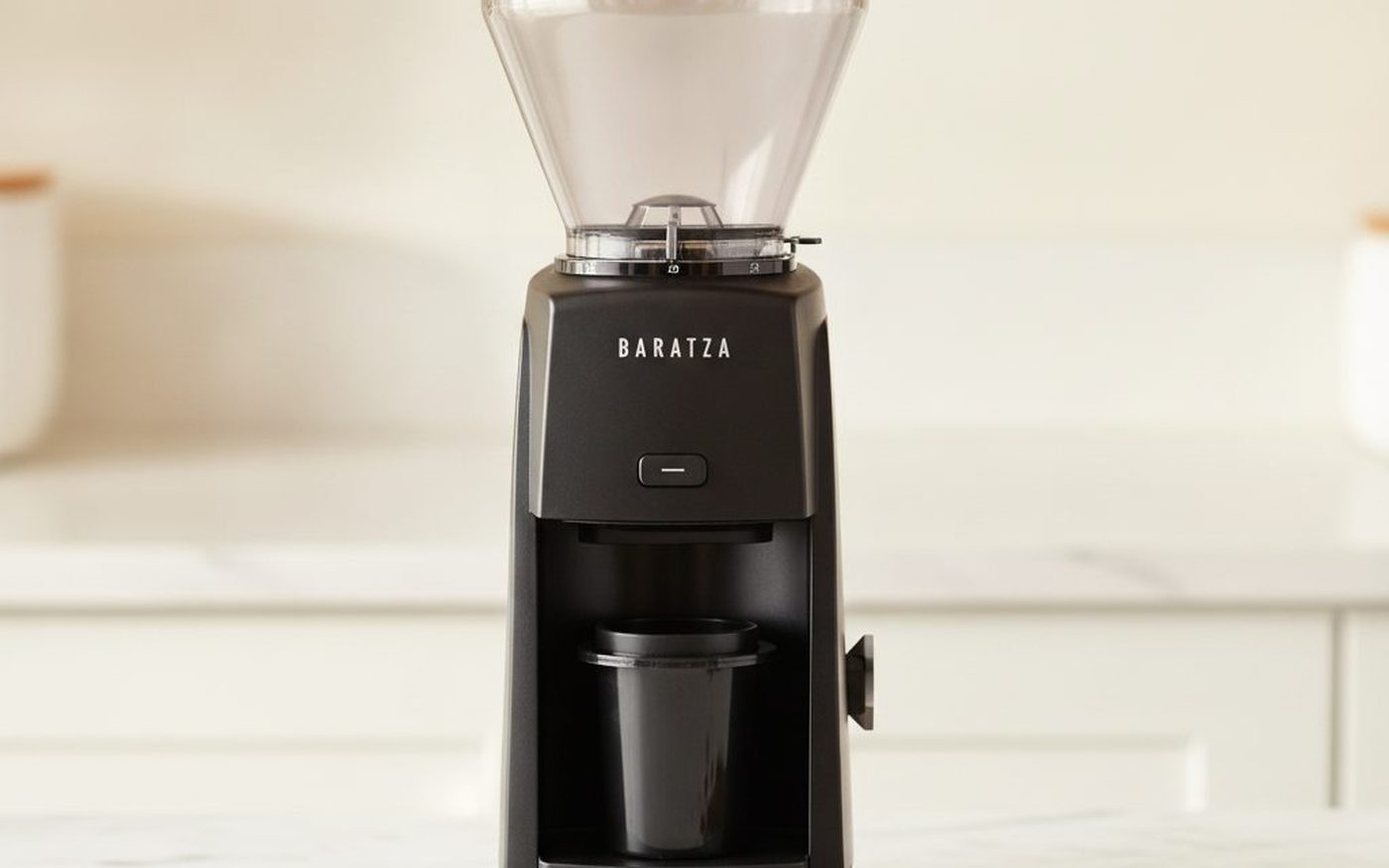 2 2 | £250 | Buy at Coffee Hit | |
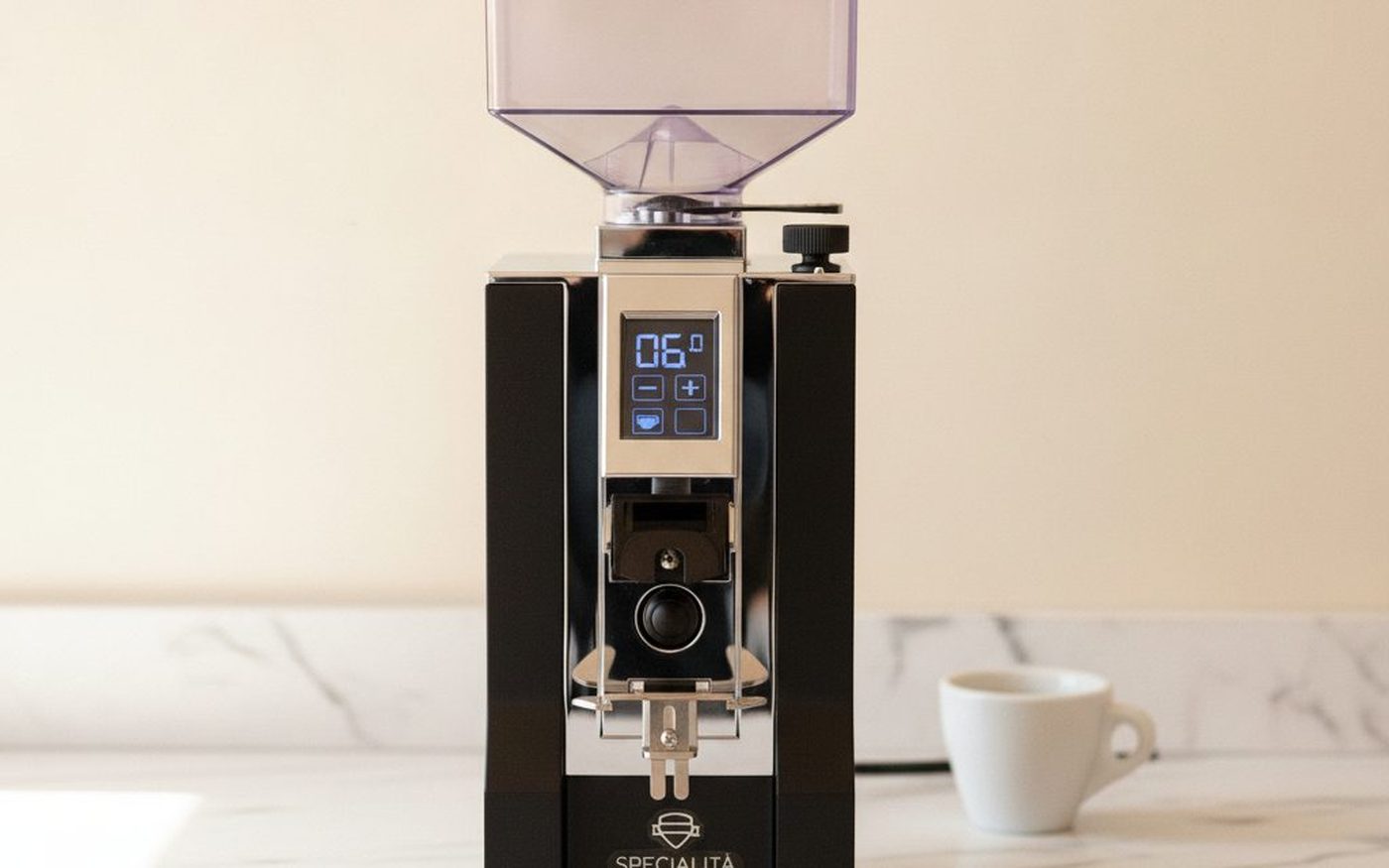 3 3 | £499 | Buy at Bella Barista |
| Use case | Winner | Price (UK, May 2026) | Where to buy |
|---|---|---|---|
| Best overall | Niche Zero | £550 | Niche Coffee |
| Best value all-rounder | Baratza Encore ESP | £250 | Coffee Hit UK |
| Best espresso-dedicated | Eureka Mignon Specialita | £499 | Bella Barista |
| Best UK upgrade under £200 | Sage Smart Grinder Pro | £199 | Sage |
| Best multi-method electric | Fellow Opus | £195 | Fellow Products |
| Best manual overall | 1Zpresso K-Ultra | £185 | 1Zpresso direct |
| Best budget single-dose | DF64 Gen 2 | £399 | Coffee Hit UK |
| Best premium manual | Comandante C40 MK4 | £260 | Comandante |
| Best filter-only | Wilfa Svart Aroma Precision | £140 | Amazon UK |
| Best premium all-rounder | Mahlkonig X54 Home | £745 | Bella Barista |
How We Tested
Over six months, ten grinders rotated through my kitchen counter and the roastery cupping room. Each was fed Balance Coffee's Cerrado Brazil naturals for filter and our Rotate Espresso blend for the lever. Balance Coffee is owned by Balance Journal's editor and is named here only as the test bean source. Editorial honesty, not product placement.
Each grinder ran four brew methods: espresso (18g VST basket, 36g out in 28 to 32 seconds), V60 (15g in, 250g water), AeroPress (17g in, inverted, 90 second steep), and French press (30g in, 500g water, four minute brew). The testing panel ran for a minimum of three weeks per grinder, not the one-day bench tests that dominate competing roundups. We logged extraction yield by refractometer where available, recorded retention to the tenth of a gram after each dose, and noted workflow speed under repeat dosing. Particle distribution was assessed visually using a 200, 400, and 800 micron sieve set, cross-referenced against Specialty Coffee Association standards for espresso and filter grind ranges.
Three external benchmarks shaped the rankings. Matt Perger's published work on burr alignment and particle distribution sets the floor for what good extraction looks like. Counter Culture Coffee's grinding fundamentals guide gave us the framework for how grind size and process affect cup clarity. Karan at Garage Coffee, the roaster who roasts Balance Coffee's lineup, contributed observations on how each grinder's burr geometry showed up in the cup at production scale.
Burr vs Blade: Why It Decides Everything
A burr grinder crushes coffee beans between two abrasive surfaces. Either conical (cone-shaped, one inside the other) or flat (two parallel discs). The gap between the burrs is set, which means the ground particles come out at a consistent size every time. A blade grinder chops the beans with a spinning blade, like a small propeller, producing a chaotic mix of dust and chunks.
The science is settled. The Specialty Coffee Association defines optimal extraction as a controlled window of yield and dissolved solids that depends on a tight particle distribution. Blade grinders cannot deliver this. The dust they produce over-extracts and tastes bitter, while the chunks under-extract and taste sour. The cup is muddled by definition. Even the cheapest entry-level burr grinder in this list outperforms the best blade grinder, every time.
Conical burrs (Niche, 1Zpresso, Baratza) cut coffee with a single point of contact and tend to retain heat better, which works well across filter and espresso. Flat burrs (Eureka, DF, Mahlkonig) cut with a wider contact patch and produce a slightly more uniform distribution, favoured by espresso specialists chasing clarity. The difference is real but smaller than the gap between any burr and any blade. If you remember one thing from this article, it is that a £140 Wilfa burr grinder will outperform a £400 blade-driven setup every single time you brew.
The other distinction worth understanding is stepped versus stepless adjustment. Stepped grinders click between fixed settings. Stepless grinders move continuously between any two points. Espresso work benefits from stepless because the difference between a perfect shot and a choked one can be a fraction of a turn. Filter work runs fine on stepped adjustment.
The Balance Journal Top 10 Coffee Grinders 2026
1. Niche Zero - Best Overall
| Spec | Detail |
|---|---|
| Burr | 63mm conical (Mazzer Kony S) |
| Adjustment | Stepless |
| Retention | 0.1 to 0.3g |
| Single-dose | Yes (designed for it) |
| Hopper | Single-dose cup only |
| Motor | 550W DC |
| Best for | Espresso and filter, single-dose workflow |
| Verdict | The grinder you keep for ten years. |
The Niche Zero is the grinder I would buy if someone made me start over. Mine has been on the kitchen counter for three years and the only maintenance has been a burr clean every six months. The 63mm Mazzer Kony S burrs are commercial-grade. The retention reads 0.1 to 0.3 grams per dose, which is the lowest of any grinder in this list and means what you put in, you get out.
In testing, the Niche moved from a Cerrado Brazil V60 grind to a Rotate Espresso shot in one workflow, no purge required. Espresso shots ran sweet and clear, with the kind of body that a properly aligned conical burr delivers. Filter brews showed cleaner cup separation between sweetness and acidity than any other grinder in the panel.
The honest skepticism is the price. £550 is real money for a grinder. But the Niche has held its price and second-hand resale value better than every other grinder on this list. If you keep it five years and then sell it, the running cost is genuinely modest. The Niche Duo released in 2026 is the new flagship, but the Zero remains the proven choice for anyone wanting one grinder that handles everything. Buy the Zero, not the Duo, unless you specifically need flat burrs.
2. Baratza Encore ESP - Best Value All-Rounder
| Spec | Detail |
|---|---|
| Burr | 40mm M2 conical |
| Adjustment | Stepped (40 macro + micro adjust) |
| Retention | 1g |
| Single-dose | Adequate |
| Hopper | 227g |
| Motor | 270W DC |
| Best for | Multi-method, espresso-capable entry |
| Verdict | The best £250 you can spend on coffee in 2026. |
The Encore ESP is what you buy when you want the rest of your life to start with good coffee but you do not want to commit £500 on day one. Baratza took the Encore, their long-running filter workhorse, and added an espresso-capable adjustment range. The micro-adjust collar gives you the finer steps espresso needs without changing the macro range for filter. It is the cleverest update in entry-level grinding in years.
Across testing, the Encore ESP held its own on espresso shots from the Sage Bambino and pour-over from a Hario V60. It is slower than the Niche or Eureka and louder than both. The 1g retention is noticeable across multiple doses but acceptable for a household grinder. Build quality is plastic-heavy but the burr unit itself is solid.
You will outgrow it if you take espresso seriously and start chasing 0.5g shot precision. That moment may take two years, may take five, may never come. For most home buyers, the Encore ESP delivers cafe-quality output without the price ceiling. Available via Coffee Hit UK and Amazon UK.
3. Eureka Mignon Specialita - Best Espresso-Dedicated
| Spec | Detail |
|---|---|
| Burr | 55mm flat steel |
| Adjustment | Stepless |
| Retention | 0.5g |
| Single-dose | Workable with single-dose adapter |
| Hopper | 300g |
| Motor | 310W AC, 1350 rpm |
| Best for | Espresso-focused users with one bean at a time |
| Verdict | The grinder that turned Italian espresso heritage into home equipment. |
The Specialita is the grinder you buy if espresso is the priority and you want flat-burr clarity at home. Eureka has been making espresso grinders for Italian cafes since the 1920s, and the Mignon line condensed that heritage into a counter-top form factor. The 55mm flat burrs grind cooler than smaller flats and produce a uniform fines distribution that shows up in shot clarity.
Testing on a Rocket Appartamento revealed the Specialita's strength. Shots ran clean and bright, with the espresso showing more separation between origin character and roast profile than the Encore ESP delivered. The stepless adjustment is intuitive once dialled in. Workflow is fast, with the Mignon moving 18g in roughly four seconds.
The trade-off is filter performance. The Specialita can grind for filter, but the burr geometry favours espresso, and at filter grind sizes some inconsistency creeps in. If you brew both, this is not the right grinder. If you brew espresso almost exclusively, it is one of the best grinders made under £500. Available via Bella Barista.
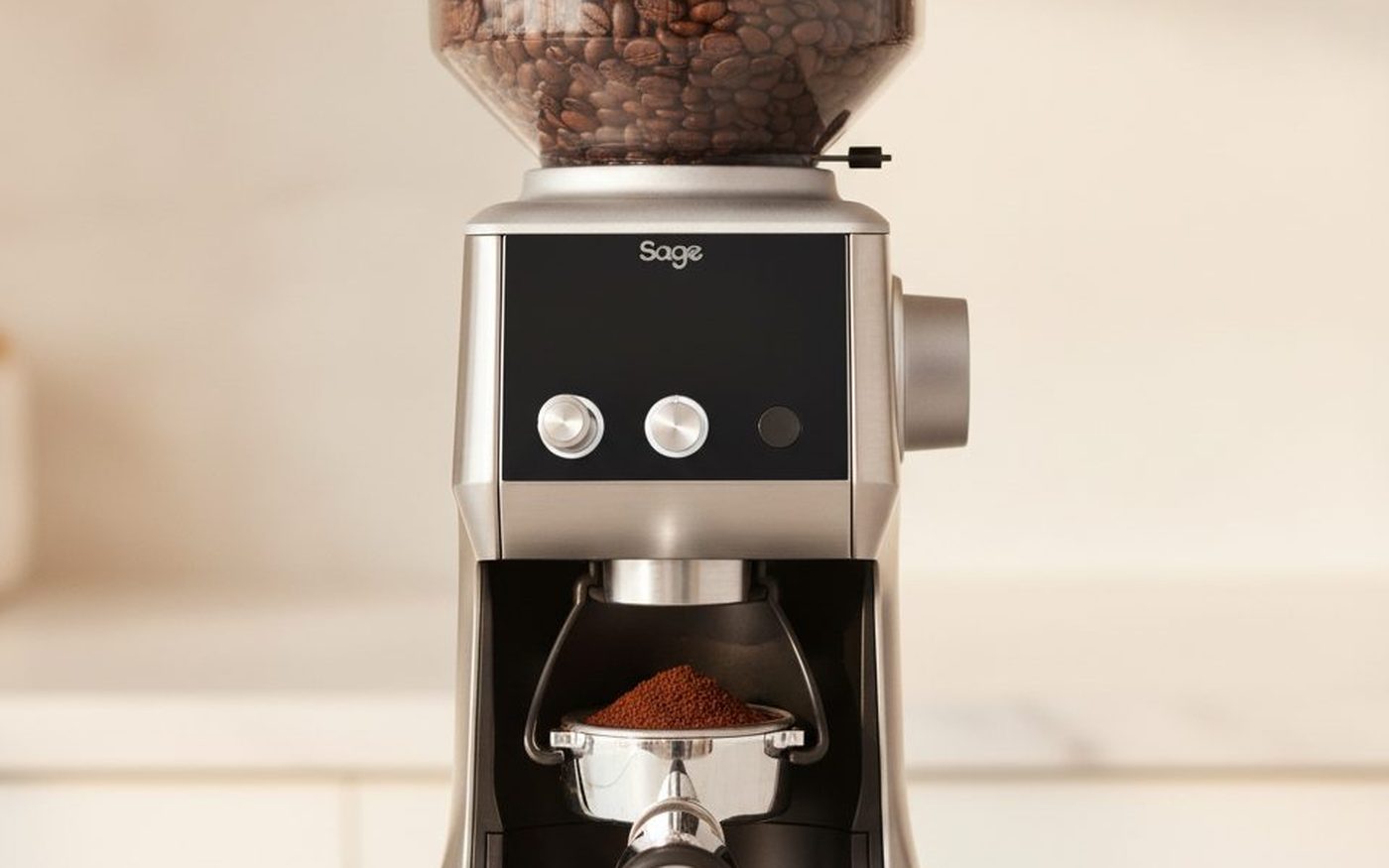
4. Sage Smart Grinder Pro - Best UK Upgrade Under £200
| Spec | Detail |
|---|---|
| Burr | 40mm conical stainless |
| Adjustment | 60 stepped settings |
| Retention | 0.8g |
| Single-dose | Adequate |
| Hopper | 450g |
| Motor | 165W |
| Best for | Sage machine pairings, UK budget upgrades |
| Verdict | The UK default for a reason: consistent, available, and stocked everywhere. |
The Smart Grinder Pro is the grinder most UK readers actually buy in this bracket. It is sold by John Lewis, Sage direct, and Amazon UK, which puts it in every kitchen department from London to Edinburgh. The 60-step adjustment gives genuine espresso range. The 40mm conical burrs are not boutique-grade but they are well aligned. Build quality is plastic-shell over metal internals.
I bought the Smart Grinder Pro for my parents during the 2020 lockdowns, alongside a Sage Bambino. Three years on, it has needed one burr clean and zero repairs. That kind of reliability in a sub-£200 grinder is the right answer to the question my parents would ask: do I need to upgrade? No, not yet.
The honest weakness is single-dose workflow. The hopper geometry holds beans and the retention sits at 0.8g, which adds up across a day. If you brew one bag of beans at a time and weigh every dose, this is not your grinder. If you fill the hopper Sunday morning and brew through the week, it is. The UK price for 2026 is £199. Available via Sage, John Lewis, and Amazon UK.
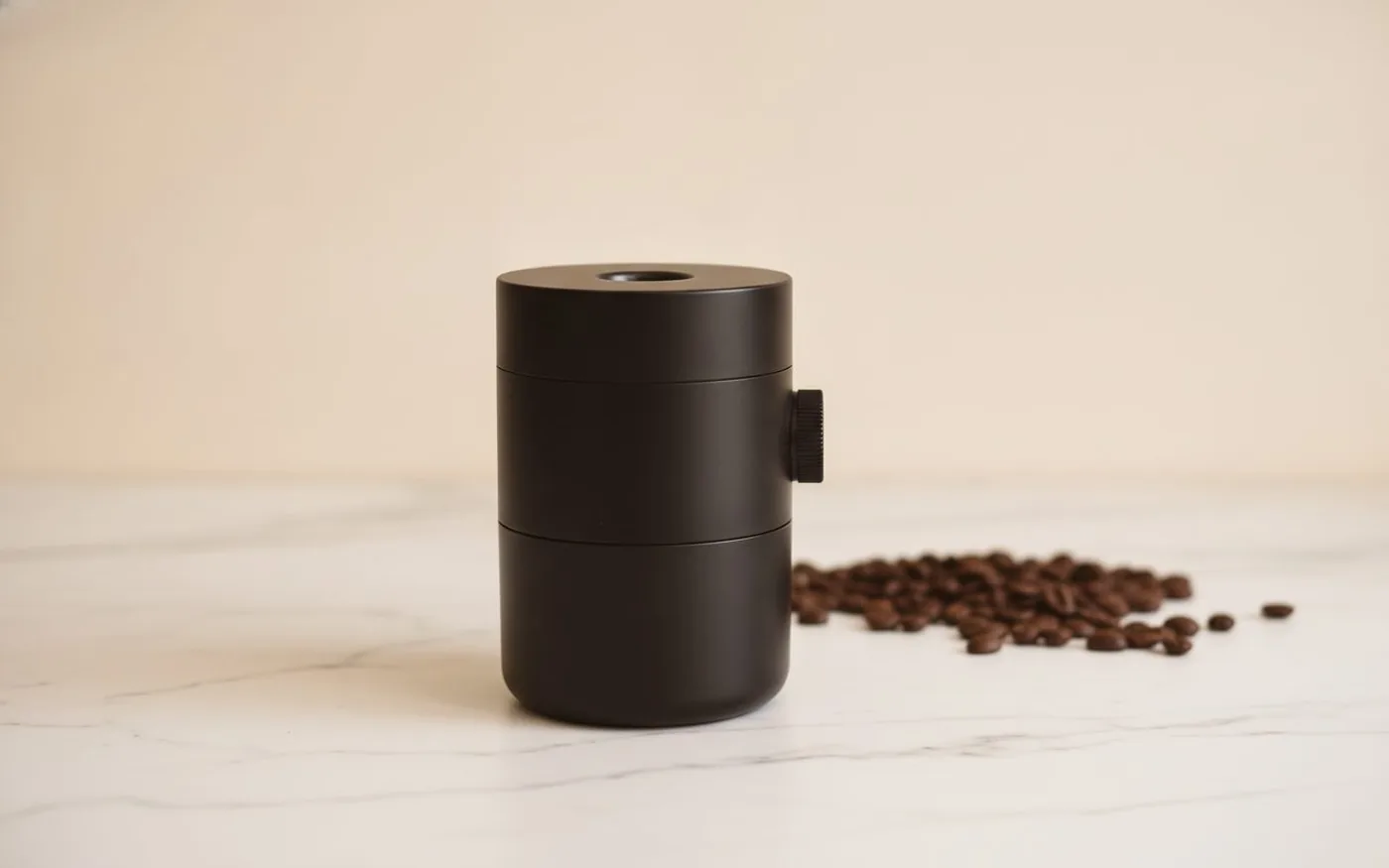
5. Fellow Opus - Best Multi-Method Electric
| Spec | Detail |
|---|---|
| Burr | 40mm conical steel |
| Adjustment | 41 stepped |
| Retention | 0.8g |
| Single-dose | Designed for it (single-dose loading bin) |
| Hopper | Single-dose bin |
| Motor | DC |
| Best for | All-method electric grinding on a £200 budget |
| Verdict | The design-led grinder that delivers across espresso, filter, and immersion. |
The Fellow Opus brought single-dose architecture to the £200 bracket. Most single-dose grinders cost north of £400. The Opus uses a small loading bin instead of a hopper, has a stepped grind range that genuinely spans Turkish to French press, and looks like a piece of design-led kitchen equipment rather than a black plastic box.
In testing, the Opus matched the Encore ESP on filter brews and outperformed it on AeroPress, where the loading bin made dose-by-dose workflow feel natural. Espresso work is the weak spot. The adjustment increments are not fine enough to dial in a precision espresso shot, although the recent firmware update tightened the espresso range slightly. If you brew espresso once a week and pour-over daily, the Opus is the right call.
Available via Fellow Products direct and Coffee Hit UK. The Fellow direct site ships UK in three to five days.
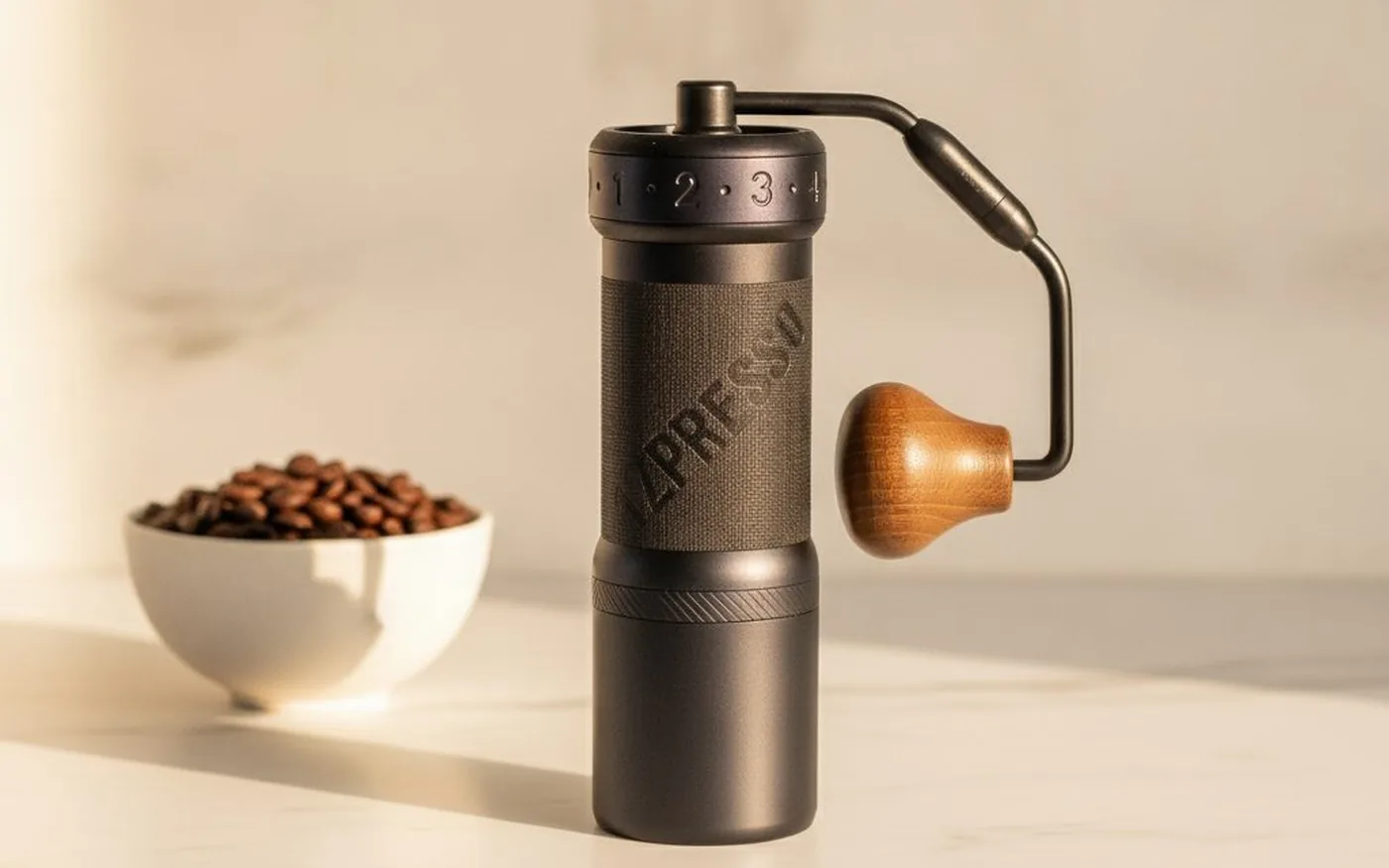
6. 1Zpresso K-Ultra - Best Manual Overall
| Spec | Detail |
|---|---|
| Burr | 48mm conical (v2 heptagonal cut) |
| Adjustment | Stepless with magnetic external dial |
| Retention | 0.1g |
| Single-dose | Yes (designed for it) |
| Hopper | Removable cup |
| Motor | Hand crank |
| Best for | Manual grinding, travel, espresso-capable hand grinder |
| Verdict | The manual grinder that finally made espresso by hand workable. |
I have ground roughly 200 doses through my K-Ultra over the past 18 months and it has not slowed once. The v2 burr geometry 1Zpresso introduced is the meaningful update of 2024 and 2025. Grind speed sits at roughly 25 seconds for an 18g espresso dose, which is fast for a hand grinder. The external magnetic dial means you can change grind size without taking the lid off, which sounds minor and turns out to matter every day.
Espresso shots ground on the K-Ultra and brewed on the Bambino were genuinely comparable to the Encore ESP and approached Specialita territory at the espresso fine end. Filter work is excellent. The 0.1g retention is the lowest in the entire panel, including the Niche. For travel, for a small kitchen, for a buyer who wants to learn the craft side of coffee, the K-Ultra is the right answer.
The trade-off is the grind itself. 25 seconds per shot adds up. If you make three coffees on a Saturday morning, that is over a minute of grinding before any extraction starts. Available via 1Zpresso direct and Amazon UK.
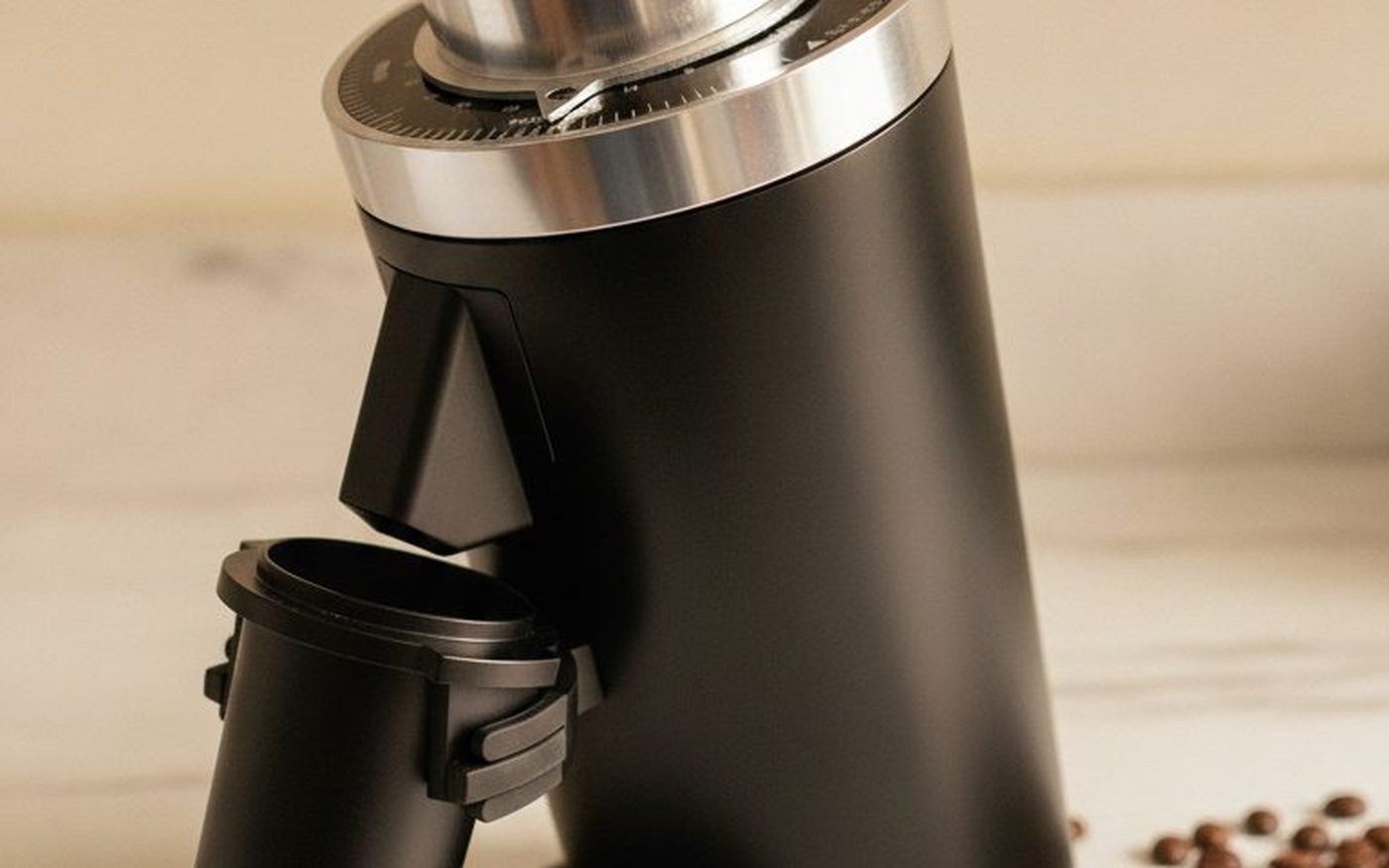
7. DF64 Gen 2 - Best Budget Single-Dose
| Spec | Detail |
|---|---|
| Burr | 64mm flat steel |
| Adjustment | Stepless |
| Retention | 0.3g |
| Single-dose | Designed for it |
| Hopper | Single-dose bellows |
| Motor | 250W DC |
| Best for | Single-dose espresso users who want flat burrs under £500 |
| Verdict | Single-dose flat-burr quality at half the boutique price. |
The DF64 Gen 2 is the 2026 revision of a grinder that has spent two years being recommended on r/espresso, often with caveats. The Gen 2 updates address most of those caveats. The motor is quieter. The bellows fit is tighter. The grind chamber design reduces popcorning, the phenomenon where light-roast beans bounce out of the burrs before being ground.
In our testing the DF64 Gen 2 produced espresso shots that were closer to the Specialita in clarity than its price suggests. The 64mm flat burrs run cooler than the Specialita's 55mm equivalents, which matters on lighter roasts. The single-dose workflow is fast: load the bellows, grind, brew, no purge.
This is the grinder for someone who has decided espresso is the priority, wants flat-burr quality, and refuses to spend £500 to get it. Many competing top 10 lists still rank the Gen 1 because the Gen 2 is recent. Available via Coffee Hit UK and Cafune Select.
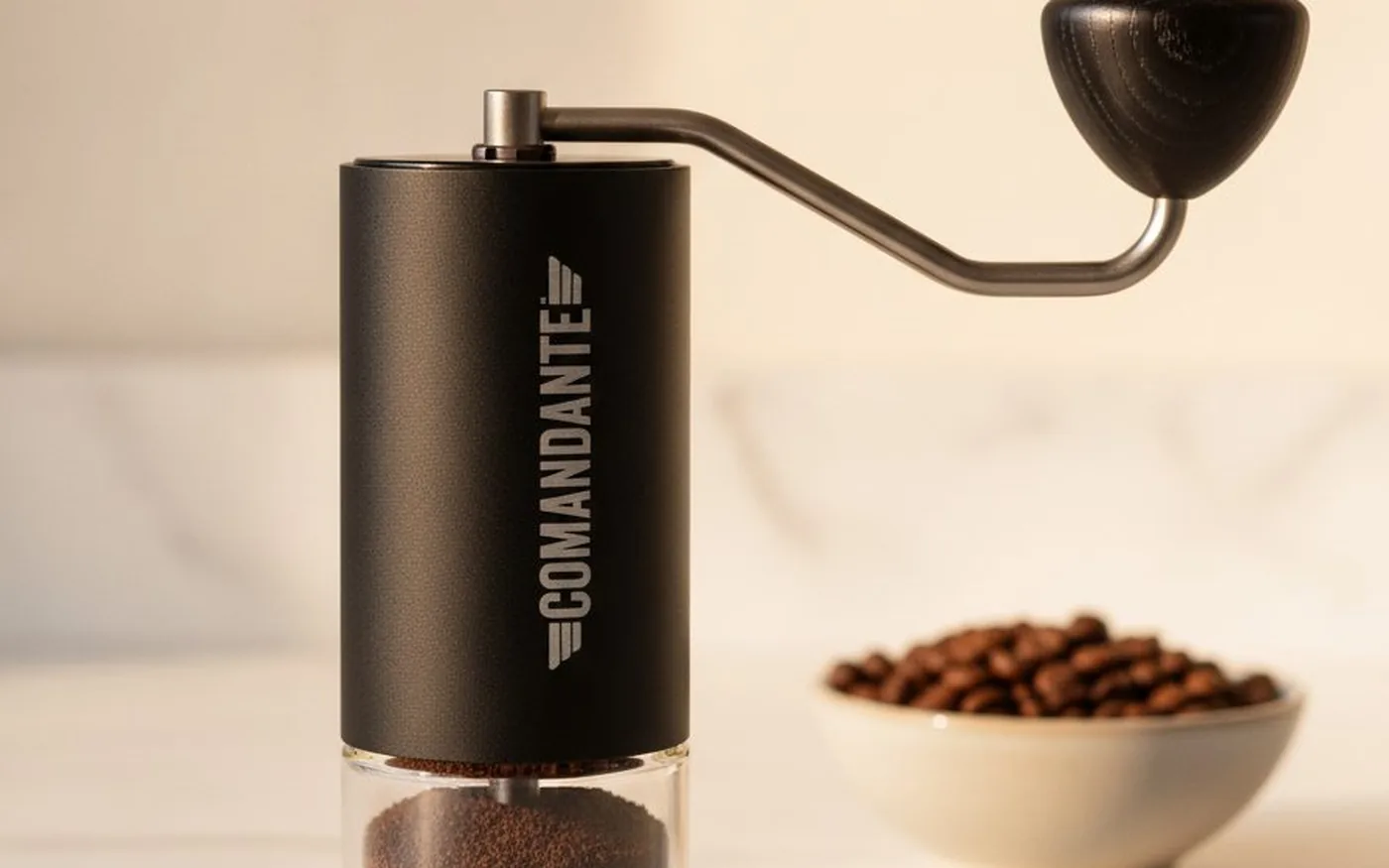
8. Comandante C40 MK4 - Best Premium Manual
| Spec | Detail |
|---|---|
| Burr | 39mm conical Nitro Blade |
| Adjustment | Stepped (one click is roughly 30 microns) |
| Retention | Below 0.1g |
| Single-dose | Yes |
| Hopper | Detachable glass jar |
| Motor | Hand crank |
| Best for | Manual brewers prioritising filter clarity and build quality |
| Verdict | The benchmark hand grinder of the last decade, still relevant in 2026. |
The Comandante C40 is what most baristas pull out at home. The Nitro Blade burrs are high-nitrogen martensitic steel, harder and more durable than the standard hardened steel found in cheaper hand grinders. The build quality is the kind that justifies a £260 price tag for a hand grinder: machined aluminium body, walnut crank, glass dosing jar.
The Comandante grinds slower than the K-Ultra, roughly 35 seconds for 18g. The stepped clicks are coarser than the K-Ultra's stepless dial. The trade is consistency. Once you find your filter setting (typically 22 to 28 clicks for V60), the Comandante hits it every time, year after year. The retention is below 0.1g and the burr alignment is the most precise of any sub-£300 grinder in this list.
For espresso, the Comandante is workable but not optimal because the stepped adjustment is coarser than espresso ideally wants. For filter, AeroPress, and immersion, the Comandante is the gold standard. Available via Comandante direct and Coffee Hit UK.
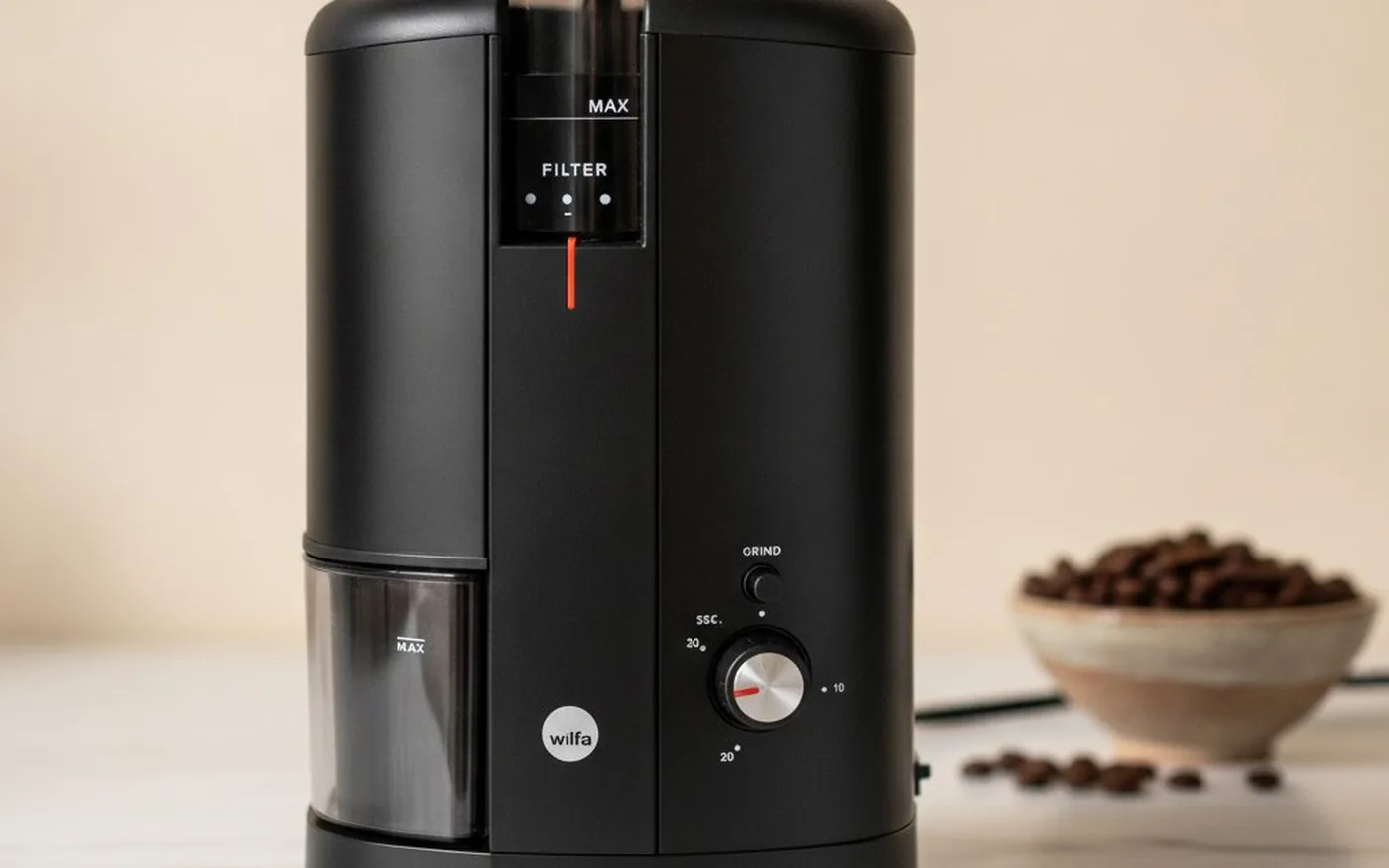
9. Wilfa Svart Aroma Precision - Best Filter-Only
| Spec | Detail |
|---|---|
| Burr | 58mm conical steel |
| Adjustment | Stepless (filter range only) |
| Retention | 1g |
| Single-dose | No (hopper-led) |
| Hopper | 250g |
| Motor | Low-RPM DC |
| Best for | Pour-over and filter-only kitchens |
| Verdict | The filter-only grinder that punches well above its £140 price. |
The Wilfa Svart Aroma was designed by Tim Wendelboe, three-time Norwegian Barista Champion and the godfather of light-roast filter coffee. That design lineage shows. The 58mm burrs are large for the price bracket. The motor runs slow, which keeps the grind cool and the particle distribution tight. The grind range is deliberately filter-focused and does not reach espresso fine.
In testing, the Wilfa produced V60 brews that were genuinely competitive with the Encore ESP and at points indistinguishable from the Niche on a side-by-side cup-out. For a £140 grinder, that is remarkable. The honest weakness is that 1g retention adds up over multiple brews, and the hopper-led workflow does not suit users who switch beans daily.
If you brew filter only and want the lowest-friction route to specialty-grade cup quality on a kitchen counter, this is the grinder. Available via Amazon UK and John Lewis.
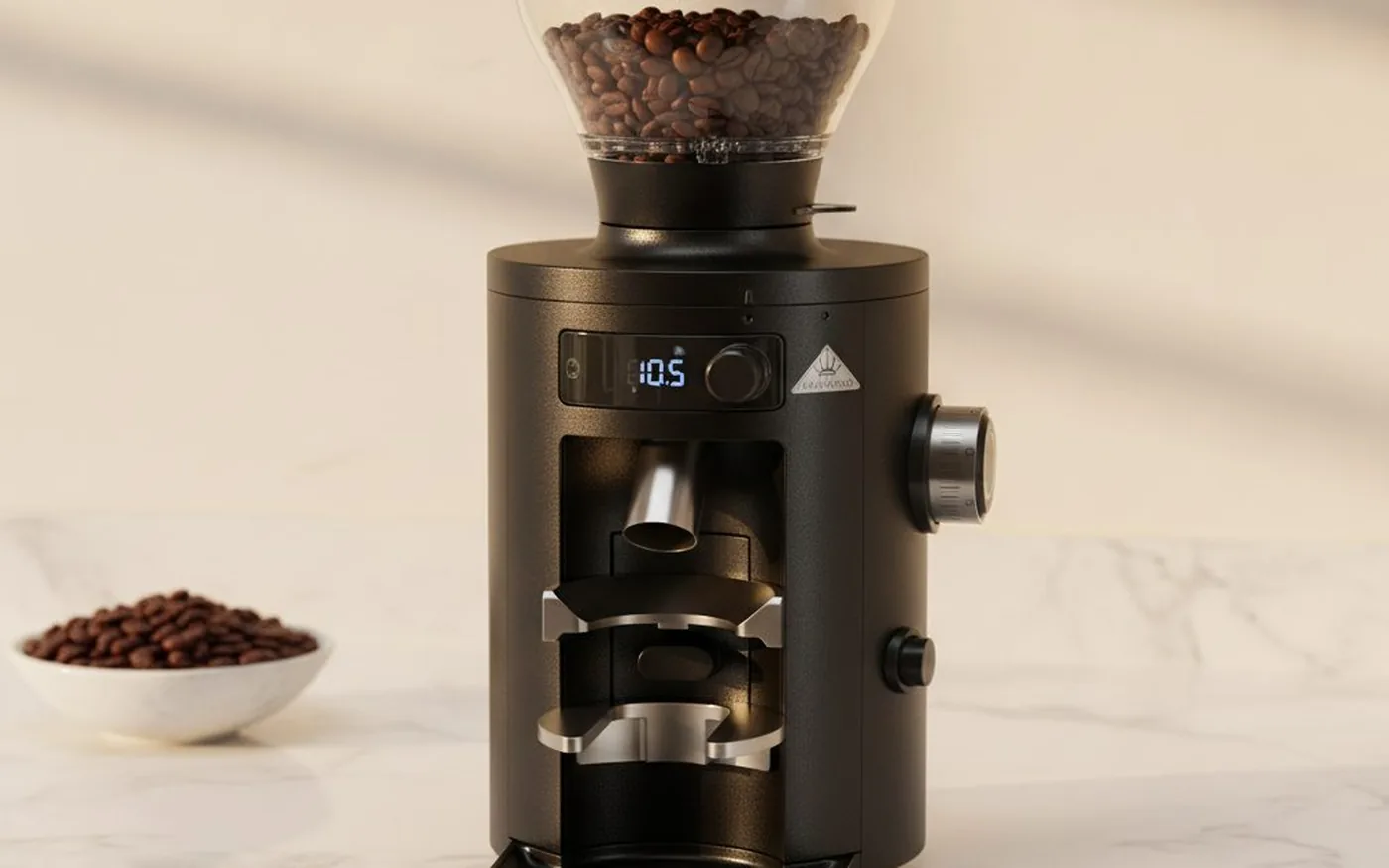
10. Mahlkonig X54 Home - Best Premium All-Rounder
| Spec | Detail |
|---|---|
| Burr | 54mm flat steel |
| Adjustment | Stepless |
| Retention | 0.5g |
| Single-dose | Workable |
| Hopper | 250g (removable for single-dose) |
| Motor | 320W DC |
| Best for | Buyers who want commercial-grade build for home use |
| Verdict | Mahlkonig commercial DNA, scaled down for the kitchen counter. |
The X54 Home is the trickle-down of Mahlkonig's commercial grinders, which power half the speciality cafes in the world. The 54mm flat burrs are precision-machined to the same standard as the company's commercial line. Build quality is the heaviest in this list. The stepless adjustment is intuitive.
In testing, the X54 produced espresso shots that were closer to the Specialita and Niche than the price gap suggests. Filter work was clean and predictable. The grind speed is fast, with sub-five seconds for an 18g espresso dose, similar to the Specialita. The workflow benefits from removing the hopper for single-dose use, which the X54 supports through a small adapter.
Worth distinguishing the X54 Home (this model, £745) from the standard X54 (commercial, larger footprint, north of £1,200). Many competing lists conflate them. The X54 Home is the right buy for serious home users. Available via Bella Barista.
Best Coffee Grinder Under £200
The £200 ceiling is the most contested bracket in home coffee. Three grinders genuinely compete here in 2026: the Sage Smart Grinder Pro at £199, the Fellow Opus at £195, and the Wilfa Svart Aroma at £140. The right answer depends on your priorities.
The Sage Smart Grinder Pro wins on availability and Sage machine pairing. If you own a Bambino, Bambino Plus, or Barista Touch and want the in-family grinder, the Smart Grinder Pro is the obvious answer. It is also the one your local John Lewis will sell you the same day.
The Fellow Opus wins on single-dose workflow and design. If you brew different beans across the week and weigh every dose, the Opus is the better choice. It is the only single-dose grinder available under £200. The Wilfa Svart wins for filter-only users. If you do not brew espresso and only need a V60, AeroPress, or French press grinder, the Wilfa is £45 cheaper than either Sage or Fellow and matches or beats them on filter quality. For more depth on burr-only options in this bracket, see our best burr coffee grinder guide.
Manual vs Electric Grinders: Which Is Right for You?
A manual grinder is a hand crank, a burr unit, and a catch cup. An electric grinder is a motor, a burr unit, and either a hopper or a single-dose chamber. Both grind coffee. The choice between them is workflow, not quality.
The 1Zpresso K-Ultra and Comandante C40 sit at the top of the manual tier. Either will produce a grind that matches an Encore ESP on filter and competes with a Specialita on espresso. The cost is your time and your wrist. An 18g espresso dose takes 25 to 35 seconds of grinding. A 30g French press dose takes a minute. Multiply that by every cup you brew over five years and you are looking at meaningful labour.
The argument for manual is portability, no electricity, and the satisfaction of the craft. The argument for electric is speed and consistency over many doses. For one cup a day, either works. For two or more cups across multiple methods, electric pays back its price in time saved within twelve months. There is a hybrid case: some readers buy a Niche or Specialita for the kitchen and a Comandante or K-Ultra for travel. For deeper analysis of the manual category, see our best manual coffee grinder roundup.
Espresso vs Filter: Do You Need Two Grinders?
Most buyers do not need two grinders. They need one good grinder that handles their primary brew method well and their secondary method acceptably. The Niche Zero, Baratza Encore ESP, and Fellow Opus all clear this bar for typical home users brewing espresso and filter.
The case for two grinders kicks in when you start chasing single-origin clarity on lighter roasts at competition-grade espresso settings. At that level, switching between filter and espresso on one grinder requires purging beans, which wastes coffee and shifts dose retention. A dedicated espresso grinder (Specialita, DF64 Gen 2) paired with a dedicated filter grinder (Wilfa, Comandante) is the answer at that point.
Most home buyers will not reach that point. If you do, you will know. Until then, one grinder is the right call. For a dedicated espresso-grinder analysis, see our best espresso grinder ranking. For machine-pairing advice, see our best espresso machine guide.
Will This Grinder Last? The Upgrade Trap
The most common question I get from r/espresso readers and Home Barista forum posts is whether buying a £250 grinder is a mistake when the £550 grinder is "objectively better". The answer depends entirely on whether you brew espresso once a week or twice a day.
For most buyers, the Encore ESP at £250 will last five to ten years before you genuinely outgrow it. By "outgrow" I mean the grinder is the bottleneck in your coffee quality, not the bag of beans or your technique. That moment comes for serious espresso users who start chasing 0.5g shot precision. It does not come for someone making one coffee in the morning before work.
If you brew daily, the Niche Zero or Specialita are the grinders that genuinely justify their price over a five-year horizon. The Niche has held resale value at roughly 60 to 70 percent of original price on UK coffee forums, which means the true running cost over five years is closer to £150 than £550. Burrs last 500 to 1000 kg of coffee, which for a home user is 8 to 15 years. The next equipment decision worth thinking about: best coffee scales for home brewing.
Full Specs Comparison Table
| Rank | Grinder | Burr | Adjustment | Retention | Single-dose | Motor | Price (May 2026) |
|---|---|---|---|---|---|---|---|
| 1 | Niche Zero | 63mm conical | Stepless | 0.1 to 0.3g | Yes | 550W DC | £550 |
| 2 | Baratza Encore ESP | 40mm conical | Stepped + micro | 1g | Adequate | 270W DC | £250 |
| 3 | Eureka Mignon Specialita | 55mm flat | Stepless | 0.5g | Workable | 310W AC | £499 |
| 4 | Sage Smart Grinder Pro | 40mm conical | 60-step | 0.8g | Adequate | 165W | £199 |
| 5 | Fellow Opus | 40mm conical | 41-step | 0.8g | Yes | DC | £195 |
| 6 | 1Zpresso K-Ultra | 48mm conical | Stepless | 0.1g | Yes | Manual | £185 |
| 7 | DF64 Gen 2 | 64mm flat | Stepless | 0.3g | Yes | 250W DC | £399 |
| 8 | Comandante C40 MK4 | 39mm conical | Stepped | Below 0.1g | Yes | Manual | £260 |
| 9 | Wilfa Svart Aroma | 58mm conical | Stepless filter | 1g | No | Low DC | £140 |
| 10 | Mahlkonig X54 Home | 54mm flat | Stepless | 0.5g | Workable | 320W DC | £745 |
Frequently Asked Questions
Which is the best coffee grinder for home use?
For most home users, the Baratza Encore ESP is the best coffee grinder under £300, and the Niche Zero is the best premium grinder under £600. The Encore ESP suits casual and intermediate brewers across espresso and filter. The Niche suits daily espresso brewers who want one grinder that handles every method for the next decade.
Are burr grinders better than blade grinders?
Yes, decisively. Burr grinders produce a consistent particle distribution that extracts evenly, while blade grinders chop coffee into a mix of dust and chunks that over and under-extract at the same time. The cheapest burr grinder in this list, the Wilfa Svart at £140, outperforms any blade grinder on the market.
Is a manual coffee grinder as good as an electric one?
For cup quality, yes at the top tier. The 1Zpresso K-Ultra and Comandante C40 produce a grind that matches the Baratza Encore ESP and approaches the Eureka Specialita on espresso. The difference is workflow speed, not extraction quality. Manual grinders take 25 to 35 seconds per espresso dose versus four to five seconds for a comparable electric.
What is the best budget coffee grinder under £200?
The Sage Smart Grinder Pro at £199 is the most widely stocked UK option, and the Fellow Opus at £195 is the best single-dose option in this bracket. For filter-only brewing, the Wilfa Svart Aroma at £140 outperforms both on cup clarity per pound spent. All three are available from John Lewis, Amazon UK, or the brand direct.
Do I need a different grinder for espresso and filter?
Most home buyers do not. A single grinder that handles both well (Niche Zero, Baratza Encore ESP, Fellow Opus) is the right answer for typical use. Two grinders only become necessary when you start chasing competition-grade precision on lighter roasts at espresso fine settings, which most home users will never need.
How long do coffee grinder burrs last?
Burr life depends on burr material and coffee volume. Hardened steel burrs (Sage, Baratza) last roughly 250 to 400 kg of coffee. Premium burrs (Niche Mazzer, Comandante Nitro Blade) last 500 to 1000 kg. For a typical home user grinding 100g of coffee per week, that is 8 to 15 years before burr replacement is needed.
Is the Niche Zero worth £550?
For daily espresso brewers, yes. Five years of daily use puts the per-shot cost below 2p, and the Niche has held resale value at 60 to 70 percent of original price on UK forums, which makes the true running cost closer to £150 over five years. For casual brewers making one coffee a day, the Baratza Encore ESP at £250 is the better-value choice.
What grinder do baristas use at home?
Most working baristas I know in London own either a Niche Zero, a 1Zpresso K-Ultra, or a Comandante C40 at home. The Niche is the daily driver for espresso, the K-Ultra is the travel and second grinder, and the Comandante is the filter and AeroPress specialist. None own a blade grinder.
A wellness entrepreneur and biohacker, James explores the intersection of hospitality and health - from clean fuel and recovery tools to mindful routines that build balance into daily life.