Best Espresso Machine Under £500 UK

Coffee & Wellness Writer
The machine gap between £250 and £600 has closed. Written by someone trained by a Sanremo manufacturer on what each price point means.

Table of Contents
Some of the links in this article are affiliate links, which help fund our independent review work at no extra cost to you. Every recommendation is based on hands-on testing through The Editor Lab methodology. No brand pays to appear, and no placement is guaranteed.
The machine gap between £250 and £600 has closed more than most buyers realise. Five years ago, pulling consistent espresso at home below £300 meant accepting pressure instability, extraction that shifted from shot to shot, and steam wands that produced warm foam rather than proper microfoam. That no longer describes the entry point. The Sage Bambino Plus at around £250 produces shots that would have required a £450 machine to match in 2019. If you have been reading reviews written a few years ago and calibrating your expectations from those, reset them.
This guide covers seven machines from £100 to £500, plus one stretch option at around £599 with specific arithmetic on whether the extra spend makes sense for your setup. Every machine was evaluated through The Editor Lab, Balance Journal's structured framework for coffee equipment, across extraction consistency, steam performance, ease of use, and value at its price point. The best espresso machine UK roundup covers the full range beyond £500; this guide is specifically for buyers working within the budget.
“I spent five and a half years as Sales and Marketing Manager for Sanremo UK, one of the world's leading traditional espresso machine manufacturers. Sanremo's engineers trained me on PID control units, heat exchanger systems, and the boiler architecture that separates a £250 home machine from a £3,000 commercial one. The under-£500 market is where engineering compromises are most visible, and knowing exactly which compromises produce the price gaps between these machines is what this guide is built on. I also spent several weeks at my parents' kitchen counter dialling in a Sage Barista Express during lockdown. The manufacturer knowledge alongside the genuine home-user experience is what I hope makes this different from a standard buying guide.”James Bellis, founder, Balance Coffee
How We Tested
Each machine in this guide was assessed through The Editor Lab across six to twelve espresso shots per machine, using freshly ground specialty coffee held at a consistent grind setting. Dose and yield targets were fixed across all machines to isolate extraction quality from dose variability. Steam performance was tested on 200ml of whole milk from fridge temperature, timed to 65 degrees Celsius. Build quality, dial-in time, and ease of daily use were each scored independently before being weighted into an overall rating. We also reviewed machine specifications against the Specialty Coffee Association's home brewer standards to contextualise extraction temperature and pressure targets. Prices were verified at UK retailers in May 2026.
At a Glance: Best Espresso Machine Under £500
| Rank | Brand | Best For | Price | Shop |
|---|---|---|---|---|
| 1 | 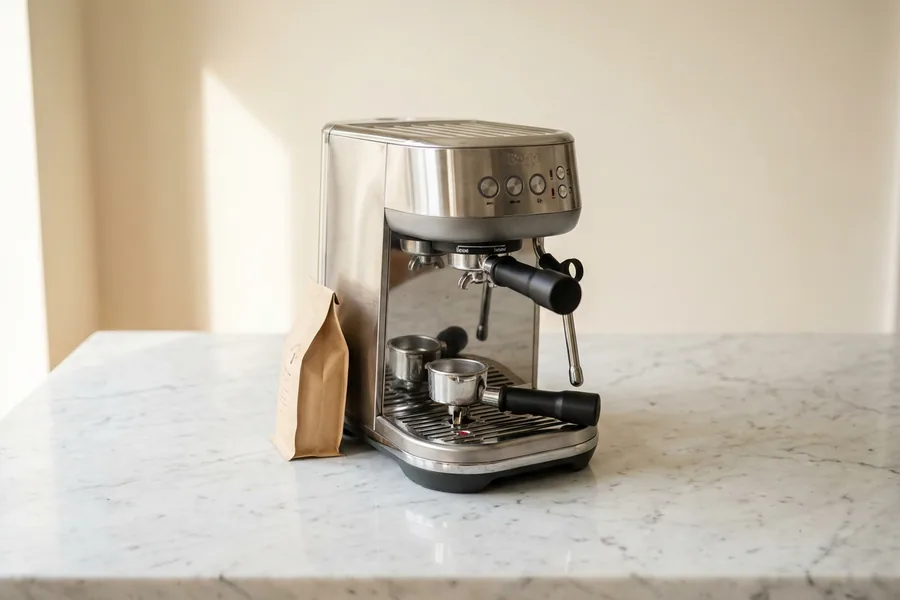 | around £250 | Shop Sage | |
| 2 | 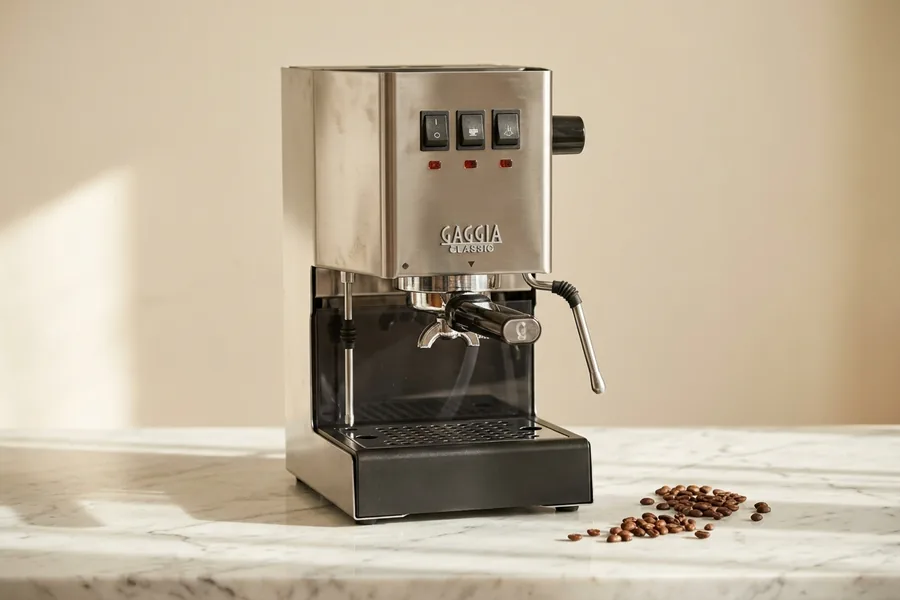 Gaggia Classic Pro ★ ★ ★ ★ ★ ★ ★ ★ ★ ★ | around £350 | Shop Gaggia | |
| 3 |  De'Longhi Dedica Maestro Plus ★ ★ ★ ★ ★ ★ ★ ★ ★ ★ | around £240 | Shop De'Longhi |
| Rank | Machine | Price (May 2026) | Best For | Built-In Grinder |
|---|---|---|---|---|
| 1 | Sage Bambino Plus | around £250 | Best Overall | No |
| 2 | Gaggia Classic Pro | around £350 | Skill development | No |
| 3 | De'Longhi Dedica Maestro Plus | around £240 | Built-in grinder | Yes |
| 4 | De'Longhi Dedica EC685 | around £110 | Best compact | No |
| 5 | De'Longhi Magnifica Evo | around £420 | Best bean-to-cup | Yes |
| 6 | De'Longhi Stilosa | around £100 | Budget floor | No |
| Stretch | Sage Barista Express | around £599 | Grinder included | Yes |
Quick View: Our Top 3 Picks
Do You Need a Grinder?
Most machines in this guide require pre-ground coffee or a separate burr grinder. The exceptions are the De'Longhi Dedica Maestro Plus and the Sage Barista Express, both of which have built-in grinders. Every other machine here is grinder-less, and that is a cost you should factor into your total budget before committing.
A decent entry-level burr grinder adds between £80 and £150 to your spend. The Sage Smart Grinder Pro (around £150) is the natural companion to the Bambino Plus or the Gaggia Classic Pro. Pre-ground espresso is a functional alternative, particularly with the pressurised baskets included with most machines here. But espresso is the coffee format most sensitive to grind freshness: ground coffee degrades meaningfully within a few days of opening, and that degradation shows in the cup. If you want to explore what your machine is genuinely capable of, a grinder is part of the investment. If budget is the constraint right now, start with pre-ground and add a grinder when it makes sense.
The best grinder for Sage Barista Express guide covers the grinder question in detail for that machine. For first-time buyers exploring whether to go best espresso machine for beginners UK, grinder decisions are covered in full in that companion guide.
Best Overall: Sage Bambino Plus (around £250)
The Bambino Plus is the machine this price category is built around. I say that having spent time inside a manufacturer that competes directly with Sage, which means I have seen the engineering that sits behind this price point and what gets cut to reach it. What gets cut is long-term build longevity under high daily volume and the portafilter basket size (54mm versus the 58mm commercial standard). What does not get cut is extraction quality or steam wand performance, both of which sit well above what the price suggests.
The thermoblock heating system brings the machine to temperature in around three seconds, which has a genuine impact on a weekday morning. The steam wand offers both an automatic mode for consistent results and a manual mode for buyers who want to develop their steaming technique over time. The dual wall (pressurised) basket that comes included performs reliably with pre-ground coffee; switching to single wall baskets once you have a grinder unlocks the full extraction ceiling.
One honest caveat: the Bambino Plus uses a 54mm portafilter rather than the 58mm commercial standard. If you eventually upgrade to a higher-end machine, your tamper and baskets will not transfer across. For most buyers in this price range, that is a theoretical future cost, not a current one. The machine itself is not a stepping stone. It is a genuinely capable home espresso machine that happens to also be accessible for beginners.
For most buyers in the under-£500 bracket, the Bambino Plus is the answer. Good extraction from day one. Steam performance that rewards developing technique. A learning curve that starts shallow and steepens when you want it to.
| Feature | Detail |
|---|---|
| Price | around £250 (as of May 2026) |
| Boiler type | Thermoblock |
| Portafilter | 54mm |
| Built-in grinder | No |
| Steam wand | Manual and auto modes |
| Baskets | Dual wall included, single wall available |
| Best for | Beginners to intermediate, daily use |
“Good extraction from day one. Steam performance that rewards developing technique. The learning curve starts shallow and steepens when you want it to.”James Bellis, Balance Journal
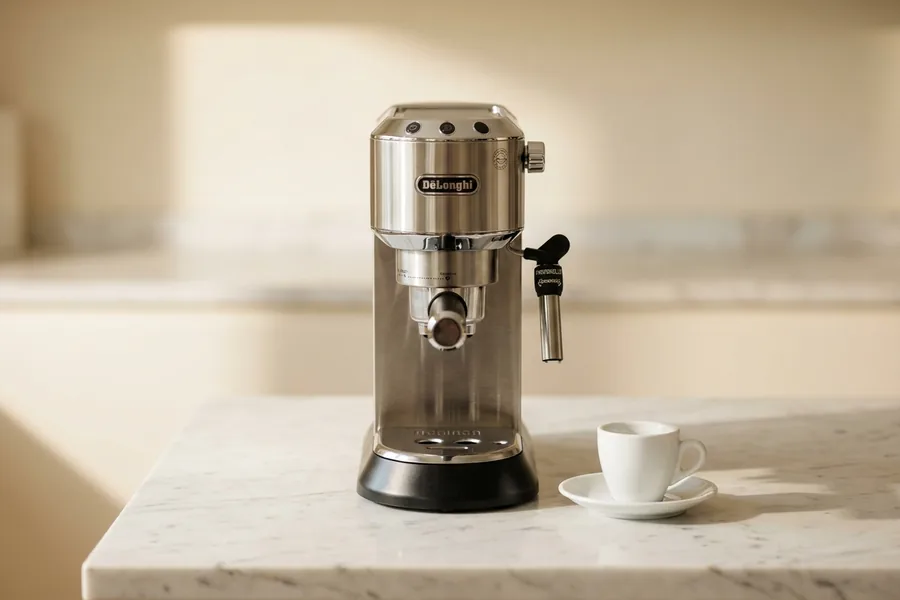
Best Compact: De'Longhi Dedica EC685 (around £110)
Fifteen centimetres wide. That is the number that defines the Dedica EC685 and separates it from every other machine in this guide. In a kitchen where counter space is already claimed by a kettle, a toaster, and a coffee grinder you have not decided whether to buy yet, the Dedica fits where nothing else does. That physical advantage is a real consideration, not a marketing point.
The extraction at this price is more than serviceable. The thermoblock heats quickly, the 15 bar pump produces adequate pressure, and the result in the cup is a recognisable espresso. Temperature stability is less precise than the Bambino Plus, and the 51mm proprietary portafilter limits your upgrade options down the line, but neither of those things matters to the buyer who wants reliable espresso in a very compact machine.
The Pannarello steam attachment produces froth rather than microfoam. If you drink flat whites, that distinction matters. The Pannarello injects air aggressively rather than texturing the milk progressively, so the foam sits on top of the drink rather than integrating through it. For black espresso drinkers, that is irrelevant. For cappuccino drinkers who want to develop their technique, it is a ceiling worth knowing about.
The honest Dedica case: it is the best-value machine in this guide for small kitchens and black coffee drinkers with a budget under £150. At £110 to £130, the value is straightforward. If you can stretch to £250, the Bambino Plus is a materially better machine. But if you cannot, the Dedica EC685 does the job without apology.
| Feature | Detail |
|---|---|
| Price | around £110 (as of May 2026) |
| Boiler type | Thermoblock |
| Portafilter | 51mm (proprietary) |
| Built-in grinder | No |
| Steam wand | Pannarello (foam, not microfoam) |
| Width | 15cm |
| Best for | Small kitchens, black espresso drinkers |
“The best machine in this guide for kitchens where counter space is the constraint. At £110, it does the job without apology.”James Bellis, Balance Journal
Best With Built-In Grinder: De'Longhi Dedica Maestro Plus (around £240)
If you want to skip the separate grinder purchase without stretching to the Barista Express, the Dedica Maestro Plus is the machine you are looking for. It combines the Dedica's narrow chassis with a built-in conical burr grinder and a single-dose hopper, meaning you load whole beans before each shot rather than filling a reservoir. The grind quality outperforms what most buyers expect at this price. It is not a standalone precision grinder, but it is consistently better than the cheap disc grinders that typically get paired with entry-level machines.
The LatteCrema automatic milk system is a meaningful upgrade over the Dedica EC685's Pannarello. It produces a creamier, better-integrated foam that works for milk drinks without requiring technique. If you want one-touch milk drinks and ground-to-cup espresso from the same compact machine, the Maestro Plus delivers that cleanly.
What you accept with the Maestro Plus is the Dedica's existing limitations: the 51mm proprietary portafilter stays, which limits your accessory options later. The steam system, while improved over the EC685, does not match the manual control of the Bambino Plus for buyers who want to develop proper microfoam technique.
This is the right machine for buyers who want a single all-in-one unit, value the built-in grinder above all else, and are not planning to invest significant time in developing espresso technique. For buyers who want to grow properly into espresso and develop their skills, the Bambino Plus with a separate grinder added later remains a better long-term path. The best De'Longhi coffee machine guide covers the full De'Longhi range for buyers comparing across the wider lineup.
| Feature | Detail |
|---|---|
| Price | around £240 (as of May 2026) |
| Boiler type | Thermoblock |
| Portafilter | 51mm (proprietary) |
| Built-in grinder | Yes (conical burr) |
| Steam system | LatteCrema automatic |
| Best for | All-in-one buyers, compact setups |
“The right machine for all-in-one buyers who value the built-in grinder and want minimal daily workflow overhead.”James Bellis, Balance Journal
Best for Skill-Building: Gaggia Classic Pro (around £350)
The Gaggia Classic Pro is the most capable machine in this guide for learning proper espresso craft. It is also the one most likely to frustrate you for the first two months. Both of those things are true simultaneously, and understanding that going in makes the difference between a machine that becomes your best purchase and one you list on eBay.
The Classic Pro uses a 58mm portafilter, the commercial standard you would find in a specialty cafe. The solenoid valve releases pressure after extraction in the same way professional equipment does, producing dry pucks and cleaner backflushing. The manual steam wand has genuine power rather than the reduced output that most domestic machines offer. All of this means the Gaggia Classic Pro trains you on the same tools the professionals use, not a simplified domestic version designed to hide the variables. According to Which?'s espresso machine reviews, the Classic Pro consistently ranks among the best-performing machines in its price bracket on extraction quality, particularly for buyers who upgrade with a quality grinder.
What that requires is patience. The Bambino Plus produces acceptable extraction on day one. The Gaggia Classic Pro produces something closer to a rough approximation on day one and proper espresso on day forty. The dial-in process is more demanding. The steam wand requires technique to operate well rather than offering an auto mode to fall back on. The learning curve is real.
If you read about coffee, want to understand extraction, and are willing to invest genuine time in getting better, the Gaggia Classic Pro is the right machine at this price point. The Gaggia Classic Pro review covers its full performance in standalone detail. If you want good espresso from the first morning with minimal friction, the Bambino Plus is the more honest call.
| Feature | Detail |
|---|---|
| Price | around £350 (as of May 2026) |
| Boiler type | Single boiler |
| Portafilter | 58mm (commercial standard) |
| Built-in grinder | No |
| Steam wand | Manual commercial wand |
| Solenoid valve | Yes |
| Best for | Buyers committed to developing technique |
“The most capable machine in this guide for learning espresso craft. Worth the patience if you are committed to developing technique.”James Bellis, Balance Journal
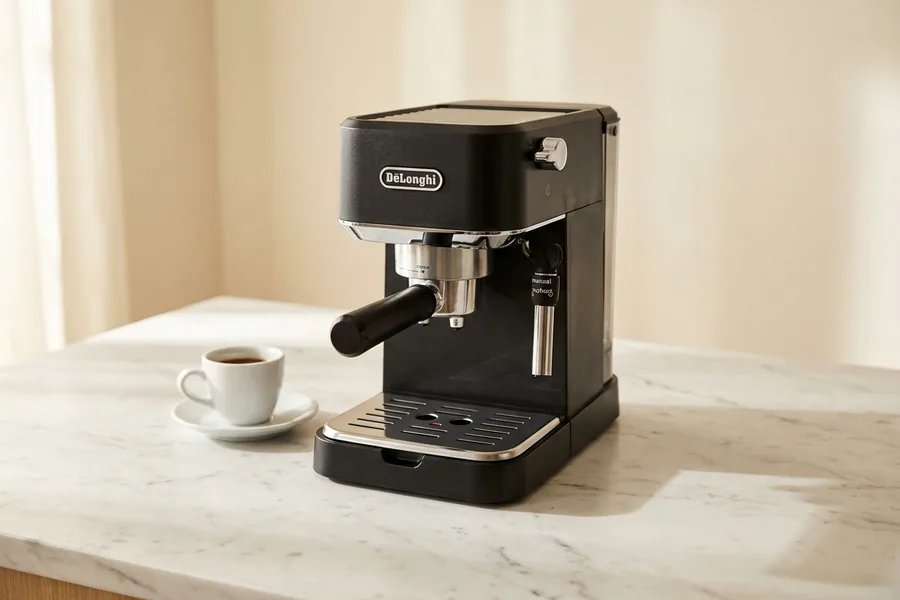
Best Budget: De'Longhi Stilosa EC230 (around £100)
The Stilosa is the lowest price point in this guide and the most honest answer to "what is the absolute floor for home espresso." At around £100, it pulls espresso. The 15 bar pressure pump produces extraction, the thermoblock heats quickly, and the manual milk frother produces foam you can use. Those are the things it does, stated plainly.
What the Stilosa does not do is produce consistent espresso across multiple consecutive shots. Temperature regulation in the thermoblock is less precise than the Dedica EC685, which means extraction can shift between your first and third shot of the morning. The 15 bar pump tends toward over-extraction when grind calibration is not precise, which is a particular problem for pre-ground buyers who cannot adjust on the fly. The build quality reflects the price point honestly: the plastic construction is fine for light use and less reassuring for daily high-volume extraction.
If £100 is a genuine ceiling, the Stilosa is the answer. It makes espresso, it works, and it does not claim to be something it is not. But at £110 to £130, the Dedica EC685 is a meaningfully better machine: better temperature consistency, better steam output, a more durable build, and a portafilter that takes standard baskets. If you can find an extra £30, the case for the Stilosa disappears.
| Feature | Detail |
|---|---|
| Price | around £100 (as of May 2026) |
| Boiler type | Thermoblock |
| Portafilter | 51mm |
| Built-in grinder | No |
| Steam wand | Manual frother |
| Best for | Absolute budget ceiling, occasional use |
“At £100 it makes espresso. It works. But at £110, the Dedica EC685 is a better machine in every way. Only the answer if £100 is the genuine ceiling.”James Bellis, Balance Journal
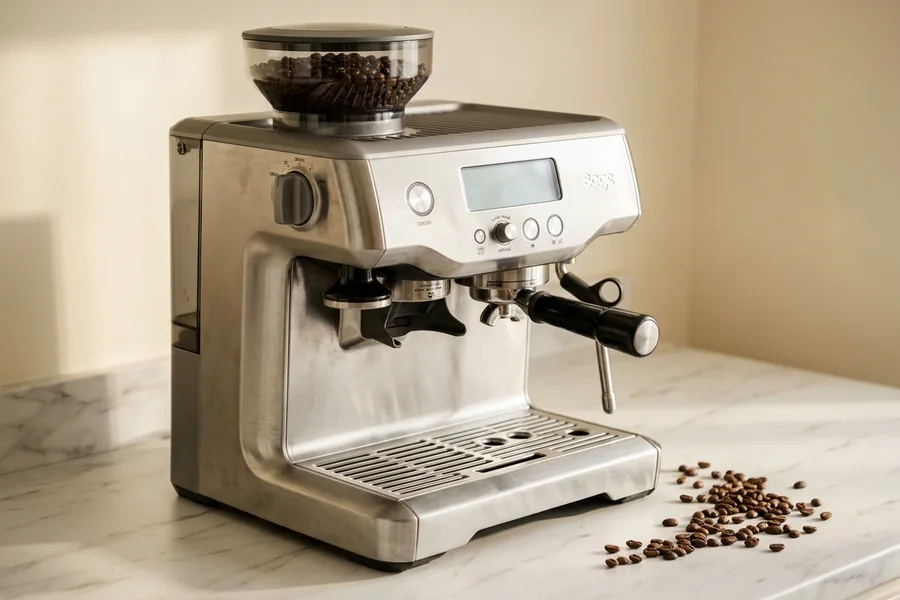
Worth the Stretch: Sage Barista Express (around £599)
The Barista Express costs around £599, which places it £99 above the upper limit of this guide. It is here because of a piece of arithmetic that most under-£500 roundups do not show you.
If you are buying the Bambino Plus at £250 and adding a decent burr grinder at £120 (an entry-level burr model, not the best grinder available), your total outlay is £370. The Barista Express at £599 gives you a machine with a built-in conical burr grinder, digital temperature control, and integrated dose management in a single unit. The real gap is £229, not £349. For buyers who were planning to add a grinder anyway, that calculation changes the decision.
The built-in grinder on the Barista Express is genuinely capable. I spent several weeks pulling shots on one at my parents' kitchen during lockdown, and the grind quality at the espresso setting is consistently good once you have spent an hour or two dialling it in. The digital temperature display gives you more extraction control than the Bambino Plus's thermoblock. The 54mm portafilter is the same size, and the basket quality is comparable. The best Sage coffee machine guide covers the full Sage lineup for buyers weighing the Barista Express against the Barista Pro and beyond.
The honest case for not stretching: if £500 is a genuine ceiling rather than a flexible one, the Bambino Plus plus a separate grinder added three months later is a perfectly sensible path. Buy the machine first, use pre-ground, add the grinder when the budget allows. The Barista Express is the right call when you are buying a grinder either way and want the convenience of a single unit.
| Feature | Detail |
|---|---|
| Price | around £599 (as of May 2026) |
| Boiler type | Thermocoil |
| Portafilter | 54mm |
| Built-in grinder | Yes (conical burr, integrated) |
| Steam wand | Manual |
| Temperature control | Digital display |
| Best for | Buyers factoring grinder cost into total spend |
“The real gap between Bambino Plus plus a grinder and the Barista Express is £229. If you were buying a grinder anyway, calculate it honestly.”James Bellis, Balance Journal

Best Bean-to-Cup: De'Longhi Magnifica Evo (around £420)
The Magnifica Evo belongs to a different category from every other machine in this guide. Every other machine here is a traditional espresso machine: you load ground coffee into a portafilter, tamp it, and extract manually. The Magnifica Evo is a bean-to-cup automatic: load whole beans into the top, press a button, and it grinds and brews in a single step. That distinction matters for how you should think about it.
At around £420, the Magnifica Evo produces genuine one-touch espresso and americano from whole beans, with a manual carafe frother for milk drinks. The extraction quality is reasonable for the format. It does not give you the manual control of a portafilter machine, the ability to adjust grind pressure mid-shot, or the extraction ceiling of the Gaggia Classic Pro. It solves a different problem.
For buyers who want fresh-bean espresso without any daily workflow overhead, the Magnifica Evo makes a strong case at its price point. You load beans, press a button, and the machine handles the rest. For buyers who want to learn espresso craft, build technique, or understand what affects a shot's flavour, a traditional portafilter machine is the more honest choice. The Magnifica Evo is excellent at what it does. What it does is not what most people mean when they say they want to make "proper espresso at home," and that is worth being direct about.
What coffee you use in a bean-to-cup machine matters considerably. The best coffee beans UK guide covers the right roast profiles for automatic extraction, which tends to perform better with medium to medium-dark roasts than with the lighter roasts common in specialty coffee.
| Feature | Detail |
|---|---|
| Price | around £420 (as of May 2026) |
| Type | Bean-to-cup automatic |
| Built-in grinder | Yes |
| Steam wand | Manual carafe frother |
| Manual control | Limited (one-touch operation) |
| Best for | Whole-bean convenience, minimal daily workflow |
“Excellent at what it does. What it does is not what most people mean when they say they want to make proper espresso at home.”James Bellis, Balance Journal
What to Avoid
Not every machine marketed as an espresso machine in the under-£500 bracket deserves the name. A few things worth knowing before you buy.
Avoid machines marketed with 19 or 20 bar pressure as a premium feature. Higher pressure is not better for espresso. The Specialty Coffee Association recommends a brewing pressure of around 9 bar. Most domestic machines, including the Bambino Plus and the Gaggia Classic Pro, use a 15 bar pump and regulate down to the correct pressure at the group head. A 19 or 20 bar marketing claim tells you about the pump rating, not the extraction pressure, and it is frequently used to make basic machines sound more capable.
Avoid proprietary pod formats marketed as espresso machines. Dolce Gusto and Tassimo machines use pressurised pod systems that produce a coffee drink at espresso strength, but they are not traditional espresso machines in the sense that this guide defines them. They do not give you control over dose, grind, or yield. If what you want is a convenient pod machine, that is a valid choice, but it is a different product category entirely.
Avoid machines with no published temperature specification or no thermoblock type listed. Temperature consistency is the single biggest variable in home espresso quality. If a machine's manufacturer does not publish extraction temperature data, that absence is usually informative.
Full Spec Comparison
| Machine | Price | Boiler | Portafilter | Grinder | Steam |
|---|---|---|---|---|---|
| Sage Bambino Plus | around £250 | Thermoblock | 54mm | No | Manual / Auto |
| De'Longhi Dedica EC685 | around £110 | Thermoblock | 51mm (proprietary) | No | Pannarello |
| De'Longhi Dedica Maestro Plus | around £240 | Thermoblock | 51mm (proprietary) | Yes (conical burr) | LatteCrema |
| Gaggia Classic Pro | around £350 | Single boiler | 58mm (commercial) | No | Manual commercial |
| De'Longhi Stilosa | around £100 | Thermoblock | 51mm | No | Manual frother |
| Sage Barista Express | around £599 | Thermocoil | 54mm | Yes (conical burr) | Manual |
| De'Longhi Magnifica Evo | around £420 | Thermoblock | N/A (bean-to-cup) | Yes | Carafe frother |
Final Verdict
The Sage Bambino Plus at around £250 is the best espresso machine under £500 for most buyers in the UK. It combines genuine extraction quality, a capable steam wand, and a forgiving learning curve that makes it the right answer across a wide range of buyer profiles. If you are building your skill and can accept a steeper initial learning curve, the Gaggia Classic Pro at £350 teaches you on tools that professionals use and will reward that investment over time. And if you were always planning to buy a grinder alongside your machine, the Sage Barista Express at £599 closes the cost gap enough to be worth the stretch.
The best espresso machine UK guide covers the full spectrum beyond this budget ceiling, including prosumer machines from £600 upward where the engineering compromises discussed throughout this guide begin to disappear.
Frequently Asked Questions
Is the Sage Bambino Plus worth the money?
Yes. At around £250, the Bambino Plus produces extraction quality and steam performance that sit above its price bracket. The thermoblock heat-up time, the quality of the pressure system, and the dual auto-manual steam wand make it a more capable machine than the price suggests. The one caveat: it does not include a grinder. Budget separately for a burr grinder if you want the best results from the machine.
What is the cheapest espresso machine in the UK that makes decent espresso?
The De'Longhi Dedica EC685 at around £110 is the lowest price point in this guide that produces reliable results consistently. The Stilosa at £100 produces espresso but with less consistency across shots. If £130 is achievable, the Dedica EC685 is the more defensible buy. Below £100, the machines available in the UK do not meet the extraction standards this guide uses as a minimum threshold.
Do I need a grinder with the Bambino Plus?
Not immediately. The Bambino Plus includes a dual wall (pressurised) basket that works reliably with pre-ground espresso. If you want to use single wall baskets and develop your extraction technique, a burr grinder becomes necessary. If you are factoring in a grinder from the start, it is worth pausing on the Sage Barista Express: at £599 with a built-in grinder, the total cost of a Bambino Plus plus a separate entry-level grinder can close the gap considerably.
Is the Sage Barista Express under £500?
No. The Barista Express is typically priced between £550 and £599 in the UK as of May 2026, placing it above the £500 ceiling of this guide. It is included as a stretch option because buyers who were planning to purchase a separate grinder alongside their machine often find the total cost of the two-machine route approaches the Barista Express price, making the stretch worth calculating. The Barista Express includes a built-in conical burr grinder and is a genuinely capable home espresso machine at its price point.
Is De'Longhi or Breville better for espresso under £500?
In the UK, Breville is sold as Sage. Both brands dominate this price range but serve different buyers. Sage machines (Bambino Plus, around £250) prioritise extraction quality and reward skill development. De'Longhi machines (Dedica EC685, around £110) are easier to use out of the box. Neither is objectively better - it depends on whether you want to learn espresso or want a good result with minimal effort.
What's a good starter espresso machine under £500?
The Sage Bambino Plus (around £250) is the most recommended starter machine in this budget. Auto milk steaming takes pressure off beginners while the extraction system is commercial-grade. If your budget is tighter, the De'Longhi Dedica EC685 (around £110) is the best compact option. Both are available widely across UK retailers and backed by a 2-year warranty.
Which espresso machine under £500 is most reliable?
The Sage Bambino Plus has the strongest reliability record in this price bracket, with consistent build quality and a 2-year UK warranty. The Gaggia Classic Pro (around £350) is the other standout for longevity - it is simple, repairable, and used in coffee shops worldwide. Both outlast cheaper machines significantly, particularly those priced below £150.
How much should a decent espresso machine cost?
A machine that produces genuine espresso requires 9 bars of pressure and temperature stability. That starts at around £110 in the UK with the De'Longhi Dedica EC685. The sweet spot for quality and longevity is £250-350 (Sage Bambino Plus, Gaggia Classic Pro). Below £100, machines rarely hit the pressure and temperature consistency required for real espresso.
A wellness entrepreneur and biohacker, James explores the intersection of hospitality and health - from clean fuel and recovery tools to mindful routines that build balance into daily life.